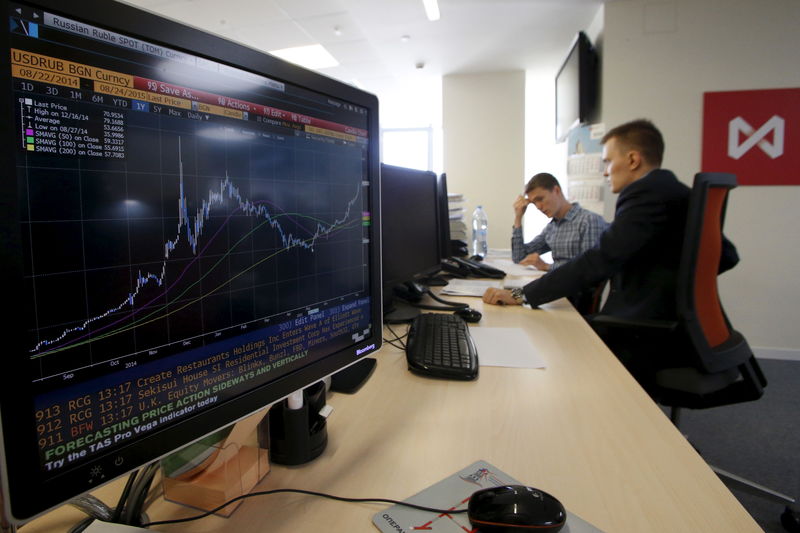
Headline geopolitical tensions between Iran and the U.S. (Hormuz) are coincident with market moves: Brent rose 3.26% to $106.41/bbl and NYMEX crude rose 2.27% to $98.32/bbl. FX moved sharply — USD/RUB fell 3.51% to 83.13 and EUR/RUB fell 3.66% to 96.18 — while MOEX Russia Index was flat and the RVI held at 24.77. Gold futures were down 0.67% (-$30.80) to $4,609.60 (as reported), and Aeroflot shares were at 52-week lows, closing flat at 50.08.
A Hormuz-era risk premium behaves like a transient supply shock layered atop a secular demand reallocation toward AI compute: energy-driven volatility amplifies funding stress for ad-dependent, high-cash-conversion businesses while creating a favorable backdrop for hardware vendors that monetize multi-year capacity expansion. EM FX and commodity-linked sovereign flows can move violently within days as receipts and insurance premia reprice, producing asymmetric outcomes — stronger commodity revenues for exporters, but sharply higher tail risk from sanctions or shipping interruptions that can wipe out local currency gains in weeks. Options markets are likely to see front-month skewed to calls in energy and puts in EM/credit, while implieds on long-dated tech names should widen only modestly because secular AI demand is a sticky structural bid. The practical takeaway: differentiate between cyclical revenue exposure to ad/spend shocks (shorter time horizons) and durable capex-driven hardware demand (multi-year), and express that via option structures that buy convexity to the right risk horizon.
AI-powered research, real-time alerts, and portfolio analytics for institutional investors.
Request DemoOverall Sentiment
neutral
Sentiment Score
0.00
Ticker Sentiment
