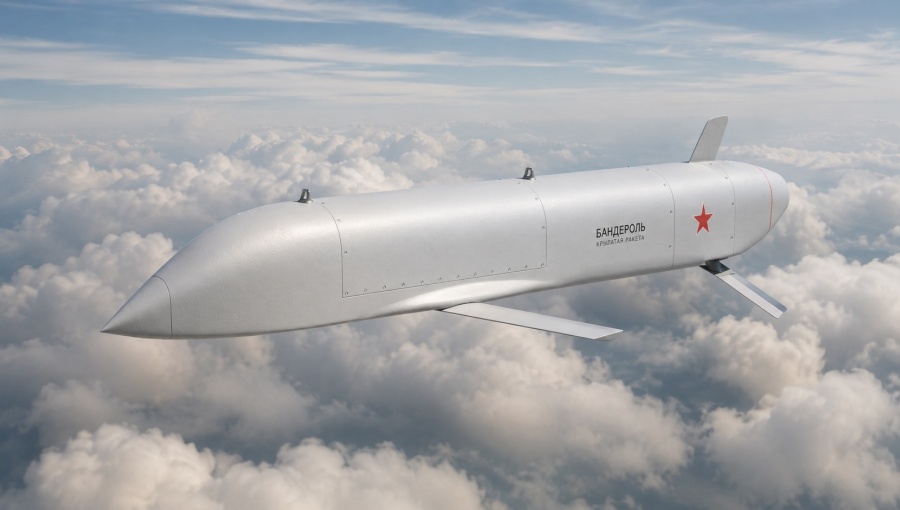
Russia is expected to manufacture several thousand long-range missiles in 2025-2026, with state estimates pointing to around 2,000 missiles this year and expanded production of Iskander and Kh-101 systems. The article says Moscow has rebuilt much of its missile industrial base despite sanctions, aided by Chinese components and sanctions-evasion networks, while Ukraine's domestic missile output remains only in the hundreds annually. The appearance of a new Russian strike weapon and the launch of the EU-Ukraine Drone Alliance underscore an intensifying defense technology race.
The investable takeaway is not “Russia can still make missiles,” but that sanctions have failed to break the industrial learning curve. That matters because once a wartime strike complex reaches steady-state output, the marginal effect of each additional sanctions package declines: the constraint shifts from headline tech bans to bottlenecks in motors, guidance, optics, propellants, and machine-tool throughput that can be substituted via gray-market routing. The second-order implication is a longer war of attrition in which Ukrainian air defense burn rates remain structurally higher than the cost of Russian offense, forcing allies into a perpetual replenishment race.
The clearest market impact is on European defense procurement, but the beneficiaries are uneven. Prime contractors with exposure to interceptors, radar, C2, and layered air defense should see accelerating order books, while legacy artillery-heavy suppliers are less well positioned. The real gap is in cheap mass-produced counter-UAS and interceptor capacity, which is still under-allocated relative to the threat; that favors companies able to scale low-cost autonomous systems and sensor fusion rather than exquisite platforms. Expect budget reallocation away from “platform count” toward munitions depth and rapid production lines over the next 12-24 months.
The contrarian risk is that investors overestimate how quickly this converts into listed-equity upside. European procurement cycles are slow, and near-term headlines often drive sentiment faster than orders, so the first trade is usually in defense multiples, not revenue. Also, a sustained expansion in Russian missile output increases the probability of asymmetric escalation around logistics hubs and energy infrastructure, which can spill into broader European risk premia even if Ukraine-front outcomes do not materially change.
The other underappreciated angle is technology diffusion: if Russia is adapting Iranian-style designs while iterating domestically, the low-cost strike template can propagate to other sanctioned states and non-state actors within 12-36 months. That raises the long-run demand floor for air defense globally, but also compresses margins for vendors stuck selling high-end systems without a low-cost intercept layer. In other words, the winners are likely to be the firms that can sell volume at scale, not just headline sophistication.
AI-powered research, real-time alerts, and portfolio analytics for institutional investors.
Request DemoOverall Sentiment
moderately negative
Sentiment Score
-0.35
