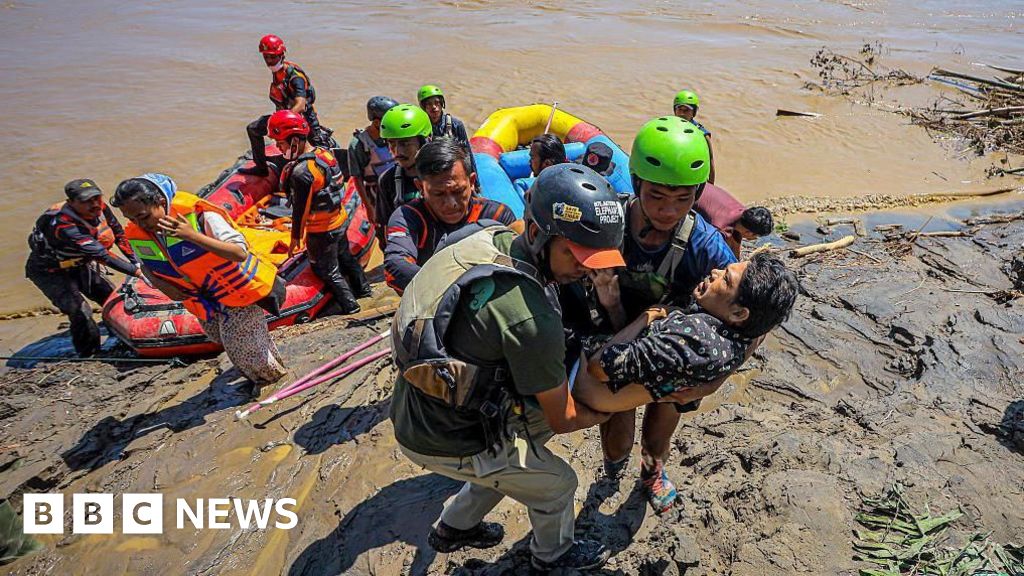
Cyclone Senyar and weeks of torrential rains have produced catastrophic flooding and landslides across Southeast Asia, with Indonesia's Sumatra reporting more than 440 dead and at least 400 people missing, and the region tallying over 900 fatalities this month. Major infrastructure and thousands of buildings are submerged or destroyed, aid delivery remains constrained in isolated areas, and reports of looting underscore acute humanitarian stress; concurrently, severe floods in the Philippines have triggered large anti-corruption protests that threaten political stability. These developments raise near-term regional economic disruption and rebuilding needs, potential commodity/transportation chokepoints in affected areas, and elevated political risk in the Philippines that investors should monitor for policy and governance spillovers.
Market structure: Flooding in Sumatra and region-wide storms will be immediate negative for Indonesian agriculture (palm oil, rubber, rice) and local retail/SME cashflows, while boosting short-term demand for construction materials and logistics. Expect near-term palm oil supply tightness in Sumatra to lift Bursa Malaysia crude palm oil (FCPO) by low double-digits if >2 weeks of port/plant disruption persists; consumer discretionary and local insurers face claims and revenue loss for 1–3 months.
Risk assessment: Tail risks include prolonged aftershocks — extended rains or supply-chain bottlenecks causing a 50–100bp sovereign spread widening for Indonesia and 5–10% currency weakness in IDR; political unrest in the Philippines raises regional sovereign-risk correlation. Immediate horizon (days): logistics/aid constraints; short-term (weeks–months): crop/plantation yield hits and reconstruction demand; long-term (quarters): higher insurance premia and fiscal strain from reconstruction.
Trade implications: Direct plays favor long palm-oil exposure and selective long construction/materials for reconstruction (6–12 month view), paired with defensive hedges: reduce net Indonesia beta and buy USD/IDR or EM downside protection. Volatility window is 1–3 months; options to express views (call spreads on FCPO, put protection on EIDO/EEM) are efficient versus outright equity shorts.
Contrarian angles: Consensus may overstate permanent loss to palm supply — plantations have seasonal buffers and replanting; a quick rebound is possible within 3–6 months, so long-dated outright longs may be crowded. Conversely, markets may underprice political contagion in Philippines — a sudden escalation could trigger broader ASEAN risk-off and push credit spreads wider, creating tactical long CDS or short EM equity opportunities.
AI-powered research, real-time alerts, and portfolio analytics for institutional investors.
Request DemoOverall Sentiment
strongly negative
Sentiment Score
-0.75
