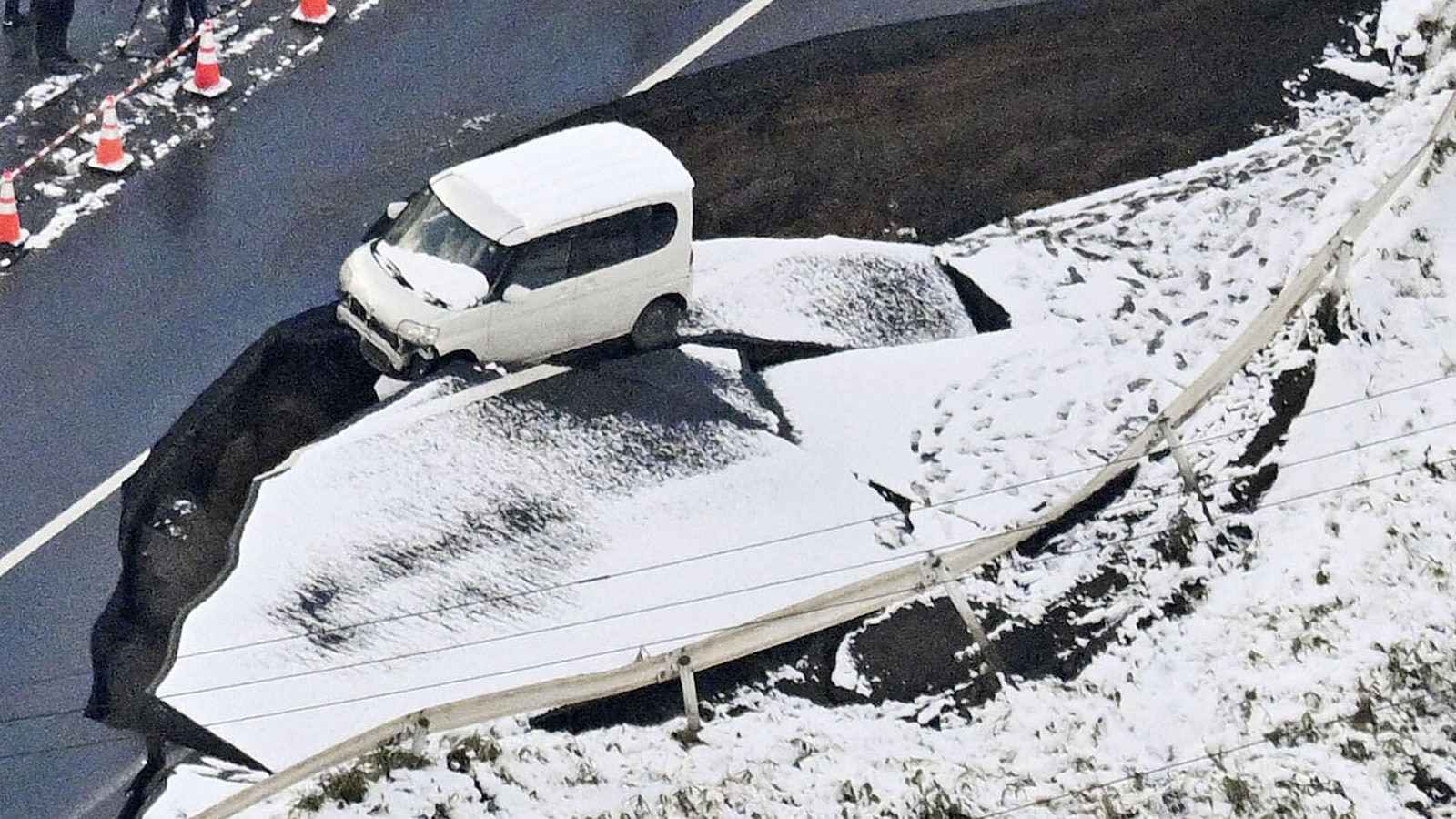
A late-night magnitude 7.5 earthquake struck about 80 km off Aomori (USGS 7.6, 44 km depth), injuring 33 people (one seriously), generating localized tsunamis up to 70 cm in Kuji and causing light damage and transport disruptions including temporary Shinkansen suspensions and power outages affecting roughly 800 homes; advisories were lifted by 6:30 a.m. and about 480 people sheltered. Prime Minister Sanae Takaichi convened an emergency task force and defense helicopters were deployed for assessment; Tohoku Electric said power was largely restored and the Nuclear Regulation Authority reported a 450‑liter spill at the Rokkasho reprocessing plant remained within normal levels with no other nuclear abnormalities. The Japan Meteorological Agency warned of continuing aftershocks—including a M6.6—and a slight increase in the risk of an M8‑level event along the northeast coast, signaling elevated operational and infrastructure risk for coastal, transport and energy assets in the region given the 2011 precedent.
A late-night undersea earthquake measured at magnitude 7.5 by Japanese authorities (USGS 7.6, 44 km depth) struck about 80 km off Aomori, injuring 33 people (one seriously) and generating localized tsunamis up to 70 cm in Kuji and up to 50 cm in nearby communities. The Fire and Disaster Management Agency reported mostly minor injuries from falling objects, and the Japan Meteorological Agency and NHK documented continuing aftershocks including a M6.6 and M5.1 in the hours after the main event.
Infrastructure and logistics disruptions were immediate but limited: roughly 800 homes briefly lost power before mostly being restored by Tohoku Electric, Shinkansen and some local rail services were suspended with East Japan Railway aiming to resume service the same day, about 480 people sheltered and ~200 passengers were stranded overnight at New Chitose Airport. The government mobilized an emergency task force, 18 defense helicopters and pledged life-first efforts, signaling rapid operational response but ongoing local service risk.
Nuclear and longer-run risk appear contained for now: the Nuclear Regulation Authority reported a 450-liter spill at the Rokkasho reprocessing plant remained within normal levels and no other abnormalities were found. The JMA cautioned of a slight increase in the probability of an M8-level event along the northeast coast (Chiba to Hokkaido) over coming days, a factor that elevates regional operational and infrastructure risk; signal outputs show mildly negative sentiment (−0.3) and a modest market-impact score (0.25).
AI-powered research, real-time alerts, and portfolio analytics for institutional investors.
Request DemoOverall Sentiment
mildly negative
Sentiment Score
-0.30
