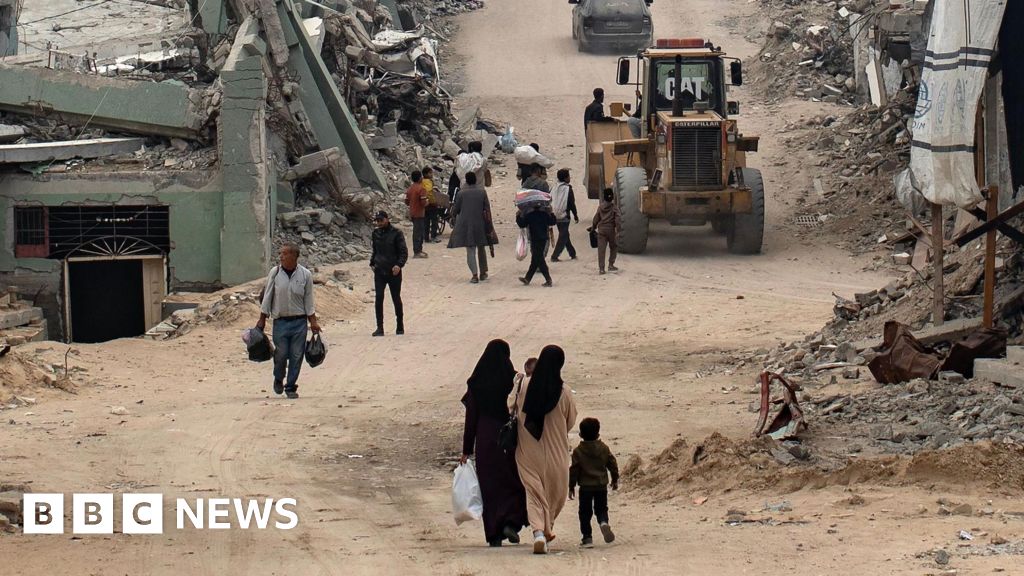
Israeli forces said they will review reports that a three-year-old Palestinian girl was shot and killed in Rafah while playing near her family's tent; the IDF said it was “not aware of a strike” but will investigate as more information emerges, and the death reportedly occurred behind the Yellow Line from which Israeli troops had agreed to withdraw under phase one of a US ceasefire plan. The article situates the incident in a broader humanitarian and political context—Amnesty and Gaza health authorities cite hundreds killed since the ceasefire and tens of thousands since October, the WHO highlights urgent evacuation needs, and Qatar, the US, Turkey and Egypt are pushing to move from a “pause” to phase two of the plan (interim governance, an international security force and Hamas disarmament) overseen by a US-led Board of Peace. German Chancellor Friedrich Merz signaled support for a Palestinian state while Prime Minister Netanyahu reiterated opposition, tying advancement of phase two to the return of the remains of an Israeli officer; Netanyahu is due to meet US President Trump on Dec. 29, leaving the timeline and feasibility of political and security arrangements — and their implications for regional stability, reconstruction and aid flows — uncertain.
Local Palestinian sources reported that three-year-old Ahed Tareq al-Bayouk was shot and killed while playing near her family's tent in Mawasi, Rafah; the Israel Defense Forces said it was "not aware of a strike" but will conduct an additional review as more information emerges. The incident is reported to have occurred on the Palestinian side of the Yellow Line from which Israeli troops agreed to withdraw under phase one of a US-mediated ceasefire plan, signaling a possible breach of the phase-one security arrangements.
The article situates the killing within wider humanitarian figures: since the October ceasefire at least 370 people have been killed in Gaza including 140 children according to Amnesty International, while Gaza's Hamas-run health ministry cites more than 70,000 Palestinians killed since October and the WHO identifies at least 16,500 wounded or seriously ill Palestinians in urgent need of evacuation. International reporting access is restricted, complicating independent verification and heightening information asymmetry for external actors assessing risk.
Diplomatic dynamics are unsettled: Qatar describes the current state as a "pause" rather than a ceasefire and, with the US, Turkey and Egypt, is pushing for phase two measures that include an interim governing authority, disarmament of Hamas, an international security force and Israeli withdrawal, overseen by a US-led Board of Peace. German Chancellor Friedrich Merz has signaled support for a Palestinian state while Prime Minister Netanyahu reiterated opposition and linked phase-two progress to the return of the remains of an Israeli officer; Netanyahu's meeting with US President Trump on Dec. 29 is presented as a near-term political catalyst with unclear implications for regional stability, reconstruction and aid flows.
AI-powered research, real-time alerts, and portfolio analytics for institutional investors.
Request DemoOverall Sentiment
moderately negative
Sentiment Score
-0.55
