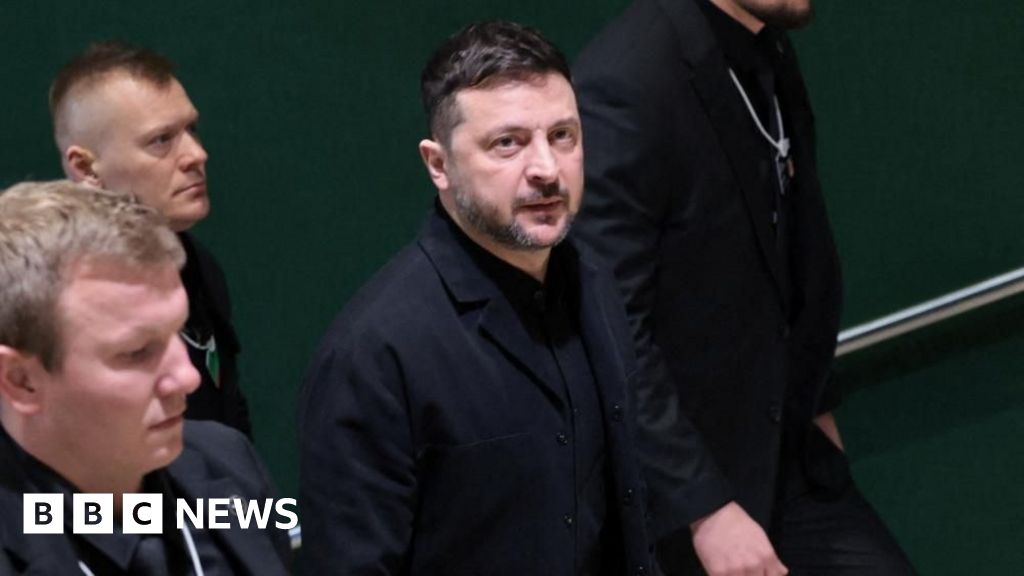
At Davos, President Trump met Ukrainian President Volodymyr Zelensky as US envoy Steve Witkoff said talks to end the Russia-Ukraine war are down to “one issue,” with recent proposals centering on a demilitarised economic zone in Donbas in exchange for security guarantees. Key outstanding points include the future status of Donetsk-held territories and control arrangements for the Zaporizhzhia nuclear plant; discussions may yield security and economic documents but signings are not confirmed, leaving outcomes uncertain and risk premia on regional security, energy supplies and defense exposure sensitive to negotiation developments.
Market structure: A credible negotiation or partial ceasefire (probability 25–40% within 90 days) would shift winners to capital- and travel-exposed cyclicals (airlines, autos, industrials) and harm defense names that trade on sustained high procurement visibility. Energy demand risk falls modestly — crude could trade down $3–8/bbl and European TTF-equivalent gas down 10–20% on a firm deal, eroding power/commodity-driven revenue for utilities and commodity hedges. FX/bond flows would reverse safe-haven bids: EUR likely +1–3% vs USD and RUB could re-rate +5–15% if sanctions ease; sovereign spreads in Western Europe would tighten 10–30bp.
Risk assessment: Low-probability tail events include a rapid deal collapse that triggers a 10–20% spike in oil and a 15–25% gap-up in defense stocks, or unilateral escalation around Zaporizhzhia causing nuclear-risk premia; both are 10–15% likelihood in next 3 months. Immediate (days) volatility will hinge on Davos headlines; short-term (weeks) positioning risk centers on headline-driven squeezes; long-term (quarters) effects depend on formal security guarantees and sanctions rollback, which could take 6–18 months. Hidden dependency: any deal that materially eases risk premia likely requires Western political buy-in—absent that, markets price only temporary relief.
Trade implications: Lean into 2–3% tactical longs in travel/cyclicals (airlines ETF or AAL) and trim 20–30% of direct defense exposure (LMT/RTX/NOC) over 2–6 weeks, replacing with industrials (CAT) or integrated oil (XOM) for relative stability. Use options to express asymmetric views: buy 3-month call spreads on airlines and 3-month put spreads on top defense names; maintain a 0.5–1% portfolio tail hedge in GLD or long-dated VIX calls. Monitor bond ETFs (VGK for equities, TLT for Treasuries) to rotate duration into Europe on confirmed de-escalation.
Contrarian angles: Consensus underestimates persistence of sanctions and domestic politics—don’t assume structural normalization; markets may underprice a failed negotiation, leaving asymmetric upside in defense and commodities. Overdone reactions likely in immediate post-headline moves: short-term pullbacks in defense could be mean-reverting if procurement timelines remain intact; stage defensive shorts and use event triggers (signing of documents within 30 days) to scale. Historical parallels (1990s Balkan talks) show temporary peace often precedes renegotiation—prioritize staged entries and keep 1–3% in liquidity to exploit reprice events.
AI-powered research, real-time alerts, and portfolio analytics for institutional investors.
Request DemoOverall Sentiment
neutral
Sentiment Score
0.05
