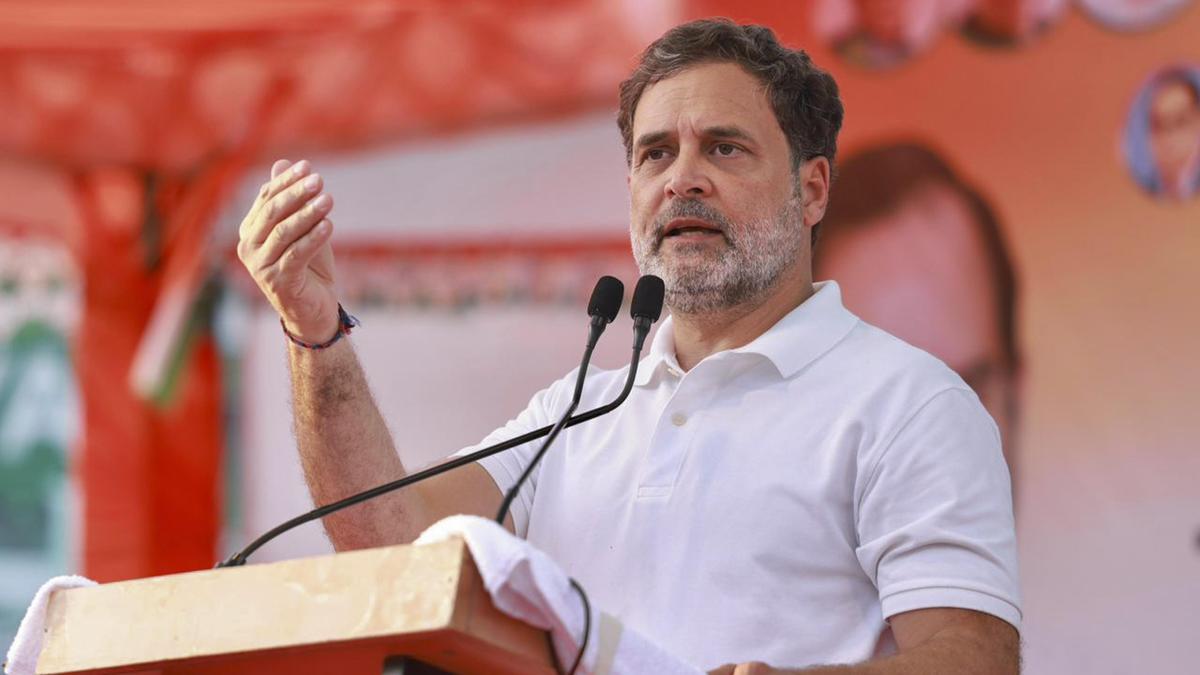
Rahul Gandhi and Congress leaders आरोप that Prime Minister Modi's U.S. trade negotiations were influenced by efforts to secure relief for Gautam Adani, following reports the U.S. may settle bribery-related claims against Adani. The article cites SEC allegations of about $265 million in bribes from 2020 to 2024 tied to a $2 billion solar contract opportunity and $2 billion in financing raised on allegedly misleading anti-bribery disclosures. The political fallout is notable, but direct market impact is likely limited unless the U.S. settlement materially changes legal exposure for Adani Group.
The market read-through is less about the legal headline itself and more about the signaling risk to India’s policy premium. When opposition leaders frame major trade progress as politically contingent, it raises the probability that any U.S.-India agreement gets slowed, diluted, or bundled with unrelated concessions, which is negative for capital goods, industrials, and any importer reliant on smoother tariff/supply-chain normalization. The first-order hit is sentiment, but the second-order impact is that Indian policy discretion becomes a larger discount factor for foreign investors in infrastructure, renewables, and regulated sectors. The Adani complex is the obvious focal point, but the broader winner could be the domestic competition set if governance scrutiny forces a re-rating of contract wins and financing access. Over the next few weeks, lenders, bondholders, and project counterparties will likely demand wider spreads or tighter covenants on anything perceived as policy-linked, which could shift marginal project awards toward firms with cleaner balance sheets and less political overhang. That creates a relative-value opportunity in companies that can absorb capital at lower cost while still participating in India’s energy transition. The catalyst window is days to months: near term, rhetoric can pressure India-linked ADRs and any names exposed to discretionary regulatory approvals; over 1–3 months, the key variable is whether U.S. legal action de-escalates or expands into a broader governance narrative. The contrarian view is that the market may overestimate the actual probability of a durable trade setback: both governments still have strong incentives to avoid a full rupture, so the headline may fade faster than consensus expects unless there is fresh documentary evidence or a policy response. If no new facts emerge, the trade should mean-revert, but the governance discount on the most politically entangled assets may persist longer than the news cycle.
AI-powered research, real-time alerts, and portfolio analytics for institutional investors.
Request DemoOverall Sentiment
moderately negative
Sentiment Score
-0.35
