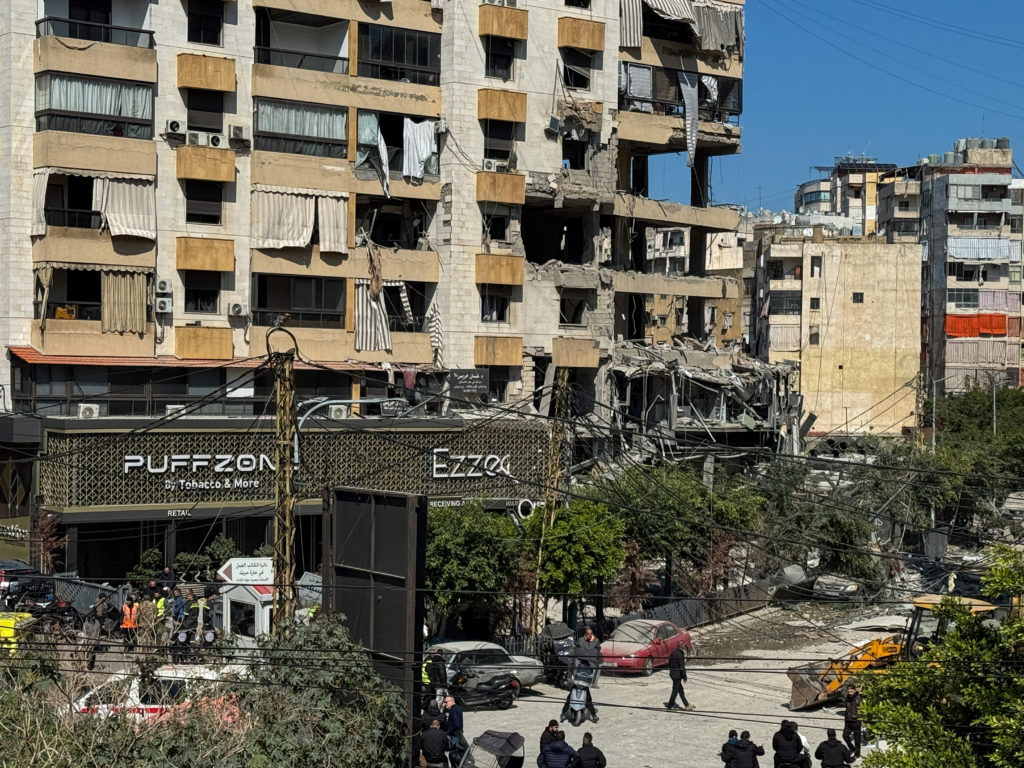
Hezbollah resumed attacks on Israel following recent Iranian strikes; rockets were largely intercepted but Israel’s retaliatory strikes killed more than 50 people around Beirut and have displaced tens of thousands amid heavy bombardment of southern Lebanon and Beirut’s southern suburbs. Lebanon’s cabinet has, in an unprecedented move, banned Hezbollah’s military and intelligence activities, while concurrent strikes and missile threats against Gulf infrastructure — including Dubai’s airport, Jebel Ali port and oil installations — plus airspace closures have halted significant trade and travel activity, raising acute short-term risks to regional trade flows and energy markets.
Winners will be defense primes (RTX, LMT, NOC) and energy producers (XOM, CVX) from higher defense spending and a near-term oil risk premium; losers are airlines (AAL, DAL), airport operators (AAL exposure via IATA/JETS ETF), cruise lines (CCL) and logistics hubs (FDX, UPS) suffering immediate airspace/port closures and a likely 10–30% revenue hit in the Gulf routes over days–weeks. Competitive dynamics favor firms with global fixed contracts and pricing power (integrated oil majors, large defense OEMs) while smaller regional carriers and port-adjacent services lose market share as customers reroute and insurers raise war-risk premia.
Cross-asset signals: expect commodity moves (Brent/WTI up 5–15% within weeks on supply worries), safe-haven Treasuries rally (2–5yr yields down 10–40bp in immediate risk-off), stronger USD and wider EM sovereign spreads (Lebanese/nearby sovereigns reprice). Options implied volatility will spike in travel/logistics names and on broad risk indexes (VIX likely +5–15 points if escalation continues); shipping and war-risk insurance will push freight rates and container spot rates higher, tightening supply in physical logistics.
Tail risks include escalation to a Gulf-wide disruption that lifts oil +$15–$30/bbl and forces naval/backstop operations (low probability, high impact); short-term catalysts: further Iranian strikes, US countermoves, OPEC+ emergency meetings, insurance notices within 7–30 days. Hidden dependencies: Gulf air/port shutdowns compress global just-in-time supply chains (electronics, auto parts) creating second-order inflation pressures and corporate margin hits over 1–3 quarters.
Contrarian view: the market may overpay for permanent defense exposure and over-penalize airlines—history (limited Gulf skirmishes 2019–2020) shows oil spikes often mean-revert within 2–3 months absent system-wide blockade. Use size discipline and option structures to capture convexity: buy protection or call spreads in energy/defense and use short-dated puts or buy-write strategies on beaten-up travel names only if airspace disruption persists beyond 3 weeks.
AI-powered research, real-time alerts, and portfolio analytics for institutional investors.
Request TrialOverall Sentiment
strongly negative
Sentiment Score
-0.70
