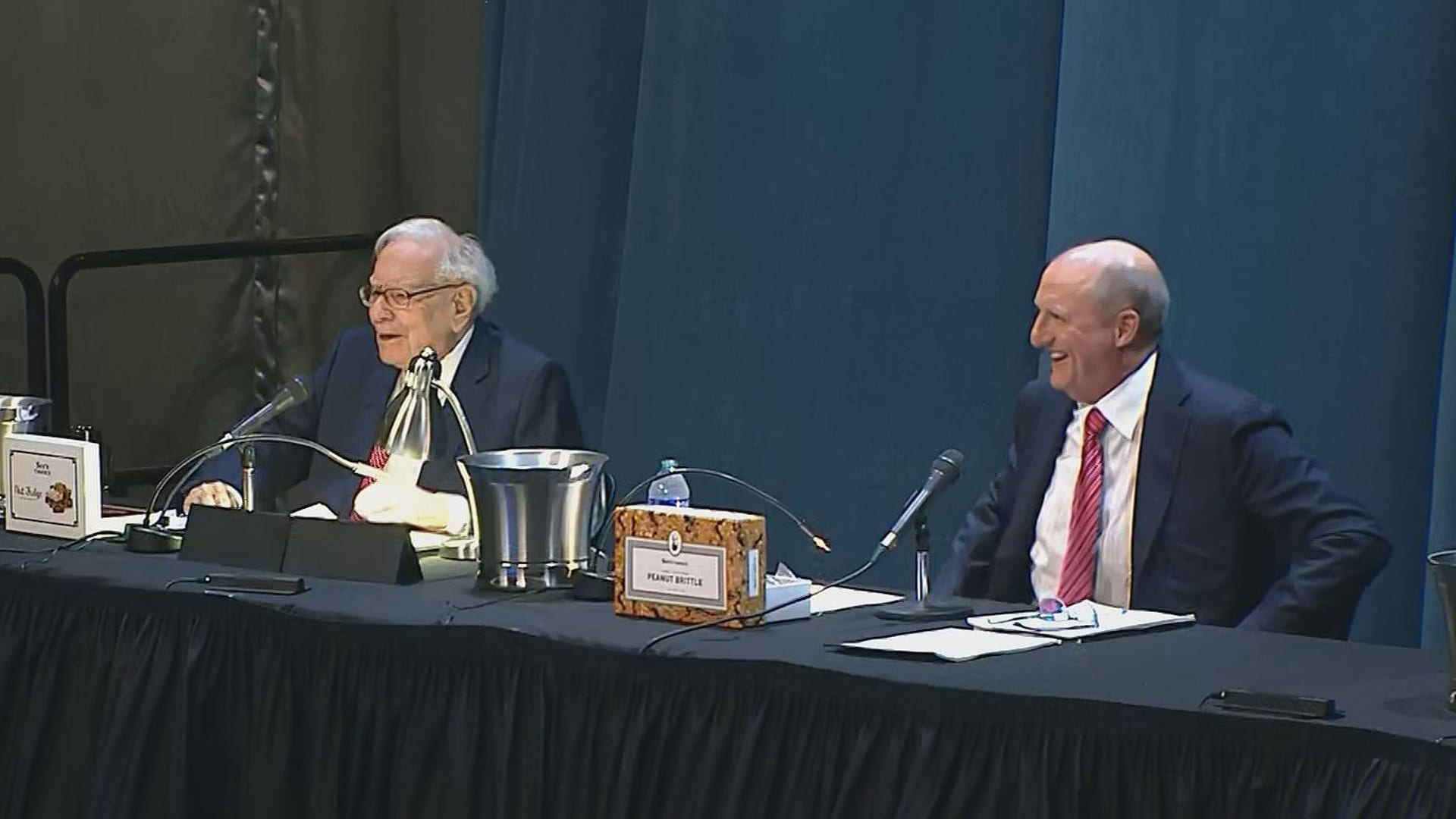
Berkshire Hathaway disclosed a new $2.6B+ stake in Delta Air Lines, marking its return to the airline sector after fully exiting in 2020. The filing also showed a trim to Chevron, a larger Alphabet position that is now Berkshire's seventh-largest holding, and a small new $55M stake in Macy's. Berkshire exited Amazon and sold several other stocks, likely tied to unwinding Todd Combs-related positions, while cash remains near a record $400B as buybacks resumed in Q1.
Berkshire’s re-entry into airlines is less a blanket endorsement of the industry and more a signal that the market has moved far enough on earnings durability, capacity discipline, and balance-sheet repair to make one carrier look investable again. Delta is the cleanest expression of that thesis because it has the best mix of premium exposure, loyalty monetization, and cost control, but the second-order read-through is that legacy carriers are now trading more like cash-generation utilities than cyclical destroyers. That matters for capital allocation: if Berkshire can tolerate airline exposure at this stage of the cycle, the hurdle for a rerating of free-cash-flow yield across the group is lower than consensus assumes. The more important positioning signal may be what Berkshire sold, not what it bought. Exiting payment names and Amazon suggests the portfolio is being rotated away from consensus compounders and toward businesses where valuation is anchored by tangible cash flow or strategic optionality. The Alphabet increase reinforces that move: AI and cloud monetization can absorb capital at scale without the multiple risk tied to consumer discretionary ad spend or e-commerce margin pressure. Meanwhile, the cut in Chevron implies Berkshire sees less asymmetry in integrated energy after the recent oil reset, which can be read as a mild warning on commodity beta. The contrarian angle is that airlines are vulnerable if fuel prices stay elevated or domestic demand softens, but the market is likely underestimating how much of Delta’s downside is already de-risked by industry capacity restraint. The bigger tail risk is not near-term demand, it is a 6-12 month macro slowdown that would compress premium cabin and corporate travel spend faster than headline passenger counts. If that happens, the move into DAL becomes a value trap; if it does not, Berkshire’s stamp of approval can catalyze multiple expansion across the sector.
AI-powered research, real-time alerts, and portfolio analytics for institutional investors.
Overall Sentiment
neutral
Sentiment Score
0.10
Ticker Sentiment
