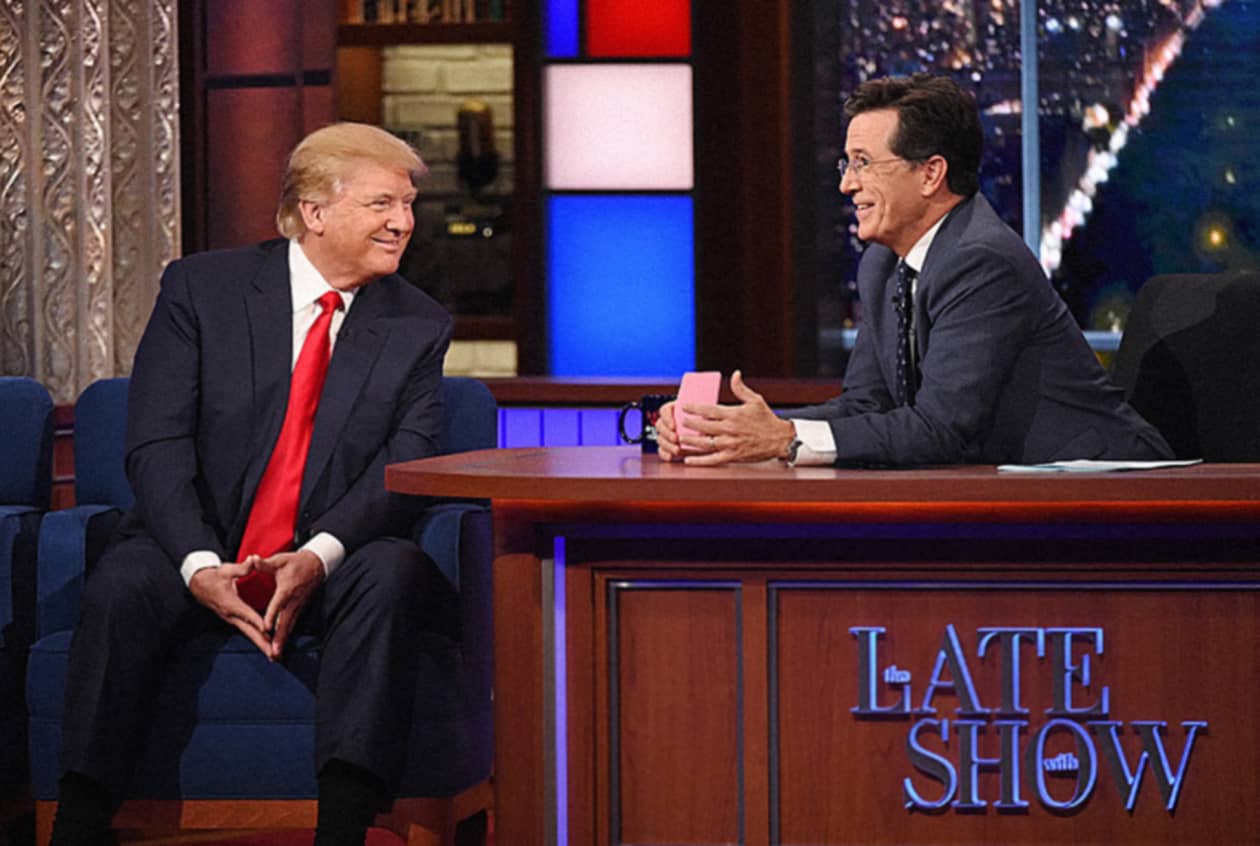
Stephen Colbert’s departure will end CBS’s 11-year run of "The Late Show" amid sharp declines in TV audiences and profitability. The article frames the move as a sign that networks are reconsidering the economics of late-night television, with political pressure also mentioned as a possible factor. The implications are industry-wide but likely limited in immediate market impact.
This is less about one host and more about the monetization cliff for linear “appointment TV.” Late-night is a high-cost, low-hour format whose economics depended on broad reach, cheap distribution, and bundled advertising; that model is now being repriced as attention fragments and CPMs migrate to digital. The second-order implication is that networks will increasingly treat these franchises as optionality on brand relevance rather than standalone profit centers, which argues for continued structural pressure on legacy entertainment margins over the next 12-24 months. The likely winners are digital-native comedy and commentary platforms that can monetize smaller but more engaged audiences through direct subscription, clip distribution, and sponsor integrations. That creates a flywheel for YouTube-first talent agencies, podcast networks, and social platforms that absorb both audience hours and ad dollars without the fixed-cost burden of studio production. The losers are not just CBS/NBC/ABC equivalents; production vendors, union-heavy backstage labor, and local affiliate ecosystems also face downstream volume pressure if networks keep trimming overnight inventory. Catalyst risk is asymmetric: the near-term market reaction is probably muted, but the pace of cancellations can accelerate after a single weak upfront cycle or ad budget reset. A partial offset would be a renewed political/news-driven viewing spike, but that typically lifts engagement more than profitability because it does not solve the structural CPM and cost problem. Over 6-18 months, expect management teams to test cheaper formats, shorter run-times, and more digital clip extraction, which may preserve audience relevance while still compressing cash returns. The contrarian view is that the decline may be overinterpreted as terminal rather than rational pruning: networks may be exiting low-ROI time blocks to protect franchise value elsewhere, not because late-night is dead. That suggests the market could underappreciate how quickly costs can be cut without impairing the parent company if these shows are simply absorbed into a broader content portfolio. The key question is whether this becomes a one-off optimization or the start of a broader retreat from expensive, low-monetization live programming across broadcast.
AI-powered research, real-time alerts, and portfolio analytics for institutional investors.
Request DemoOverall Sentiment
moderately negative
Sentiment Score
-0.25
