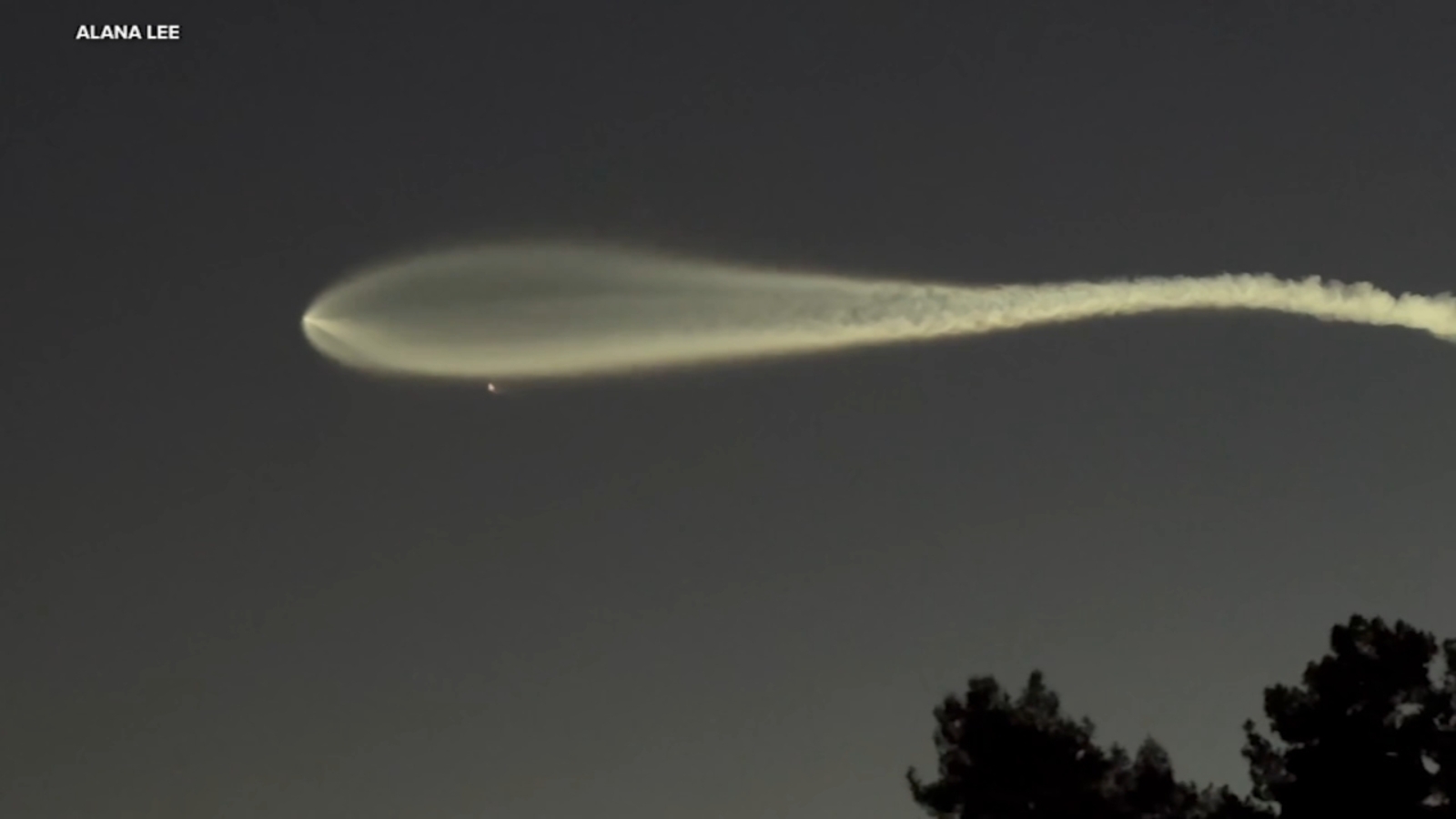
SpaceX launched a Falcon 9 carrying Starlink satellites from Vandenberg Space Force Base at ~7:50 p.m.; the launch was delayed from Sunday due to weather. The lift-off produced a bright plume visible across Southern California and residents in San Luis Obispo, Santa Barbara and Ventura counties may have heard sonic booms. This is a routine operational deployment of Starlink satellites and is unlikely to have material market impact.
A sustained high cadence of smallsat/megaconstellation deployments amplifies demand for avionics, RF payloads, ground terminals and launch integration services — not just engines and fairings. That flow benefits Tier-1 defense/space integrators with diversified backlogs and higher-margin systems work (ground stations, secure comms) because they capture program-level content rather than commoditized stage hardware. Expect gross margin expansion concentrated in the 6–18 month window as more firm orders convert and long-lead suppliers ramp subcontracts.
Second-order supply-chain strains will show up unevenly: composite structures and precision avionics suppliers face tighter lead times and pricing power, while small incumbent launch providers face pricing pressure and margin compression from scale players. Externalities — local noise/airspace complaints, sonic-boom sensitivity, and orbital-debris scrutiny — create episodic regulatory risk that can puncture cadence for weeks-to-months and spike insurance premiums, hitting marginal launches first. Monitoring insurance pricing and FCC/FAA processing times will give 2–3 week early-warning signals of tempo risk.
Catalysts and time horizons: near-term (0–3 months) watch for procurement notices and DoD grant awards that shift integration/spec content toward incumbents; medium-term (3–12 months) catalysts include insurance cycles, FCC/NTIA policy updates, and competitor launches that test market economics; long-term (12–36 months) is where commercial broadband adoption and military constellation buys materially re-rate suppliers. The contrarian angle: consensus underprices the operational friction from externalities — if regulators or insurers tighten, short-term winner-takes-all economics reverse, creating a rapid repricing opportunity for exposed pure-play launchers versus diversified integrators.
AI-powered research, real-time alerts, and portfolio analytics for institutional investors.
Request DemoOverall Sentiment
neutral
Sentiment Score
0.00
