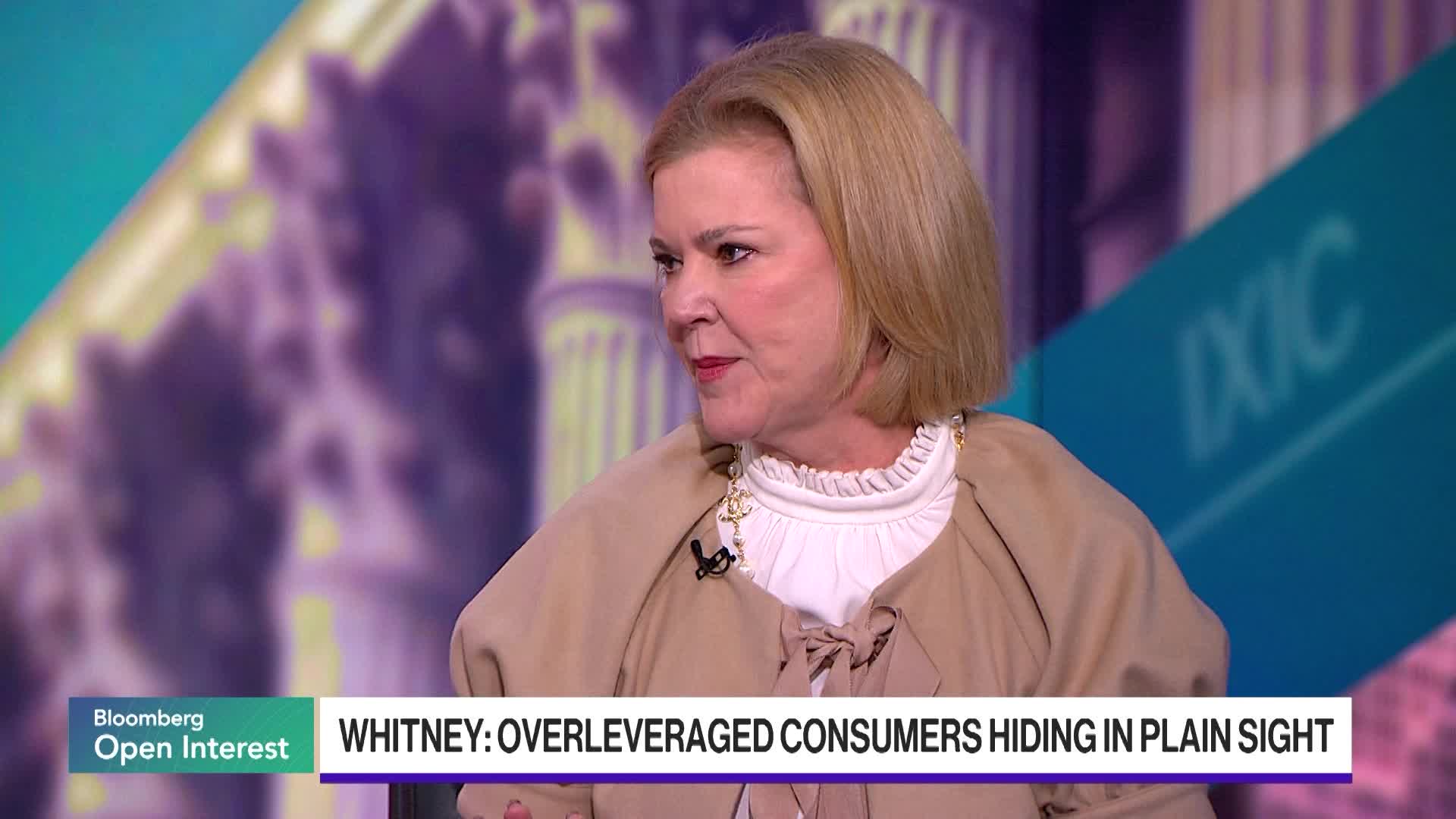
The end of a nearly five‑year student‑loan forbearance is squeezing millennials' discretionary spending and is starting to show up in corporate commentary; the speaker estimates roughly $400bn of relief flowed to ~40m borrowers during forbearance, millennials hold about 52% (~$850bn) of student debt, and ~20% (~$170bn) is in default or seriously delinquent. Wage and tax‑refund garnishments have begun, which should further pressure auto loans and consumer discretionary demand, while policy levers that matter most are structural (housing affordability, manufactured housing) rather than marginal Fed rate cuts. Investors should monitor consumer discretionary, autos, mortgage/REITs and policy developments that affect housing supply and targeted relief.
Market structure: Resumption of student‑loan payments (roughly $300/month or ~$17k per affected borrower across ~40M borrowers) reallocates discretionary spend away from travel, dining, apparel and higher‑ticket auto purchases. Winners: affordable housing manufacturers and MH REITs (manufactured housing production could cut costs ~25% per the bill cited), consumer staples and value retailers that capture necessity spend. Losers: discretionary retail (merchant and e‑commerce discretionary exposure including AMZN’s retail segments), travel & leisure, and prime/subprime auto originators as delinquencies migrate.
Risk assessment: Tail risks include Congressional relief (large tax rebate or forgiveness >$150B) which would restore spending quickly, or slow enforcement of garnishments delaying impact; both would reverse this thesis within 3–12 months. Immediate (days–weeks) risks are earnings guidance shocks; short term (3–9 months) is rising ABS delinquencies (watch auto ABS vintage delinquencies +50–150bps); long term (2–4 years) is structural lower homeownership among affected cohorts.
Trade implications: Tactical ideas: buy 12–24 month LEAP calls on CVCO/SKY and 2–3% long in UMH/SUI REITs for durable yield and housing re‑rating; hedge with 6–9 month protection on consumer discretionary via XLY 3x put spread or AMZN 6–9 month 15–20% OTM puts sized to 1–2% portfolio. Credit: buy protection on consumer ABS/HY via HY CDX 5yr puts or long protection sized to expected spread widening of 50–150bps; rotate from discretionary into staples/utilities over next 1–6 months.
Contrarian angles: Consensus underprices manufactured housing upside and overprices the sensitivity of large diversified names (AMZN) to millennial weakness because AWS/grocery offset; reaction may be overdone if garnishment rollout is phased — short positions should be hedged. Historical parallel: post‑forbearance shocks (COVID mortgage pause) showed consumption reallocation but not uniform bankruptcy; size convictions 1–3% portfolio and use options to limit tail losses.
AI-powered research, real-time alerts, and portfolio analytics for institutional investors.
Request DemoOverall Sentiment
strongly negative
Sentiment Score
-0.60
Ticker Sentiment
