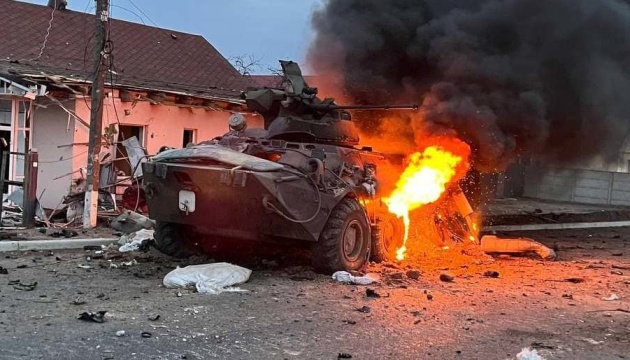
Russia lost 1,060 troops and three multiple-launch rocket systems in the past day, the Ukrainian General Staff reported. Cumulative reported Russian losses now include 11,828 (+2) tanks, 24,327 (+3) armored fighting vehicles, 39,169 (+59) artillery systems, 1,712 (+3) MLRS, 435 warplanes, 350 helicopters, 210,896 (+2,069) tactical UAS, 33 warships, 2 submarines and 86,578 (+219) vehicles/fuel trucks. Continued high attrition sustains elevated geopolitical risk that can keep defense demand elevated and maintain volatility in energy and commodity markets; portfolio stance should remain risk-off and focused on downside protection.
Sustained high attrition on a broad set of battlefield hardware shifts the market from a “one-off weapons” narrative to a replenishment and industrial-base story. Expect multi‑month to multi‑year demand for artillery rounds, rocket motors, vehicle spares, and repair services that cannot be met by inventory draws alone; that creates pricing power for producers of propellant, brass/steel forgings, and turret/drive-line subsystems over 3–12 months while backlog ramps.
A second‑order winner set is logistics and sustainment capacity — rail, heavy maintenance, and depot-level MRO — because repeated materiel losses translate into a persistent replacement cycle (not just new-build platforms). NATO standardization amplifies this: Western primes capture outsized aftermarket share because rebuilds need interoperable components and certification, pressuring non-aligned suppliers and raising switching costs for customers over the next 12–36 months.
Key catalysts and tail risks are highly idiosyncratic and path‑dependent: short‑term (days–weeks) political events — aid packages, sanctions, or port disruptions — can cause sharp market moves; medium term (3–12 months) the speed at which Western munitions plants add capacity will govern prices and margins; long term (1–3 years) the industrial re‑tooling and budget cycles will determine sustainable winners. The consensus buy‑the‑defense-beta trade may be too blunt — low‑tech, high‑volume suppliers (propellants, medium‑caliber ammunition, vehicle subsystems) see steadier cash conversion than headline primes if munitions burn rates remain elevated.
AI-powered research, real-time alerts, and portfolio analytics for institutional investors.
Request DemoOverall Sentiment
moderately negative
Sentiment Score
-0.50
