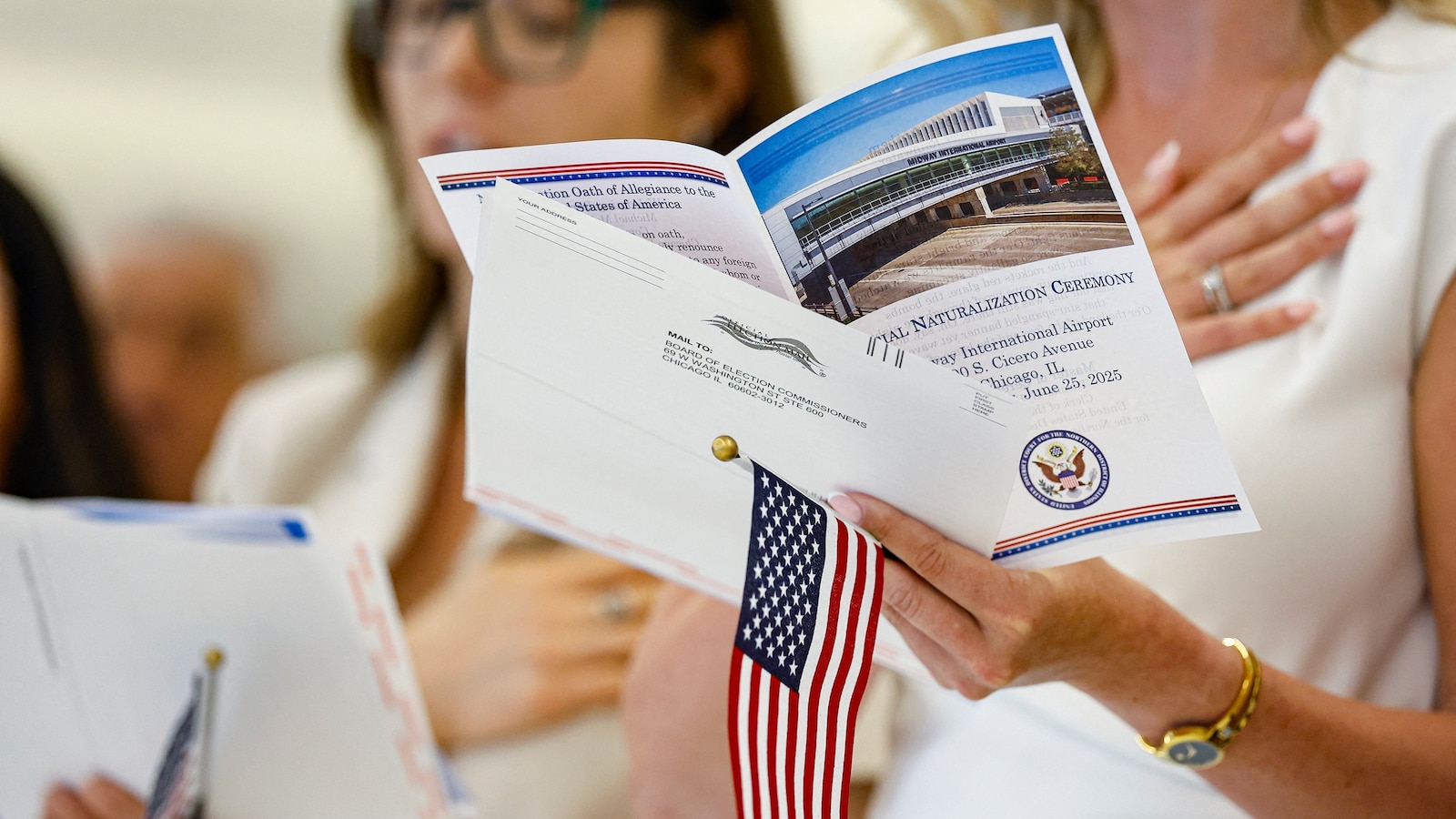
The administration has paused adjudications and canceled naturalization ceremonies for nationals from designated “high-risk” countries following a November shooting, with a Dec. 2 USCIS memo ordering comprehensive re-reviews, possible re-interviews and notifying applicants of canceled oath ceremonies. Advocacy groups say at least 21 clients had ceremonies canceled, USCIS reportedly directed field officers to refer up to 200 denaturalization cases per month, and the president has publicly threatened denaturalization, creating the prospect of litigation and procedural backlogs. The move increases legal and political risk and uncertainty around immigration enforcement but is unlikely to materially move broad financial markets; hedge funds should monitor ensuing litigation, DHS/USCIS guidance, and any spillovers into sector-specific labor availability or regulatory enforcement.
Market structure: The immediate winners are identity, background-check and national-security contractors who win incremental screening work (TransUnion TRU, Equifax EFX, Leidos LDOS, CACI CACI). Losers are labor-intensive consumer sectors (restaurants, hospitality, seasonal agriculture) in immigrant-heavy metros where a constrained labor pipeline can compress margins and raise unit labor costs by low-single-digit percentage points within 3–12 months. Cross-asset: expect modest risk-off flows into Treasuries and USD on political uncertainty; regional-bank credit spreads (KRE) could widen if deposit behavior alters in immigrant communities.
Risk assessment: Tail risks include a court injunction that either restores ceremonies (sharp reversal) or upholds pauses and triggers mass denaturalizations + civil unrest (months–years, high impact but low probability). Near-term (days–weeks) headline-driven volatility; short-term (0–6 months) legal rulings will govern trajectory; long-term (1–3 years) depends on election outcomes and DHS appropriations. Hidden dependencies: DHS contract awards, USCIS backlog metrics, and DOJ litigation timetables are proximate drivers.
Trade implications: Tactical long exposure to TRU/EFX and small-cap defense contractors (LDOS, CACI) for 3–12 months; pair long screening vendors vs short consumer discretionary exposure (XLY) to capture divergent fundamentals. Use 3–9 month call-buying to express asymmetric upside and 1–3 month puts on XLY for downside protection around expected court rulings in 30–90 days.
Contrarian angles: Consensus assumes persistent policy; a legal injunction within 60–120 days is a plausible rapid catalyst that would spike volatility and reverse winners. Also underappreciated: accelerated automation/HR-tech spend (ADP, PAYX) as firms substitute labor uptake—these can outperform if policy persists. Watch DOJ memos, USCIS case-referral rates and DHS contract notices as binary triggers.
AI-powered research, real-time alerts, and portfolio analytics for institutional investors.
Request DemoOverall Sentiment
moderately negative
Sentiment Score
-0.40
