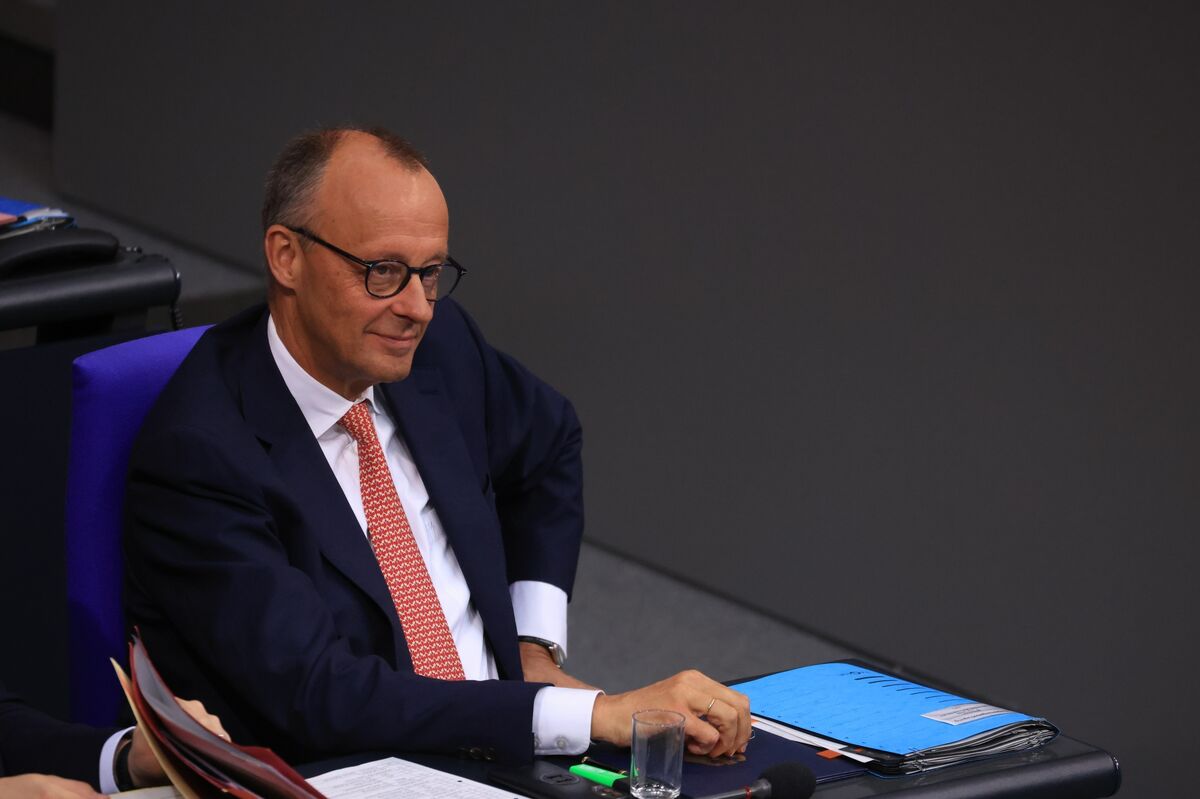
Chancellor Friedrich Merz urged German business leaders to be patient as measures enacted by his new ruling coalition are given time to revive growth, highlighting that lifting Europe’s largest economy out of a prolonged slump is a top priority for his conservative-led alliance with the Social Democrats. Having taken office in early May, Merz’s appeal signals a focus on implementing fiscal and regulatory reforms rather than immediate stimulus, suggesting a period of policy continuity and gradual reform execution rather than abrupt change for corporate planning.
Market structure: Merz’s call for patience signals a pro-growth, business-friendly tilt without immediate shock policies; winners are cyclical exporters, industrials and banks (Siemens SIEGY, BASFY, VWAGY, DB) as a multi-quarter capex/reform story, while high-tax or regulated utilities and some domestic social services providers face political scrutiny. Competitive dynamics favor German mid-cap industrials (machine tools, automation) gaining share from slower EU peers if reform reduces labor/friction costs; pricing power should lift if capacity utilization rises >3–5 pts over 6–12 months. Supply/demand: stronger reform-driven capex increases demand for industrial metals, machine tools and skilled labor, tightening supply chains and pushing inputs 3–8% higher in 12–18 months if orders rebound. Cross-asset: improved growth trajectory should steepen the Bund curve (10y +20–60bp potential), strengthen EUR (target 1.08–1.12 vs USD in 6–12 months), lift commodity cyclicals (copper +5–12%), and raise equity vols initially then compress as data confirms recovery.
Risk assessment: Tail risks include coalition breakdown, EU fiscal constraints or an ECB policy surprise that reverses the growth trade; probability ~15–25% in next 12 months but impact large (DAX -20%, Bunds rally). Immediate market reaction will be muted (days); short-term (weeks–months) hinge on concrete bills and PMI/industrial orders; long-term (quarters–years) depends on implementation — expect meaningful EPS upside only if reforms pass and investment rises >5% YoY. Hidden dependencies: reform success requires European Commission approval and labor-market acceptance; second-order effects include wage inflation that could prompt earlier ECB tightening. Catalysts: coalition budget vote, Q3 German industrial orders, ECB meeting, and PMI prints within 30–90 days.
Trade implications: Direct plays favor overweight Germany via EWG or top-Germany names: industrials (SIEGY, BASFY), autos (VWAGY, MBGYY) and banks (DB). Pair trades: long German industrials vs short European defensives (e.g., long SIEGY vs short NESN.SW/NSRGY) to express cyclical re-rating. Options strategies: buy 6–12 month call spreads on EWG or EURUSD (1.04/1.12) to capture growth-led EUR appreciation while limiting premium. Fixed income: tactically short 2–5y German Bund futures if fiscal loosening >€20bn is confirmed; hedge duration risk with EUR curve steepeners.
Contrarian angles: Consensus expects slow payoff; markets may underprice rapid implementation — if industrial orders accelerate >7% YoY within 6 months, cyclicals could re-rate 15–25% quickly. Conversely, markets could underappreciate inflationary consequence of labor-friendly reforms; a 50–75bp ECB hawkish surprise would hurt long-duration names and sovereigns. Historical parallels: 2005 German reforms took years to feed through — don’t expect immediate V-shaped GDP jump; mispricing window likely 3–9 months after clear policy signals. Unintended consequences: aggressive fiscal or deregulation moves could spark social backlash and policy reversals, creating volatile entry points — size positions to withstand 12–20% drawdowns.
AI-powered research, real-time alerts, and portfolio analytics for institutional investors.
Request DemoOverall Sentiment
neutral
Sentiment Score
0.05
