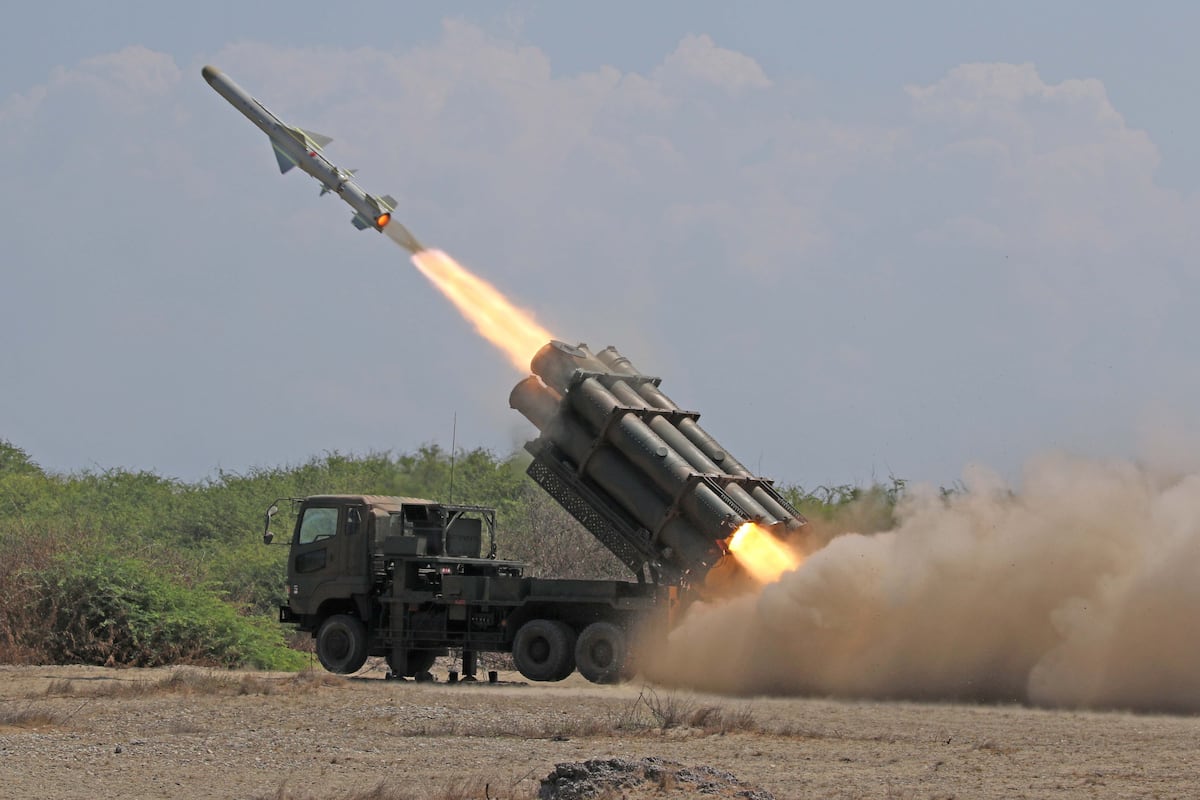
Japan fired two Type 88 anti-ship missiles during Exercise Balikatan 2026, with the first round hitting a decommissioned Philippine vessel 47 miles away after a six-minute flight and sinking it. The drill marked the maiden deployment of Japanese combat troops on Philippine soil since World War II and underscored deeper Japan-Philippines-U.S. defense coordination amid rising China tensions. Roughly 17,000 troops from seven countries participated in the Apr. 20-May 8 exercise.
This is less a one-off exercise headline than a visible tightening of the Japan-Philippines security stack, which matters because it shifts deterrence from rhetoric to rehearsed kill chains. The second-order market implication is not immediate defense revenue from the event itself, but a higher probability of multi-year procurement normalization: coastal anti-ship, ISR, C2, air defense, and maritime logistics all become more defensible budget lines in both capitals. That supports a broader re-rating of suppliers tied to distributed maritime operations rather than legacy platform builders. The more investable angle is the operational bottleneck this strategy creates for China: if First Island Chain chokepoints become more contested, commercial shipping and subsea infrastructure risk premia rise across the Luzon Strait / Taiwan-adjacent lanes. Even a low-probability conflict tail can drive a persistent increase in rerouting, insurance, port contingency spending, and stockpiling behavior by Japanese, Korean, and Taiwanese manufacturers over the next 6-18 months. That is supportive for defense electronics, maritime surveillance, and select logistics names, but mildly negative for Asia-exposed cyclicals with just-in-time supply chains. Contrarian view: the market may overestimate how quickly these announcements translate into actual volume. Cross-border access agreements and live-fire demonstrations are politically useful, but procurement execution in Japan and the Philippines can be slow, and budgets are constrained by domestic optics. The cleaner catalyst is not the headline itself but follow-on orders, integration contracts, and deployment cadence at future Balikatan iterations; absent those, the trade becomes a sentiment fade rather than a structural rerate.
AI-powered research, real-time alerts, and portfolio analytics for institutional investors.
Request DemoOverall Sentiment
neutral
Sentiment Score
-0.05
