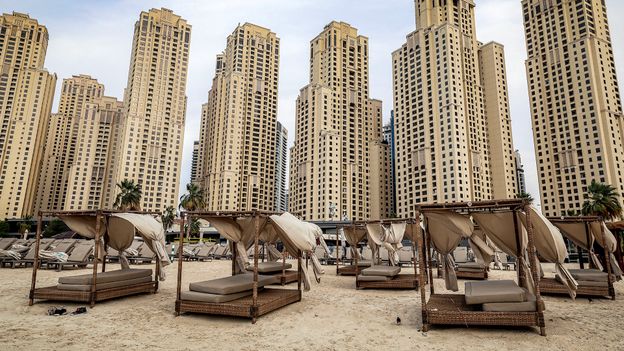
Dubai welcomed 19.59 million international visitors last year, but the US‑Israel–Iran war has sharply reduced tourism: restaurant revenues down >50% (70–80% at tourist‑dependent outlets), footfall at some chains at 15–20% of normal and hotel occupancy plunging to 15–20% (single digits at some properties). AirDNA reports ~226,500 short‑term bookings cancelled (Feb 28–Mar 29); Tourism Economics estimates $34bn–$56bn in lost regional visitor spending and Dubai has announced $272.26m in short‑term business support. Recovery timing is highly uncertain and operators face deep cuts, unpaid leave and potential closures if the conflict persists.
This shock is primarily a demand shock with an outsized real-economy feedback loop: hospitality operators with high fixed costs will exhaust cash buffers quickly, forcing landlord concession cycles and accelerating vacancy-led markdowns in commercial real estate. That amplifies credit risk for locally exposed lenders and prompts insurers to reprice political-risk and business-interruption coverage, raising operating costs for hotels and tour operators even after tourists return.
A material second-order effect is labour-market scarring. Large-scale unpaid leave and layoffs will depress remittances into sending economies and reduce discretionary spending among expatriate communities who previously buttressed off-season occupancy. That effect lengthens recovery timelines because a return to pre-crisis demand requires both tourist confidence and restoration of resident spending power — not just promotional pricing.
Operational repositioning by global travel intermediaries and carriers will create winners and losers: platforms and carriers with flexible cancellation/refund engines and strong corporate-booking footprints will capture share from pure-play leisure exposures; meanwhile, suppliers dependent on short-term bookings and high seasonal leverage face the sharpest earnings vagaries. If the conflict ends quickly, look for a sharp but short-lived repricing in regional equities and travel names; if it lingers, expect a multi-quarter impairment cycle across hospitality balance sheets and related real-estate credits.
AI-powered research, real-time alerts, and portfolio analytics for institutional investors.
Overall Sentiment
strongly negative
Sentiment Score
-0.75
