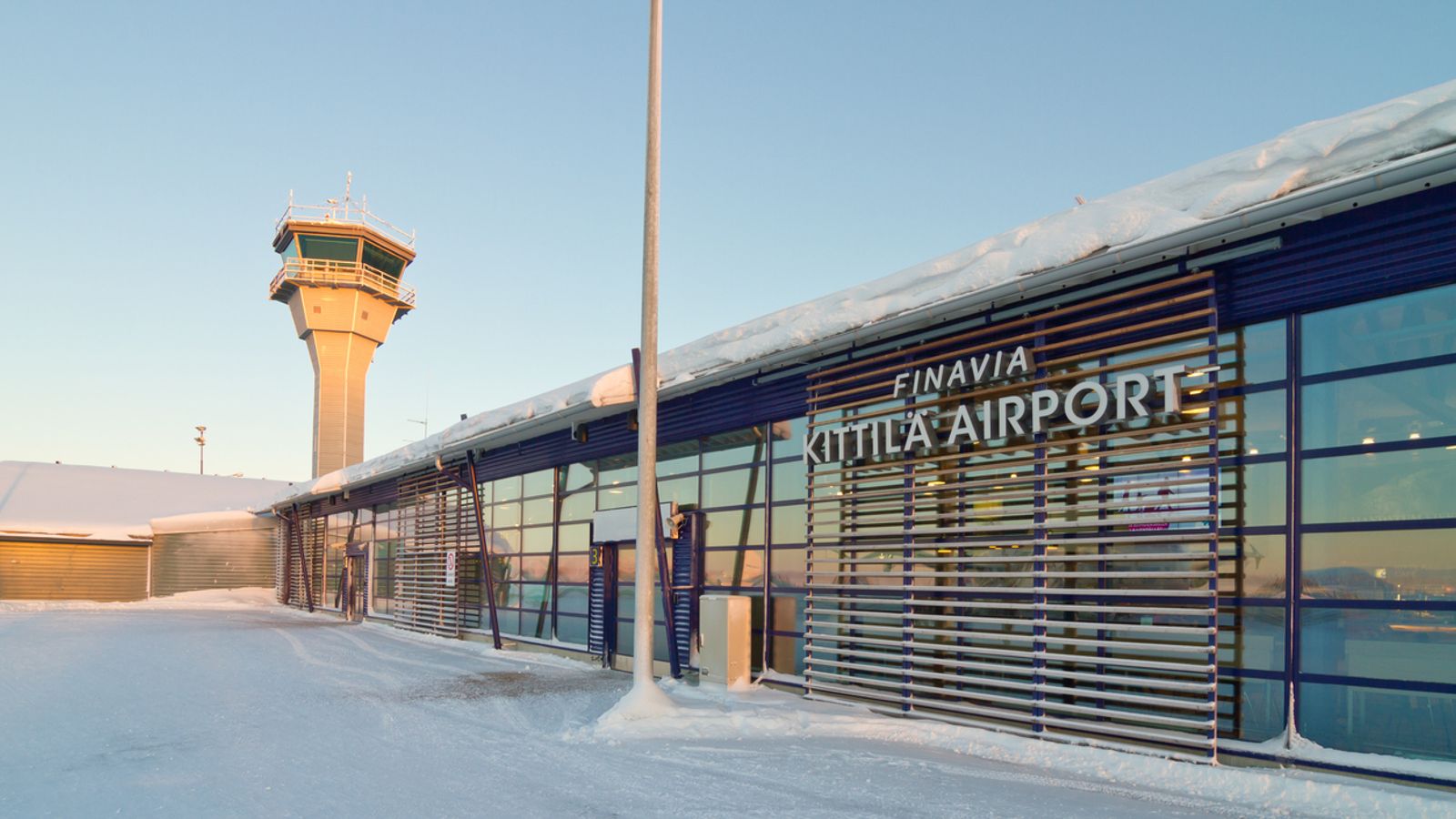
Severe Arctic conditions have left thousands of tourists stranded at Kittila Airport in Finnish Lapland after temperatures plunged to around -37C, forcing flight cancellations and complicating de-icing and ground operations; flights to Manchester and London are scheduled to attempt departures on Monday when temperatures are still forecast near -28C. Broader disruption across northern and central Europe includes heavy snowfall-driven rail shutdowns in northern Germany, school closures in North Rhine-Westphalia and travel advisories in the Baltic states, implying near-term operational risk for carriers and regional logistics providers and localized demand disruption for travel-related services.
Market structure: acute Arctic cold is a transitory shock that directly benefits energy suppliers, heating-fuel traders and specialist winter-operations providers (de-icing contractors and snow-clearance firms) while hurting network airlines, regional airports and time-sensitive logistics carriers. Expect airlines' unit costs to rise high-single-digits short-term from delays, de-icing and crew re-rostering; low-cost carriers with point-to-point networks (e.g., RYANAIR/RYAAY) will regain schedule advantage versus hub carriers (IAG.L, LHA.DE) that face cascading disruptions.
Risk assessment: immediate tail risks include prolonged grid strain or localized blackouts and large travel-insurance claims over the next 7–21 days; a sustained two-week cold snap could push European TTF gas spot prices >15% and stress deliveries through February. Hidden dependencies: LNG tanker arrival schedules, pipeline maintenance windows and airport runway friction management are critical failure points; a missed LNG cargo is a 48–72 hour catalyst for price spikes.
Trade implications: favor short-duration, volatility-aware energy longs and tactical airline shorts. Rotate away from discretionary travel exposure into utilities/energy and winter-capex names for 1–3 month horizons; use options to buy time and cap downside. Monitor storage % and 7-day temperature anomalies as trade triggers.
Contrarian angles: consensus will overprice airline operational risk beyond winter normalization; infrastructure spend winners (airport winterization contractors, heating-equipment makers, utility capex contractors) are under-owned. Consider selective long-term buys in regulated utilities (3–12 months) that can monetize higher winter demand and upgrade cycles, while trimming cyclical travel-beta.
AI-powered research, real-time alerts, and portfolio analytics for institutional investors.
Request DemoOverall Sentiment
mildly negative
Sentiment Score
-0.25
