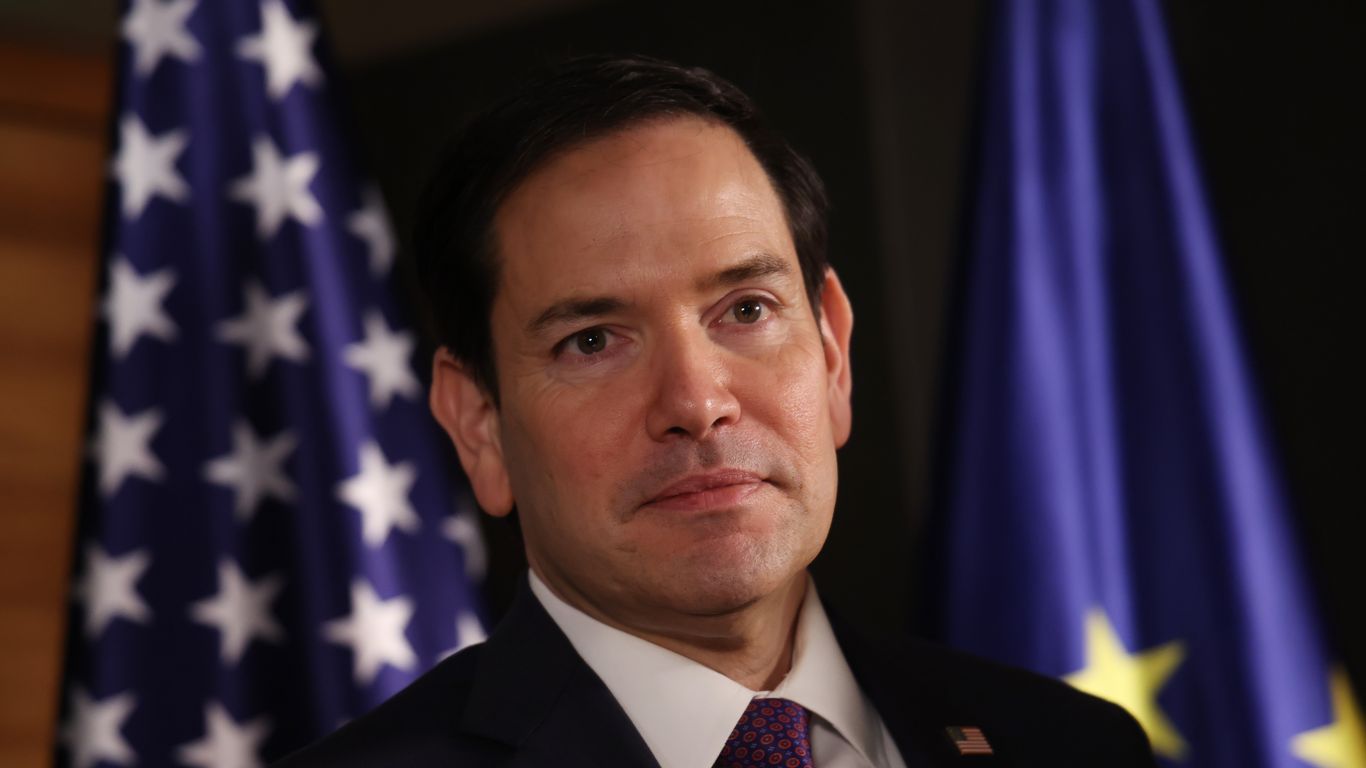
The Trump administration, led by President Trump and Secretary of State Rubio, is significantly restructuring the National Security Council (NSC), reducing its staff by roughly half and shifting power to the State and Defense departments. This move, framed as targeting Washington's "Deep State," aims to streamline decision-making and eliminate bureaucratic processes perceived as hindering the President's agenda. Rubio will remain acting national security advisor, and the administration believes the NSC will be better positioned to execute the President's will through direct orders rather than lengthy committee procedures.
The Trump administration is undertaking a significant restructuring of the National Security Council (NSC), reducing its staff by approximately half from its current 350 members and reallocating many of its powers to the State and Defense departments. This reorganization, characterized by a White House official as a move against Washington's "Deep State," is driven by President Trump and Secretary of State Marco Rubio, who will continue as acting national security adviser. The stated aim is to dismantle a perceived bureaucratic structure, filled with committees like the "sub-PCC," "PCC," "DCs," and "PC," which officials claim slow decision-making and hinder the execution of the President's agenda. The new NSC model will emphasize a top-down approach, focusing on policy coordination and advice rather than direct execution, shifting from what an official termed an unworkable "bottom-to-the-top approach." Administration officials assert this streamlined structure is viable due to the current cohesion among key cabinet members, citing the swift implementation of Trump's call to eliminate Syrian sanctions as an example of the desired "reverse workflow." This move aligns with Rubio's previous efforts to streamline the State Department and his long-held view that career staff can impede presidential directives, a perspective he shared with Trump concerning Cuba policy in 2017. While supporters of the traditional NSC system argue it fosters healthy debate, the administration believes the changes will enhance collaboration with agencies and ensure the NSC directly supports the President's vision.
AI-powered research, real-time alerts, and portfolio analytics for institutional investors.
Overall Sentiment
neutral
Sentiment Score
0.00
