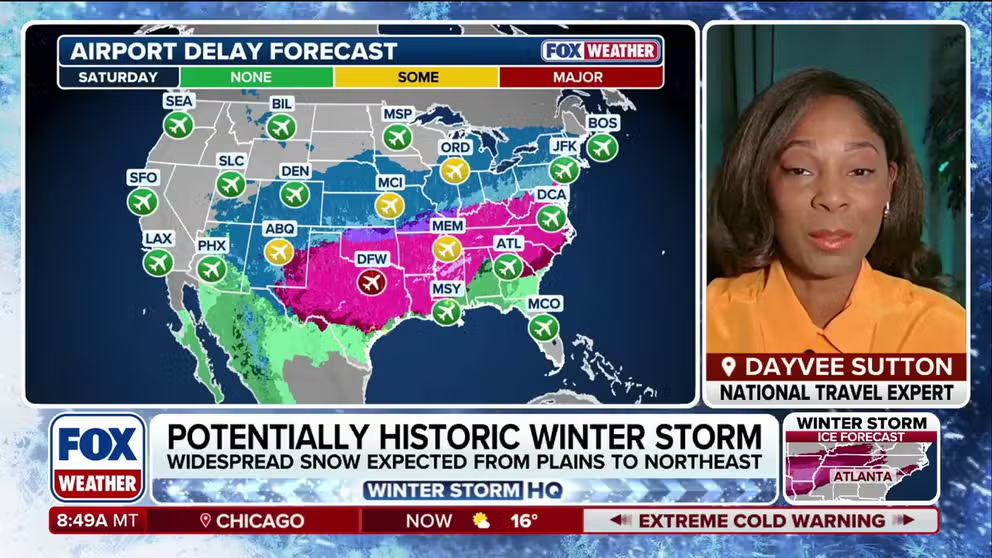
A sprawling winter storm impacting more than 40 states has forced nearly 1,300 flight cancellations through Saturday with thousands more expected into next week; American Airlines canceled 16% of its Saturday schedule and Delta preemptively canceled flights in five states. The system brings a major ice threat across a 15-state corridor with potential widespread power outages, heavy snow across the Mississippi/Ohio valleys and the I-95 corridor, prompting travel waivers from major carriers, rail and Amtrak service adjustments and state-of-emergency declarations—risks that could pressure airline operations, regional economic activity and utility/restoration costs.
Market structure: Immediate winners are short-duration energy suppliers (front-month Henry Hub nat gas) and municipal/utility contractors (road salt/deicing vendors) who see >1-week revenue bumps; losers are airlines (AAL, DAL) and ground-transport networks where cancellations reduce capacity ~1,000s of flights and raise operational costs. Large network carriers with deep liquidity and crew flexibility (DAL) hold relative pricing power versus more schedule-concentrated peers (AAL cited 16% cancel rate), creating a temporary shift in share vs. LCCs for 1–4 weeks.
Risk assessment: Tail risks include multi-day airport closures or widespread grid outages that extend cancellations beyond 7–10 days and materially hit quarterly revenue; regulatory scrutiny or required compensation could follow if outages exceed 72 hours. Immediate (0–7d) operational pain is near-certain; short-term (2–8 weeks) recovery depends on crew repositioning and rebooking rates; long-term (quarters) impacts are muted unless infrastructure damage or regulatory cost increases >$100m per major carrier.
Trade implications: Direct trade: buy short-dated protection on AAL (2-week put spread) and a relative-long on DAL vs AAL for 2–6 week horizon; play nat gas front-month call spread for a 1–3 week heating-demand pop. Market micro: airline IV will spike—sell premium selectively after volatility crest; rotate into utilities/maintenance contractors for 4–12 week defensive exposure.
Contrarian angles: Consensus focuses on cancellations; it underestimates rebooking and ancillary fee capture which historically recovers ~70–90% of lost ticket revenue within 2–4 weeks, creating bounce candidates post-IV collapse. The sell-off can be overdone intraday—consider buying AAL on >8% gap down with IV normalized; beware short squeezes if retail flows cluster into beaten-down names.
AI-powered research, real-time alerts, and portfolio analytics for institutional investors.
Request DemoOverall Sentiment
moderately negative
Sentiment Score
-0.40
Ticker Sentiment
