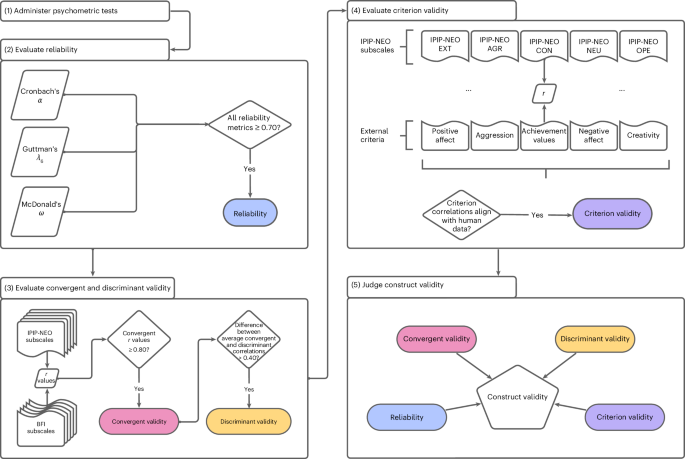
Researchers evaluated 18 large language models using a psychometric protocol (IPIP-NEO and BFI) and found that larger, instruction-fine-tuned models—notably Flan-PaLM 540B and GPT-4o—produce the most reliable and valid synthetic personality measurements (convergent correlations up to ~0.90). They demonstrate a zero-shot personality-shaping method using 104 trait adjectives across nine intensity levels (single-trait shaping produced average Spearman ρ ≥ 0.80 in 11 models; Flan-PaLM 540B achieved an average distribution shift Δ ≈ 3.67), and show shaped personality measurably affects downstream text outputs. Implications center on AI alignment, governance and misuse risk rather than direct market-moving financial metrics, though regulatory and product-governance consequences could influence firms operating with or deploying LLM-based agents.
Market structure: The paper implies clear winners—large, instruction-fine-tuned model owners (Alphabet/GOOGL, GOOG) and cloud/AI-infrastructure providers—who gain differentiated product features (personalized assistants) that can command enterprise pricing premiums (potential +10–25% ARPU uplift over 12–24 months if monetized). Losers include ad-dependent publishers and smaller base-model vendors lacking instruction tuning who face faster commoditization and potential ad revenue cannibalization. Expect higher demand for GPUs/energy (upward pressure on datacenter capex) and elevated implied volatility in large-cap AI equities; modest compression in tech IG spreads if revenue outlook improves.
Risk assessment: Tail risks include regulatory intervention (content/persuasion rules, fines) or reputational shocks from misuse—each could knock 20–40% off forward multiples for implicated platforms over 3–12 months. Short-term (days–weeks) volatility driven by product announcements or policy memos; medium-term (3–12 months) driven by monetization proof points and audits; long-term (1–3 years) depends on enterprise adoption and regulation. Hidden dependencies: quality of instruction-tuning datasets, third-party safety audits, and chip supply concentration create concentrated single points of failure.
Trade implications: Tactical conviction favors overweight Alphabet (GOOGL) into the next 90-day product/corporate catalysts while hedging regulatory risk. Implement size-constrained directional exposure (2–3% portfolio long GOOGL) with asymmetric option overlays (buy 3–6 month call spreads sized 0.5–1% portfolio; buy 12-month 10% OTM puts sized 0.5% as insurance). Rotate 5–10% away from small-cap digital media (e.g., NYT relative exposure) into AI infrastructure/large-cap platforms.
Contrarian angle: Consensus underestimates speed of monetization from personalized agents—revenue ramp could be front-loaded if advertisers and enterprises accept agent-driven conversions (scenario: +15% digital ad yield within 12 months). Conversely, market may be underpricing regulatory tail risk and detection/ethics headaches that could force de-monetization or stricter consent regimes. History (mobile ad personalization) shows fast adoption after UX gains, but also rapid regulatory responses; position sizing should reflect both asymmetric upside and ~10–15% shock risk.
AI-powered research, real-time alerts, and portfolio analytics for institutional investors.
Request DemoOverall Sentiment
mildly positive
Sentiment Score
0.12
Ticker Sentiment
