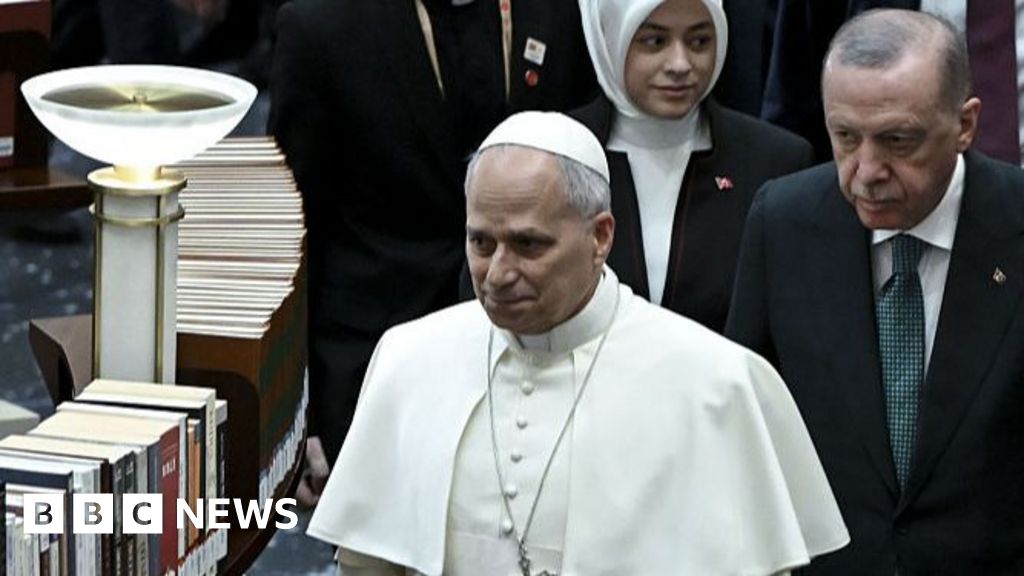
Pope Leo XIV launched his first foreign trip in Turkey, warning that increasing global conflicts risk the future of humanity and urging President Recep Tayyip Erdogan to act as a source of stability; he will mark the 1,700th anniversary of the Council of Nicaea in Iznik, visit the Blue Mosque, then travel to Lebanon to meet faith leaders, engage youth and celebrate Mass at the Beirut waterfront site of the 2020 port explosion (over 200 killed, ~7,000 injured). The visit is a high-profile diplomatic effort aimed at promoting dialogue and healing divisions—comments and symbolic gestures could modestly shift regional risk perceptions and investor sentiment in Turkey and Lebanon, but are unlikely to be a major driver of global markets in the near term.
Market structure: Short-term winners are defense contractors (pricing power if regional risk premium rises), gold/miners (safe-haven flows) and oil exporters if strikes risk supply; losers are Lebanon/Turkey sovereign credit, local banks, tourism/airlines and EM high-yield debt. Expect a 2–7% knee-jerk bid in Brent and a 3–8% rise in benchmark defense stocks on a clear escalation, while TRY and Lebanese pound proxies should weaken 5–15% on renewed risk aversion.
Risk assessment: Tail risks include a localized Lebanon–Israel escalation or a wider regional conflagration (low prob. but high impact) that could spike oil >10% and widen EMB spreads by 150–300bp within weeks. Immediate (days): FX/credit volatility; short-term (weeks–months): sovereign defaults, refugee pressures and aid/reconstruction flows; long-term: re‑rated defense budgets and infrastructure rebuild opportunities over 12–36 months. Hidden dependencies: diaspora remittances and EU/Turkey diplomatic outcomes that can flip capital flows quickly.
Trade implications: Tactical plays should be size-constrained and event-driven: preferred instruments are 3–12 month options and relative-value pairs to limit tail losses. Expect elevated IV for EM credit and short-dated oil/drone-risk hedges; favor GLD and liquid defense names over illiquid EM credit. Rebalance from EMB-sized positions into IG duration if spreads widen >75bp.
Contrarian angles: Markets may underprice a short-term calming effect from high-profile diplomacy (Pope + Erdogan) — a failed immediate escalation could leave defense equities rich and VIX mean-reverting. Conversely, Turkish assets are often oversold on headlines; consider a small, hedged mean-reversion play (6–12 months) if USD/TRY moves less than 7% in 10 trading days, otherwise avoid exposure.
AI-powered research, real-time alerts, and portfolio analytics for institutional investors.
Request DemoOverall Sentiment
moderately negative
Sentiment Score
-0.25
