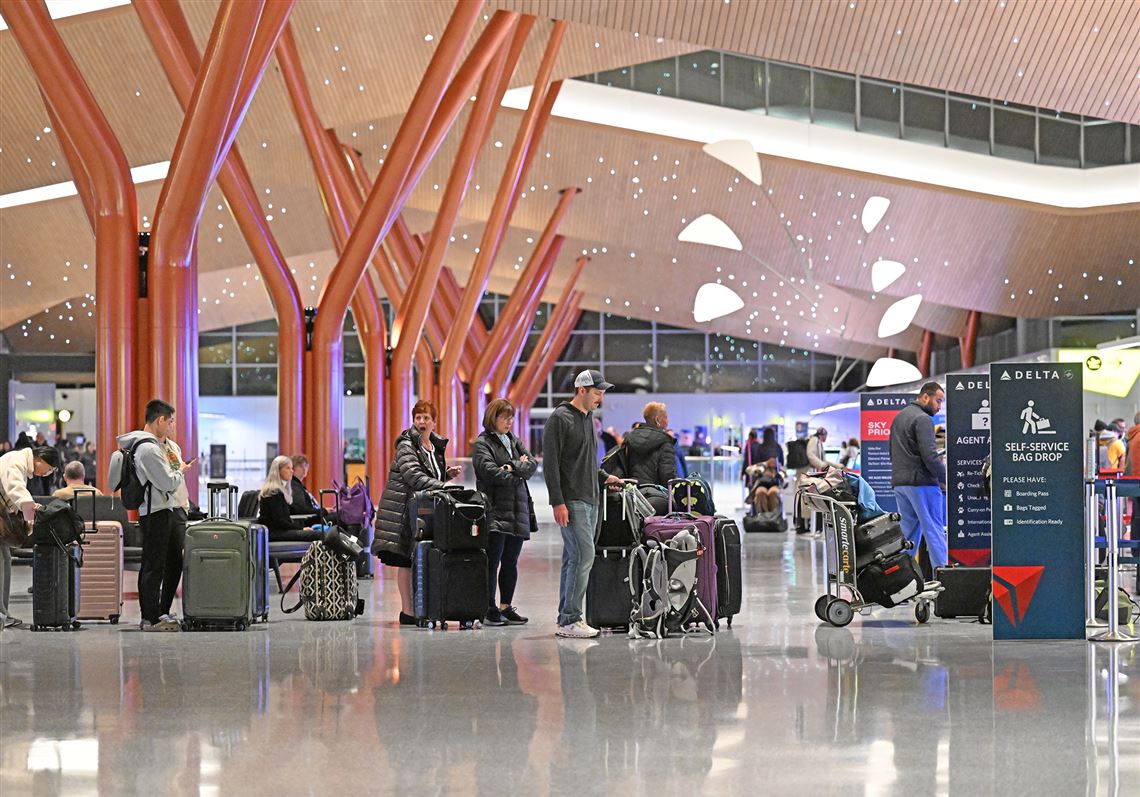
Pittsburgh International opened its new 811,000-square-foot, $1.7 billion terminal overnight, completing a planned migration that processed roughly 20,000 passengers and 85 flights by midmorning with only minor operational issues; airport leadership described the transition as smooth. The facility consolidates security into a single TSA checkpoint with 12 mostly automated lanes and credential-authentication machines (peak wait ~20 minutes), introduces an 8,000-space consolidated parking lot served by eight shuttle buses plus on-site parking, and is expected to materially improve throughput and passenger experience after last summer’s congestion. Management will collect real-time passenger feedback to tweak operations and has invited representatives from eight U.S. airports to study the execution, positioning the project as a potential model for other large airport capital programs.
Pittsburgh International officially opened its new 811,000-square-foot terminal after a multi-year modernization, with airport officials reporting a smooth overnight migration that processed roughly 20,000 passengers and 85 flights by 11:30 a.m.; the project cost cited is $1.7 billion and construction began in October 2021 following a planning phase that started in September 2017. Airport CEO Christina Cassotis characterized the switch as largely problem-free, though staff noted isolated issues such as rental-car returns; leadership invited representatives from eight U.S. airports to observe the transition, signaling confidence in the program’s execution.
Operational changes include a single TSA checkpoint with 12 mostly automated lanes and credential-authentication technology (peak reported wait ~20 minutes), an 8,000-space consolidated parking lot served by eight 35-passenger shuttles (≈10-minute ride) and closer terminal parking options (5–10 minute walk). These features directly address last summer’s congestion and were credited by TSA and airport management with materially faster throughput and a better passenger experience.
Near-term implications are improved operational resilience and a potential reduction in delay-related costs for carriers operating at PIT (article references United and JetBlue flights), while management’s plan to survey passengers and “tweak in real time” highlights the need to monitor early performance metrics. Residual execution risks remain limited but tangible (logistics such as rental-car transitions), so the business case for the terminal as a model for other capital programs rests on sustained operational data rather than opening-day anecdotes.
AI-powered research, real-time alerts, and portfolio analytics for institutional investors.
Request DemoOverall Sentiment
mildly positive
Sentiment Score
0.30
Ticker Sentiment
