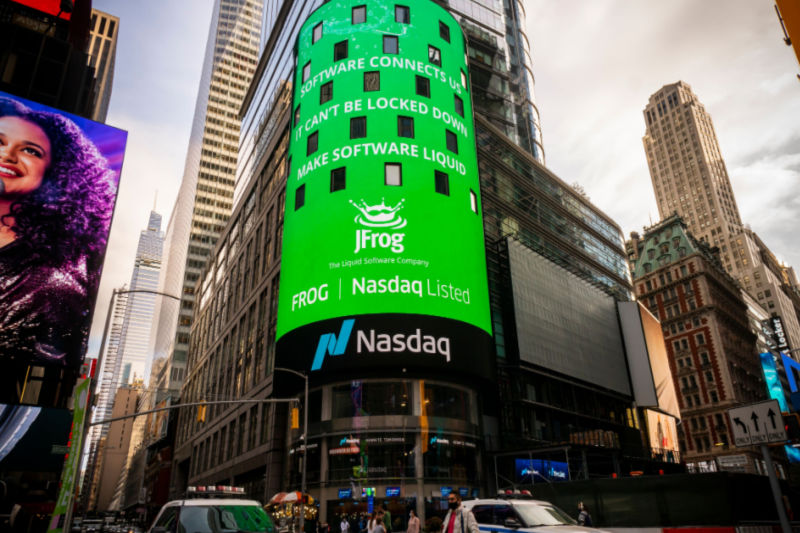
JFrog announced a $300M share buyback (~6% of market cap) amid bullish analyst activity (Guggenheim initiated Buy $60, TD Cowen reiterated Buy $80, UBS upgraded to Buy $60; price targets $52–$80). The firm reported strong fundamentals cited by analysts: 24% revenue growth, 77% gross profit margins and 45% cloud growth, and launched an Agent Skills Registry with NVIDIA to bolster AI governance. Offsetting risk: a TeamPCP supply‑chain attack compromised litellm PyPI packages (1.82.7/1.82.8) for roughly three hours, but JFrog quickly published analysis and updated Xray/Curation detections, appearing to contain the impact.
This incident accelerates structural demand for CI/CD-native security controls that operate at package ingestion and runtime — not just static SBOMs. Vendors that can instrument pipelines and block malicious artifacts in real time gain outsized leverage because detection rules become a productized moat: once adopted at scale they raise switching costs and create high marginal renewal revenue through policy and telemetry add-ons.
JFrog's recent visibility and rapid signature push should translate into a near-term commercial sales cadence (closed-won proof-of-concept to paid conversion) that rivals typical enterprise security cycles, shortening payback to quarters rather than years if technical integration is smooth. However, the same dynamic creates a battleground: large platform owners (Git hosters, cloud registries) can internalize prevention features, compressing third-party vendor gross retention unless those vendors own unique telemetry or integrate deeply with AI agent governance stacks.
Key tail risks are commoditization of detection (platform embeds) and the emergence of attacker techniques that evade signature-based blocking by weaponizing build-time secrets or model-serving endpoints — both would shift ROI from ecosystem prevention to incident-response and observability spend. Over 12–36 months, winners will be those pairing pipeline prevention with agent governance (policy + runtime attestation) and clear data-leveraged pricing; in the near-term (days–weeks), expect headline-driven re-rates and opportunistic flows into names tied to AI infra and endpoint security demand.
AI-powered research, real-time alerts, and portfolio analytics for institutional investors.
Overall Sentiment
moderately positive
Sentiment Score
0.45
Ticker Sentiment
