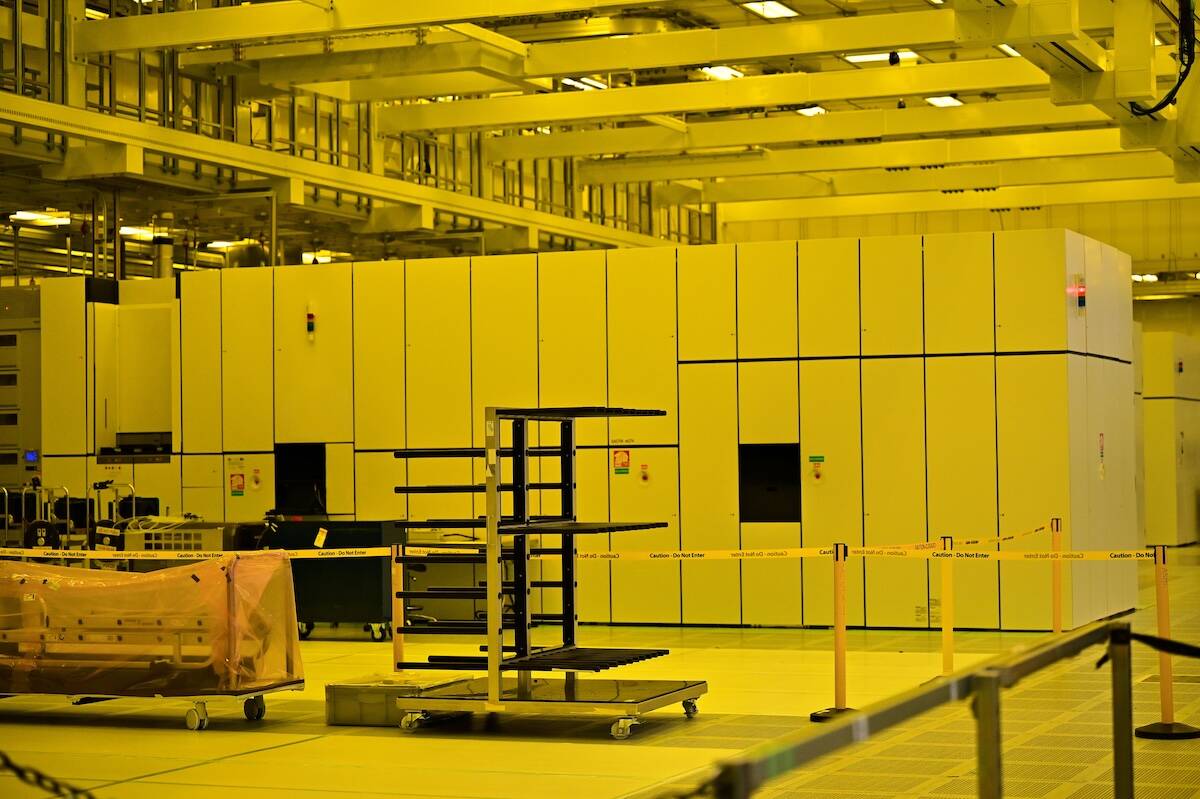
Intel has initiated mass production of its advanced 18A process node at Fab52 in Arizona, a pivotal move in its strategy to re-establish technological leadership and become a major contract semiconductor manufacturer. This 2nm-class technology integrates Gate-All-Around (GAA) transistors (RibbonFET) and backside power delivery (PowerVIA), which Intel asserts will yield substantial performance-per-watt gains and increased chip density, potentially giving it an edge over competitors like TSMC in certain advanced features. The first chips utilizing 18A, including Panther Lake and Clearwater Forest Xeons, are expected in early 2025, with the success of this foundry initiative, particularly in securing external customers, being crucial for Intel's long-term market position and its strategic importance, as highlighted by recent government support.
Intel has commenced mass production of its 18A process node at Fab52 in Arizona, marking a significant step in its strategy to regain process leadership and establish itself as a contract semiconductor manufacturer. This 2nm-class technology incorporates Gate-All-Around (GAA) transistors (RibbonFET) and backside power delivery (PowerVIA), which Intel claims boosts performance per watt by 15% over Intel 3 and increases chip density by 30%. The first 18A-based chips, Panther Lake and Clearwater Forest Xeons, are slated for release in early 2025.
The adoption of backside power delivery in 18A positions Intel ahead of TSMC, which is not expected to integrate this technology until its A16 process late next year. While Intel previously outsourced much of its client computing lineup to TSMC, the success of 18A is crucial for clawing back market share and attracting external foundry customers. The company's long-term foundry ambition hinges on 14A, expected in 2027, with interim variants 18A-P and 18A-PT offering further performance enhancements.
Despite the technological advancements, Intel's foundry business faces the critical challenge of securing external customers for 18A and future nodes, a concern highlighted by CEO Lip Bu Tan regarding 14A. However, the U.S. government's recent designation of Intel Foundry as a key national security asset, carving out a 10% stake, underscores the strategic importance of domestic chip manufacturing and may provide a competitive advantage in attracting clients. This government support could mitigate some of the commercial risks associated with Intel's ambitious foundry expansion.
AI-powered research, real-time alerts, and portfolio analytics for institutional investors.
Request DemoOverall Sentiment
moderately positive
Sentiment Score
0.50
Ticker Sentiment
