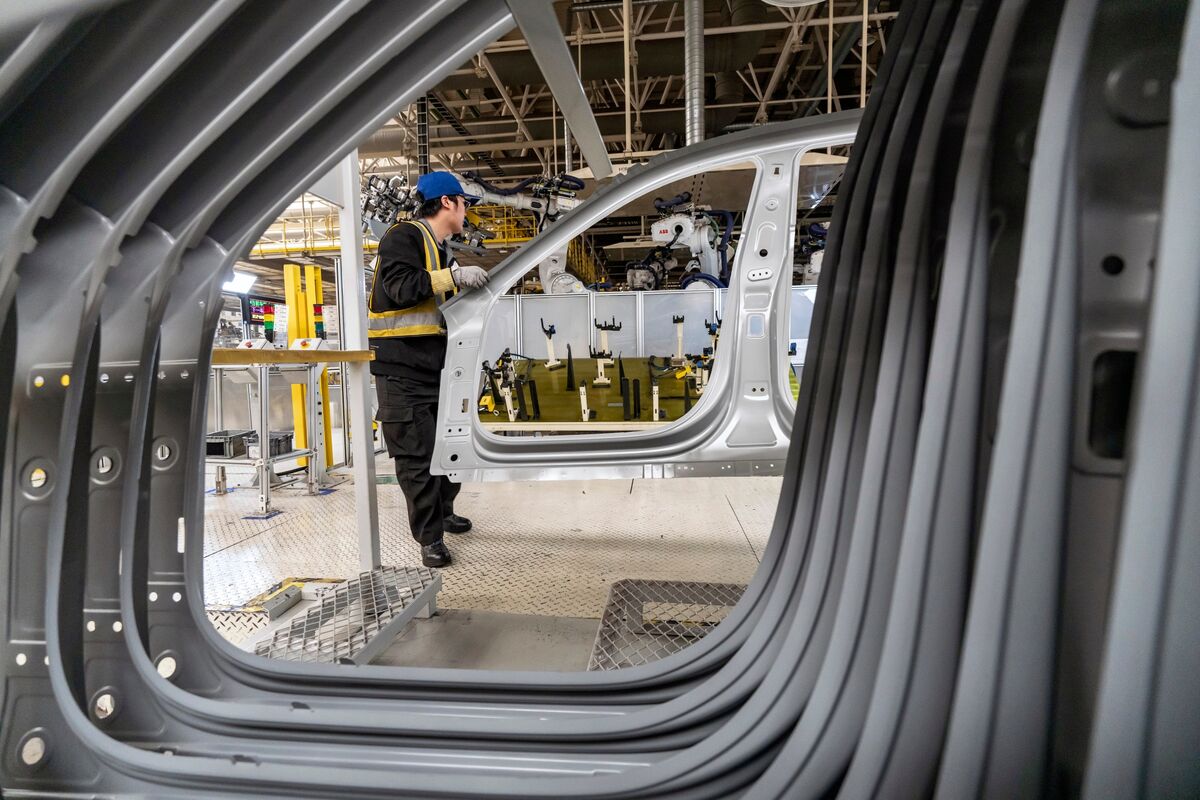
China's factory activity contracted at a slower pace in May, with the official manufacturing PMI rising to 49.5 from 49 in April, matching economists' expectations. The improvement follows a truce in the trade war with the U.S. that eased trade flows, though weak domestic demand continues to be a drag on the Chinese economy.
China's manufacturing sector exhibited a marginal slowdown in its rate of contraction during May, with the official Purchasing Managers' Index (PMI) registering 49.5, an increase from April's 49.0 figure. This modest improvement, which aligned with median economist expectations, is attributed to a temporary easing in U.S.-China trade tensions that facilitated smoother trade flows. Despite this uptick, the PMI remains below the 50-point threshold, signifying persistent contractionary conditions within the factory sector. A key concern highlighted is the ongoing weakness in domestic demand, which continues to exert downward pressure on the Chinese economy, suggesting that the observed PMI improvement may be fragile and contingent on external trade dynamics rather than a broad-based domestic recovery. The overall data suggests continued headwinds for China's industrial economy, even with the slight positive movement in the headline PMI.
AI-powered research, real-time alerts, and portfolio analytics for institutional investors.
Request DemoOverall Sentiment
mixed
Sentiment Score
0.10
