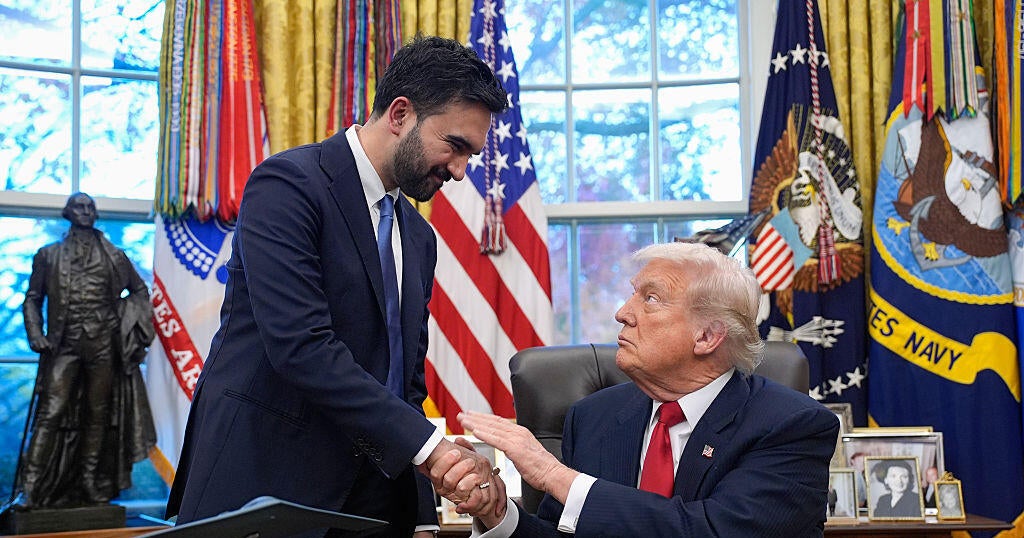
Mayor-elect Zohran Mamdani met with President Trump in the Oval Office and described the discussion as productive, centering on New York City's affordability crisis with talks covering housing, public transit, child care, federal infrastructure funding, immigration enforcement protocols and security clearances. Both signaled willingness to cooperate—Mamdani reaffirmed his stance on past rhetoric and noted retaining NYPD Commissioner Jessica Tisch—actions that are politically significant for municipal governance and budgets but unlikely to produce immediate, material market moves beyond potential longer-term impacts on municipal spending, local real estate and public service costs.
Market structure: Expect bifurcation — public infrastructure and construction services (beneficiaries: Jacobs Solutions J, AECOM ACM, Caterpillar CAT) gain optionality if federal dollars flow; Manhattan office/retail landlords (Vornado VNO, SL Green SLG) remain structurally weak as policy focus shifts to housing affordability not office support. Pricing power shifts toward contractors and affordable-housing developers; supply signals point to increased muni issuance and targeted construction demand, but near‑term rent relief programs could depress multifamily revenue by 3–8% in affected submarkets.
Risk assessment: Low-probability/high-impact tails include (A) a large federal appropriation that is conditional and triggers >$5bn NYC muni issuance within 12 months (prob ~15%, negative for muni prices), and (B) policy reversal or social unrest that forces emergency spending (prob ~10%, acute market volatility). Immediate window (days) will trade on headlines, short‑term (weeks–months) on budget language and appropriation votes, long term (12–36 months) on credit rating and capex realization. Hidden dependency: state-level budget constraints and debt service costs (if Treasury yields rise >75bp vs today) could negate federal support.
Trade implications: Implement asymmetric exposure — overweight Industrials/Construction and underweight Office REITs. Use J and CAT as primary longs via equity and 6‑month call spreads (buy ATM, sell +15% OTM) to cap cost; short VNO/SLG via equity or buy 6‑month 10% OTM puts to express secular office downside. Small tactical overweight to NYC muni duration (iShares MUB) only after visible spread compression (>10bp) following appropriation language; maintain tight stops (8–10%).
Contrarian angles: Consensus downplays issuance risk — if cooperation becomes a path to larger deficits, muni spreads widen and office weakness compounds, creating an opportunity to short NY-centric high‑yield muni exposure or HYD-like ETFs. Historical parallel: post-crisis municipal funding episodes saw 6–12 month lag between pledge and credit impact; a well‑timed short into that lag could capture 5–15% repricing. Watch for the mayor’s budget in 60–90 days and any federal appropriation vote as inflection points.
AI-powered research, real-time alerts, and portfolio analytics for institutional investors.
Request DemoOverall Sentiment
neutral
Sentiment Score
0.00
