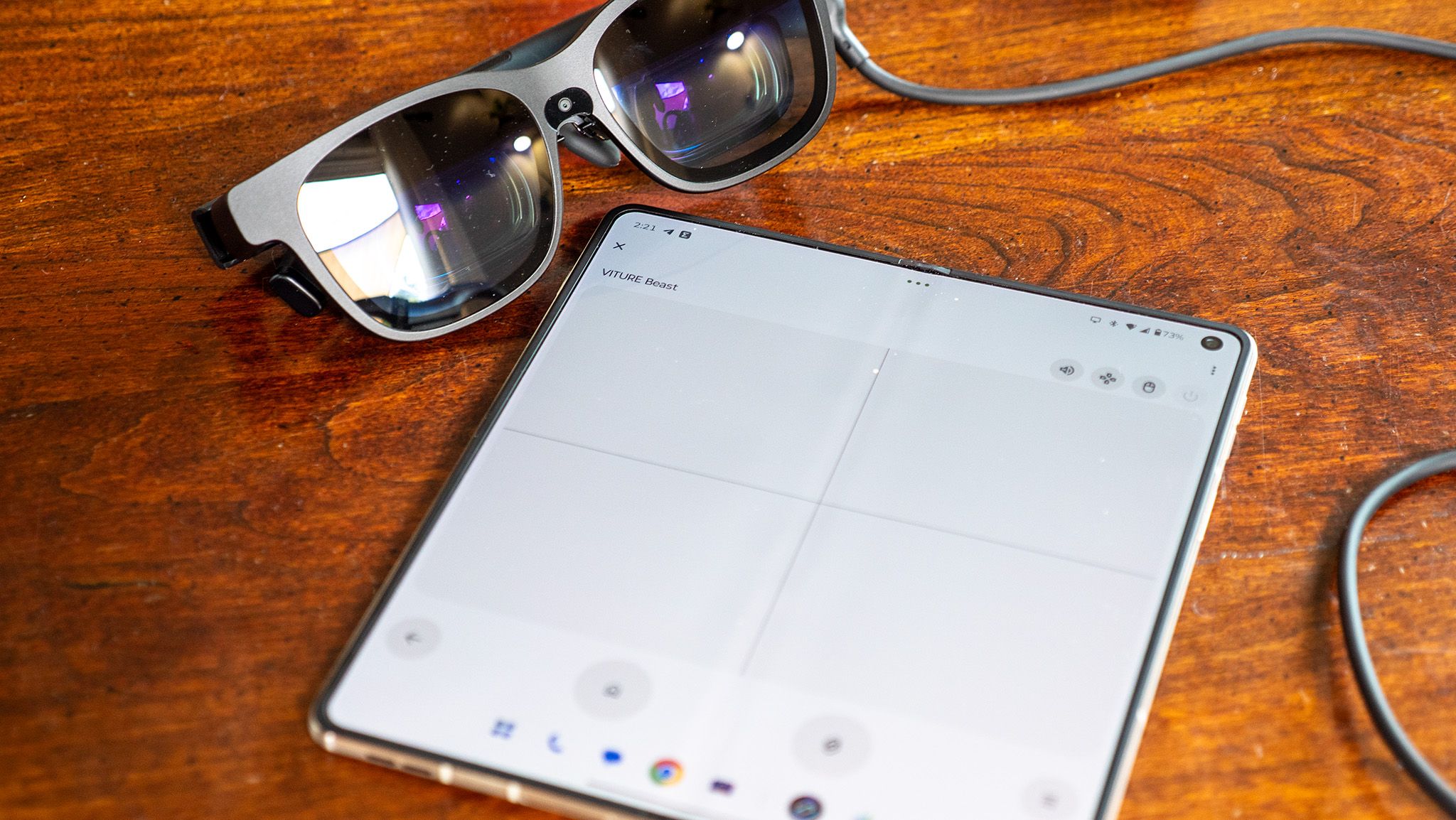
Motorola’s Smart Connect software and Razr Fold 2026 integration with smart glasses turn the phone into a laptop-like desktop environment, with desktop, TV, video call, and gaming modes accessible through the glasses. The article highlights Viture Beast and Xreal 1S glasses as lower-cost, more portable XR alternatives to bulkier headsets like Apple Vision Pro and Samsung Galaxy XR. The piece is broadly positive on the productivity and travel-use-case potential, but it is product commentary rather than a market-moving earnings or guidance event.
This is less a handset story than a distribution-channel shift: the phone is becoming the compute node and the glasses the display layer. That matters because it collapses demand for standalone XR headsets at the low end and shifts value toward accessory ecosystems, software orchestration, and peripherals that make “phone-as-PC” usable for more than 10 minutes at a time. The second-order winner is whoever owns the coordination layer across devices; the loser is any hardware vendor betting on a self-contained headset experience before battery, weight, and price become good enough for mainstream use. For Logitech, the near-term read-through is incremental but real: if portable productivity gains traction, the attach rate for compact keyboards and pointer devices rises faster than smartphone unit growth. The bigger opportunity is not unit replacement of laptops, but a modest elongation of accessory replacement cycles as consumers and travelers buy a “mobile desk kit” once and reuse it across devices for years. That creates a higher-quality demand stream than pure commoditized input peripherals, especially if software workflows keep making external input feel mandatory rather than optional. The catalyst path is multi-quarter, not days: adoption will be gated by user experience friction, app compatibility, and whether OEMs other than Motorola replicate the mode-switching UX. If this remains a niche travel/productivity use case, the stock impact stays contained; if it becomes a default behavior for premium phones, it pressures budget laptop demand and raises the importance of accessory bundles. A key risk is that early enthusiasm overstates TAM because the feature works best for a very specific, high-intent user segment. The contrarian view is that markets may be underpricing software lock-in versus hardware novelty. The real moat is not the glasses themselves but the ability to make the phone feel like a desktop with zero setup; that favors platform owners and ecosystem integrators more than display OEMs. If that thesis gains traction, the trade is to own the enabling layer, not the flashy endpoint.
AI-powered research, real-time alerts, and portfolio analytics for institutional investors.
Request DemoOverall Sentiment
mildly positive
Sentiment Score
0.25
Ticker Sentiment
