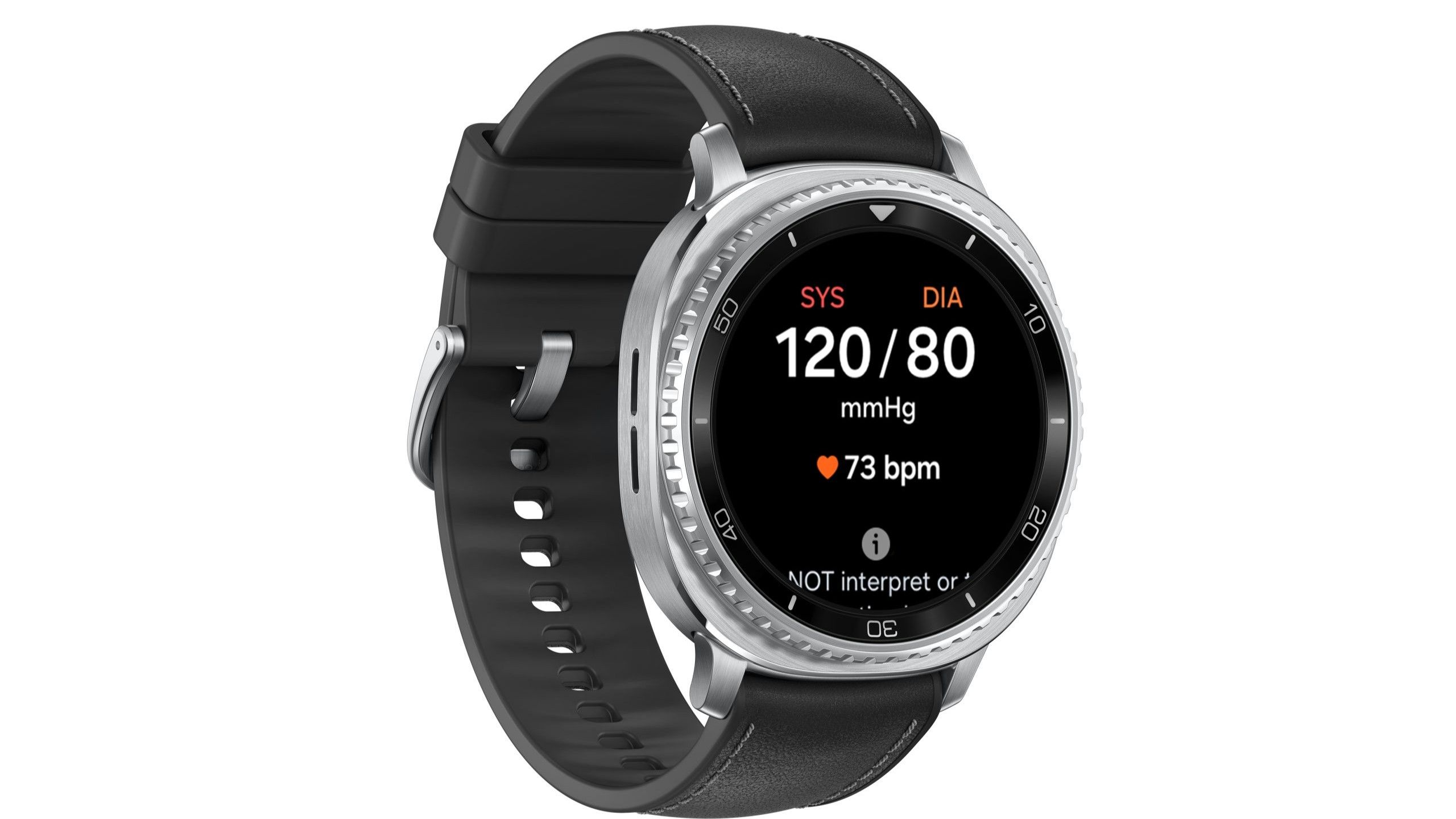
Samsung began a phased US rollout on March 31 of FDA-cleared blood pressure monitoring for Galaxy Watches (Watch 4 through Watch 8 and select 2025 models). The feature requires an upper-arm cuff for calibration every 28 days and stores readings in Samsung Health; it is marketed as a screening/monitoring tool, not a diagnostic substitute. Expect modest product differentiation and potential incremental engagement/monetization benefits for Samsung's wearable ecosystem, but limited near-term impact on the company's stock or broader market.
This rollout converts a one-time product feature into a recurring commercialization vector: the 28-day calibration requirement creates a structural aftermarket for cuffs, verification services, and potential subscription nudges that are easy to price and hard to unbundle. If even a low-single-digit share of existing Galaxy watch users adopt paid calibration accessories or validation services, this becomes a multi-hundred-million dollar incremental channel within 12 months and a recurring engagement stream for Samsung’s Health ecosystem over several years.
Second-order winners are the medtech suppliers and software integrators that sit between sensor hardware and clinical workflows: MEMS/analog IC vendors, FDA-experienced wearable software providers, and telehealth platforms that can ingest validated home BP streams. Conversely, incumbent cuff-only players face bifurcation — partner and co-sell opportunities vs. margin erosion if Samsung bundles calibration support and drives direct-to-consumer pricing pressure.
Key risks are regulatory and behavioral friction. FDA clearance narrows competition but invites stricter post-market surveillance and liability exposure; calibration every 28 days is a real adoption hurdle that will cap clinical utility to engaged users. True reimbursement-driven clinical adoption (RPM billing and EHR integrations) is a 12–36 month play; absent payor acceptance the data will live mainly in consumer health silos.
For portfolio timing, expect near-term hardware/accessory sales and partner M&A chatter within 3–12 months, while durable monetization through reimbursement, enterprise partnerships, and valuation rerating of suppliers is a 12–36 month outcome. Watch metrics: accessory attach rate, calibration compliance over 90/180 days, number of payor pilots, and any FDA post-market directives — each is a binary catalyst that will reprice winners and losers quickly.
AI-powered research, real-time alerts, and portfolio analytics for institutional investors.
Request DemoOverall Sentiment
mildly positive
Sentiment Score
0.25
