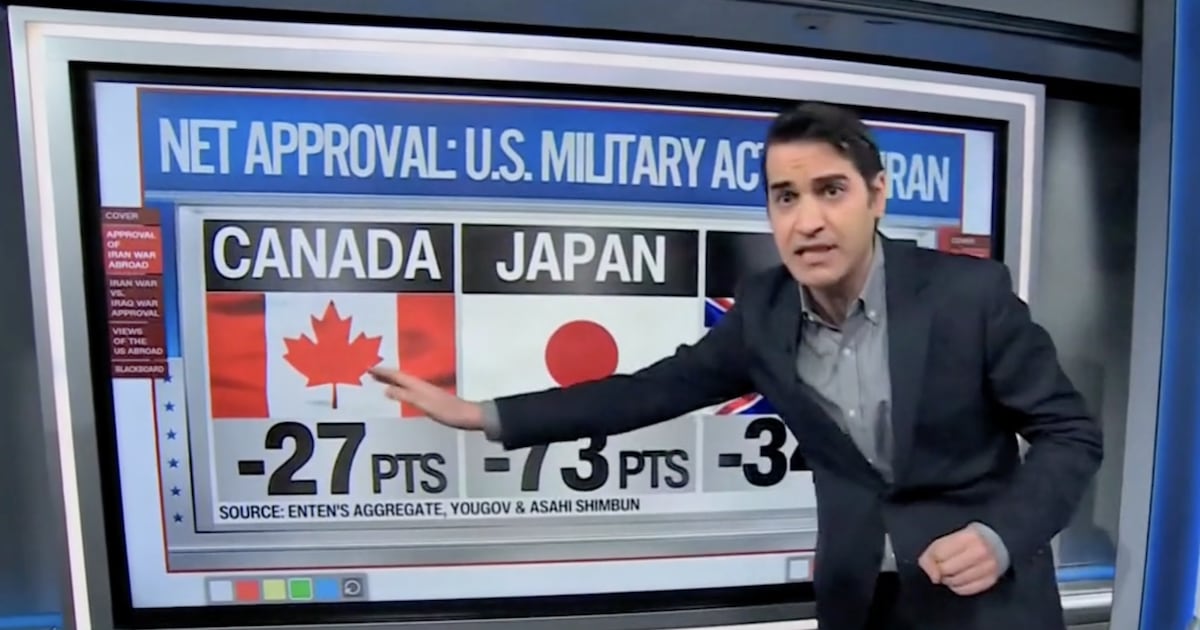
Net approval ratings for the U.S. war in Iran are deeply negative overseas (net approval: Canada -27, Japan -73, U.K. -34) after President Trump ordered coordinated strikes with Israel on Feb. 28. Allies have refused to help secure the Strait of Hormuz, where Iranian attacks have halted oil shipments, raising the risk of a material oil-price shock and broader market volatility. The resignation of NCTC director Joe Kent, who claimed there was no imminent Iranian threat, adds political and intelligence uncertainty that could prolong risk-off positioning.
A rapid deterioration in allied support changes the operational calculus more than headline volatility suggests. Reduced willingness to host or escort U.S. logistics forces forces longer supply lines, a larger private logistics footprint, and heavier reliance on naval and airlift assets — mechanically raising surge deployment costs by a non-trivial percentage and extending replenishment timelines by weeks to months. Procurement demand for missiles, ISR, munitions, and resilient communications becomes stickier: program ramps that would normally take 18–36 months can accelerate into multi-year multi-billion-dollar backlogs for a concentrated set of primes. Energy markets will price a persistent "chokepoint premium" rather than a one-off spike if allied cooperation remains impaired. Shipping reroutes and insurance shocks can lift freight and refinery input costs for multiple quarters; a 5–15% structural premium on benchmark crude is plausible if transit friction persists and insurance rates reset much higher. That premium disproportionately helps low-decline, high-margin producers with spare capacity and quick cash conversion, while refiners and energy-intensive industrials face margin compression and inventory revaluation risk. Financial flows will be bifurcated short-term and durable medium-term: immediate risk-off buys duration and gold, but fiscal and procurement responses (defense capex + energy security measures) will drive cyclical winners over 6–36 months. Key reversal catalysts are credible multilateral burden-sharing, a visible diplomatic de-escalation path, or coordinated commodity releases that remove the premium; absent those, markets will price a longer-term risk premium into insurance, freight, and defense procurement. Watch political calendars as amplifiers — electoral cycles that reward unilateralism or hawkish staffing moves materially bias the path higher for defense and energy premia. Positioning should reflect asymmetric payoffs: buy concentrated exposure to durable defense revenue and optionality on oil volatility while hedging for a fast diplomatic unwind. Liquidity and supply-chain concentration are second-order watchpoints — suppliers of specialized semiconductors, precision steel, and aircraft components become single-point-of-failure risks to program delivery and are potential catalysts for idiosyncratic alpha or drawdowns.
AI-powered research, real-time alerts, and portfolio analytics for institutional investors.
Request DemoOverall Sentiment
strongly negative
Sentiment Score
-0.70
