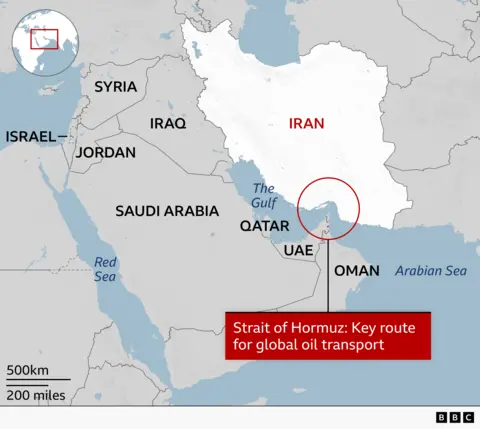
UAE officials said Fujairah’s key oil port was hit by a drone attack from Iran, while three missiles were intercepted and a fourth fell into the sea, injuring three Indian nationals. Brent crude jumped above $115 a barrel, up more than 5% on the day, as renewed attacks and Strait of Hormuz disruptions heightened concern over roughly 20% of global oil and LNG flows. The escalating conflict, vessel blockages, and reported attacks on ships and coastal targets across the UAE, Oman, and nearby waters point to a major market-wide geopolitical shock.
The market is pricing a classic supply shock, but the second-order effect is broader: once the choke point is perceived as unreliable, every barrel that needs Gulf transit gets a higher required return, even if physical flows are only partially disrupted. That widens the spread between “safe” energy exposure and assets tied to global trade velocity, with refiners, airlines, shipping, and high-beta industrial cyclicals likely to underperform before the headline damage to crude itself fully stabilizes. The more important near-term risk is not just price, but operability. If insurers, charterers, and port operators treat this as an open-ended force majeure regime, the effective throughput of regional crude and LNG can remain impaired for weeks even absent additional strikes, which would keep prompt energy prices bid and steepen the backwardation in crude curves. That favors producers with lower geopolitical beta and visible export routes, while punishing downstream users that cannot pass through input costs quickly. Consensus may be underestimating policy reflexes. A sustained spike in Brent tightens the odds of emergency diplomatic pressure and covert de-escalation attempts within days to a few weeks, but that does not eliminate the trade because market damage often persists after the first “ceasefire” headlines. The contrarian setup is that the immediate move in crude may be overextended relative to longer-dated contracts, creating a cleaner expression in volatility and relative value than in outright directional oil beta.
AI-powered research, real-time alerts, and portfolio analytics for institutional investors.
Overall Sentiment
strongly negative
Sentiment Score
-0.82
