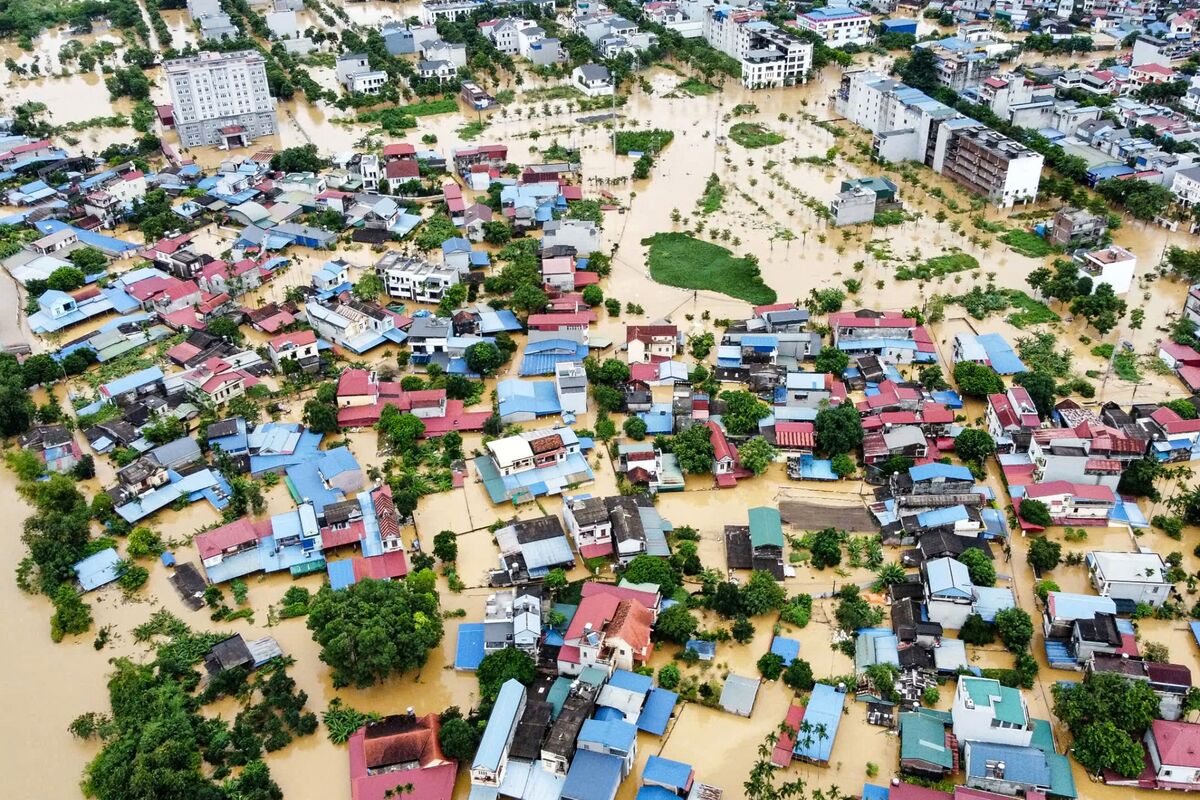
Vietnam has been hit by an extraordinary run of storms this year — including one that nearly set a global rainfall record — which have overwhelmed the country’s limited flood defenses and left widespread damage. The events underscore rising recovery costs and mounting adaptation needs that will pressure public finances, raise insurance and reconstruction spending, and create longer-term infrastructure investment requirements; these developments are likely to increase fiscal burdens and elevate climate-related tail risks for investors with exposure to Vietnam and regional supply chains.
Market structure: Worsening storms create clear winners (global reinsurers, engineering/construction contractors focused on coastal defenses, and green-infrastructure financiers) and losers (Vietnam coastal real-estate, small SME exporters, and underinsured domestic banks). Expect higher insurance/reinsurance pricing at the Jan 1 renewals (potentially +15-30% on catastrophe-exposed lines) and multi-year public capex demand for flood defenses that will bid up steel/cement and specialist engineering margins.
Risk assessment: Near-term (days–weeks) risks are operational—supply-chain disruption, commodity price spikes; short-term (3–12 months) are earnings hits for local insurers and tourism, and 12–36 months could include sovereign fiscal pressure and rating stress if reconstruction financing gaps exceed 2–3% of GDP. Tail risks include a multi-year El Niño-driven storm cycle, sovereign downgrade, or capital flight that could push USD/VND >3–5% weaker in 6–12 months, and politically-driven onshore capital controls.
Trade implications: Favor reinsurance/ILS exposure and global infrastructure suppliers while reducing direct Vietnam equity/country exposure; protect EM FX exposure and selectively buy EM sovereign debt yields above specified thresholds. Use volatility products around reinsurance renewals and buy-protective options on Vietnam exposures to manage asymmetric downside between now and next rainy season.
Contrarian angle: Consensus may permanently derate Vietnam equities, but selective developers/contractors with secured public contracts can see 20–40% backlog growth over 12–24 months; catastrophe-bond spreads and ILS capacity may be underpriced relative to increased loss frequency, offering idiosyncratic alpha if accessed directly rather than via crowded EM ETFs.
AI-powered research, real-time alerts, and portfolio analytics for institutional investors.
Request DemoOverall Sentiment
moderately negative
Sentiment Score
-0.45
