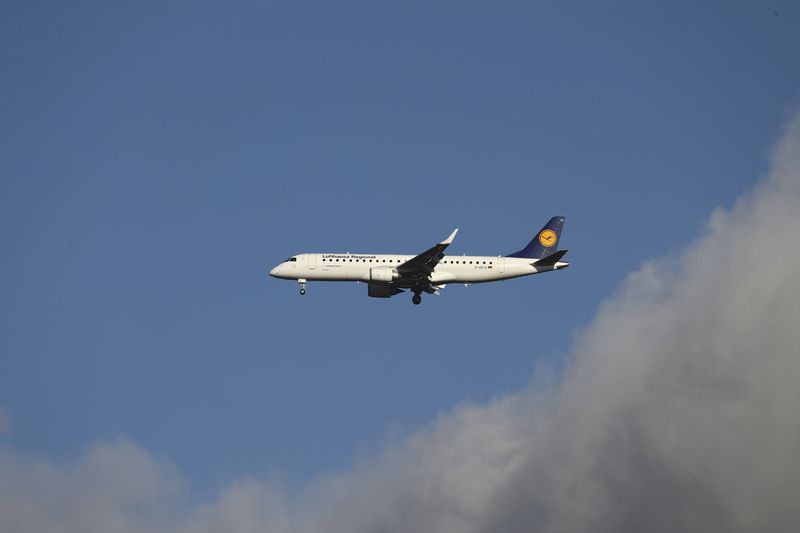
Morgan Stanley downgraded Deutsche Lufthansa from 'overweight' to 'equal-weight' and cut its 2026 EBITDA estimate for Lufthansa by ~17% (≈€800m), citing a €1.6bn fuel-cost impact as it raised jet-fuel assumptions. Shares fell ~3.8% intraday and are down ~9% YTD (vs ~16% for IAG and Air France‑KLM); the broker also trimmed sector EBITDA ~11% for flag carriers and ~16% for low-cost carriers, warning persistent jet-fuel deficits, weaker load factors (~-2% from 3Q26) and slower capacity growth (2.5% vs prior 4%) will pressure profitability despite projected yield increases (+7%/+11%/+11% in 2Q/3Q/4Q26).
Higher sustained jet-fuel real pricing is a structural shock to airline unit economics beyond the immediate ticket-price/capacity dial. Tight refined-product balances translate into a premium on jet cracks versus crude that accrues to refiners with middle‑distillate capability and to players that can flex yield toward jet/ULSD; conversely, carriers with poor hedging and high unit exposure to long‑haul flying will see margin erosion faster than headline capacity metrics suggest.
Second‑order effects will show up in corporate travel mix and yield elasticity: corporates and price‑sensitive leisure cohorts shift faster to yield bundles and off‑peak travel when headline fares rise, pulling forward a demand softening that compounds by late next year if fuel stays elevated. Supply‑side responses (refinery maintenance, capacity additions, or rapid seesawing of shipping lanes) are slow; therefore market participants should expect volatility spikes around geopolitical headlines but a multi‑quarter elevated crack premium unless macro demand slumps.
Key catalysts that would reverse the trend are identifiable and time‑bounded: a coordinated SPR release or large refinery restart within 30–90 days, or a clear diplomatic de‑escalation reducing risk premia in shipping; downside scenarios include a global economic slowdown that knocks corporate travel for 2–4 quarters. Tail risks to the upside are military disruption to Middle East exports or rapid secondary sanctions — both can lift cracks materially and quickly, compressing airline valuations and amplifying creditor/stress risks in weaker balance sheets.
AI-powered research, real-time alerts, and portfolio analytics for institutional investors.
Overall Sentiment
strongly negative
Sentiment Score
-0.60
Ticker Sentiment
