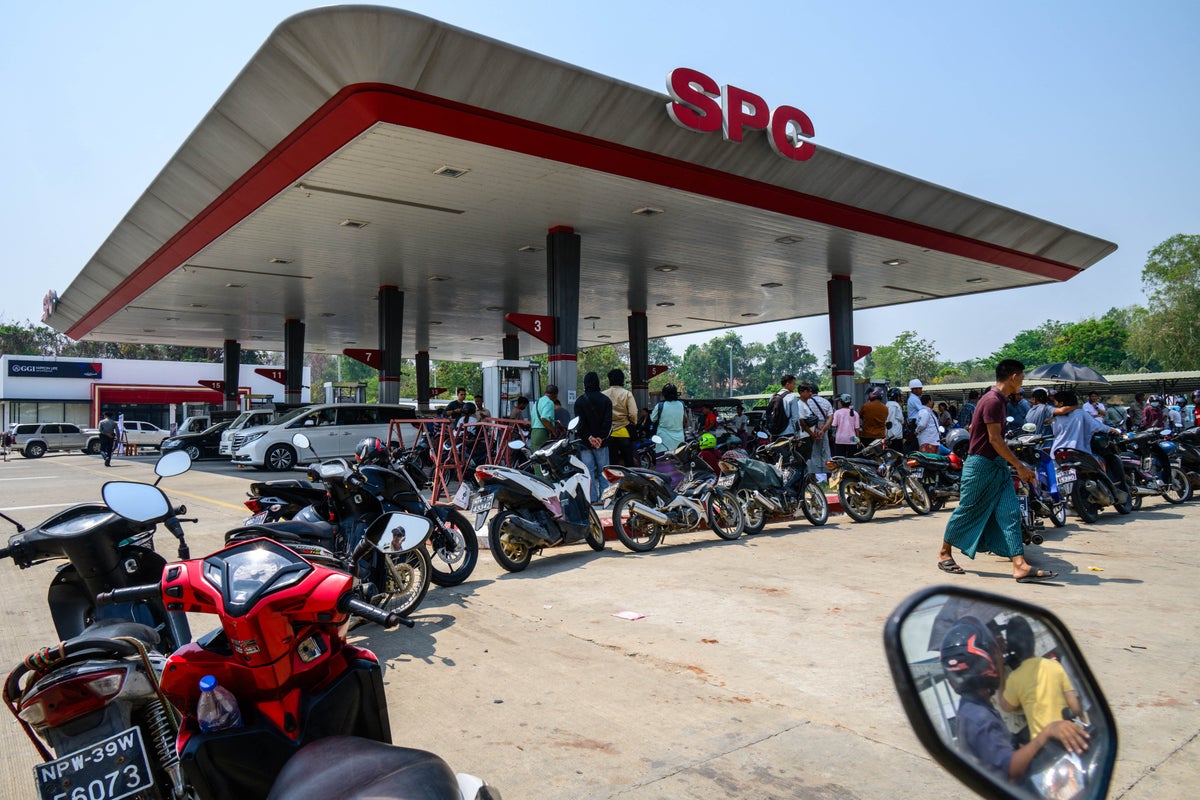
Oil surged to $117/barrel as Iran’s blockade of the Strait of Hormuz triggers global supply fears, prompting emergency measures worldwide including free public transport, four-day government workweeks, fuel rationing and energy curfews. Notable data points: UK diesel averaged 181.2p/litre, Myanmar diesel rose to 3,800 kyat/litre (from 2,450 kyat), governments ordered up to 20% cuts in public-sector energy use, and Bangladesh is seeking roughly $2.5bn in external financing to cover fuel and LNG imports. Expect elevated commodity-driven inflation, supply-chain disruptions and sovereign funding stress to pressure markets and policy makers.
The near-term shock to sea-lift through the Strait of Hormuz is amplifying frictions beyond crude barrels — longer voyage times and higher war-risk insurance are creating an effective shock to tanker capacity that looks structurally positive for owners and spot freight for several months. Rerouting via the Cape can add ~7–10 days to voyages (roughly +15–25% days-at-sea), which tightens available tonnage and can boost spot tanker rates by tens of percent even if headline oil demand softens.
Energy-importing sovereigns face a double hit: higher import bills and demand-suppression policies (work reductions, closures) that both compress near-term GDP and erode FX reserves. That dynamic increases sovereign default/credit spread risk in weaker issuers over a 3–12 month window and raises the odds of IMF/conditional financing needs — a catalytic variable for EM credit and FX trades.
Inflationary impulse from expensive diesel/jet-fuel will be uneven: goods-heavy supply chains and agriculture (fertilizer, diesel-dependent harvests) will reprice quicker than headline services, pressuring real incomes and pushing central banks in marginal economies to choose between FX defense and domestic liquidity support. In developed markets, transitory demand destruction (conservation policies) creates a convex payoff — if oil stays >$100 for 3+ months, producers and tanker owners win materially; if recessionary demand drops, the move reverses fast.
Contrarian hinge: consensus treats the shock as purely supply-driven; missing is the fact that coordinated demand curbs by governments create a self-limiting floor. Historical analogs show ~1% global oil demand elasticity over 6–12 months at these price bands, so the current price may be overstating persistent scarcity absent further supply-side closures or a prolonged blockade.
AI-powered research, real-time alerts, and portfolio analytics for institutional investors.
Request DemoOverall Sentiment
strongly negative
Sentiment Score
-0.70
