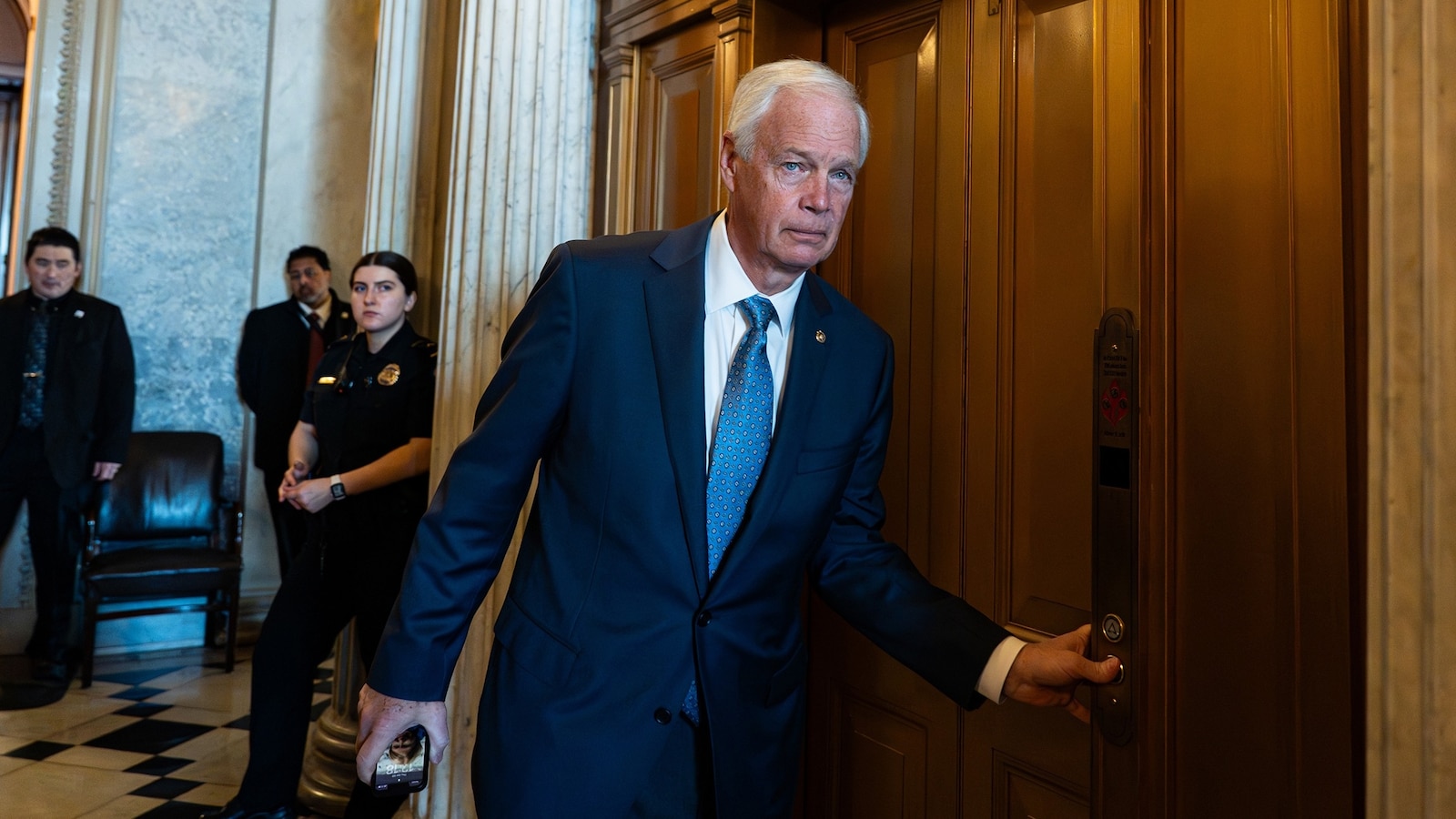
Key event: President Trump threatened to bomb Iranian bridges and power plants and set an 8 p.m. ET Tuesday deadline, elevating the conflict now in its sixth week. Senator Ron Johnson, a Trump ally, broke with the president and warned against attacking civilian infrastructure while multiple Democrats and conservative figures condemned the rhetoric; lawmakers are calling on Congress to act. The report cites significant humanitarian consequences (including a school bombing that killed over 100 children), raising material geopolitical risk and a likely market risk-off reaction.
The GOP rupture around use-of-force rhetoric materially increases policy uncertainty even if it lowers the pure-probability of sustained strategic bombing. Political checks (intra-party splits, potential Congressional rebuke) compress the likely window for kinetic escalation to days–weeks, which favors short-dated market reactions (volatility, risk premia) over multi-year structural repositioning.
A shorter, high-intensity disruption scenario still produces outsized second-order costs: insurance/wartime surcharges, longer voyage miles for tankers/containers, and temporary refinery feedstock dislocations. A 1–2 mbpd effective transit shock typically translates into a $10–30/bbl shock to crude within days and 10–30% spikes in short-term freight and war-risk premiums, pressuring profit margins in oil refining, airlines, and trade-exposed manufacturers.
Financially, expect a flight to traditional safe-havens and convex hedges: gold and the USD should outperform EM assets and cyclical equities in the immediate 48–72 hour window, while implied volatility across energy, defense, and shipping ticks up more than realized volatility. Defense equity moves may be front-loaded and noisy — pricing in contract reprioritization and revision risk rather than guaranteed multi-year order growth.
Key catalysts to watch are (1) formal Congressional action or funding strings within 2–8 weeks, and (2) credible diplomatic backchannels that can unwind risk premia within days. The asymmetric tail is miscalculation: a sustained campaign against critical infrastructure would extend shocks from weeks into quarters and materially raise inflation and bond-yield volatility.
AI-powered research, real-time alerts, and portfolio analytics for institutional investors.
Request DemoOverall Sentiment
strongly negative
Sentiment Score
-0.75
