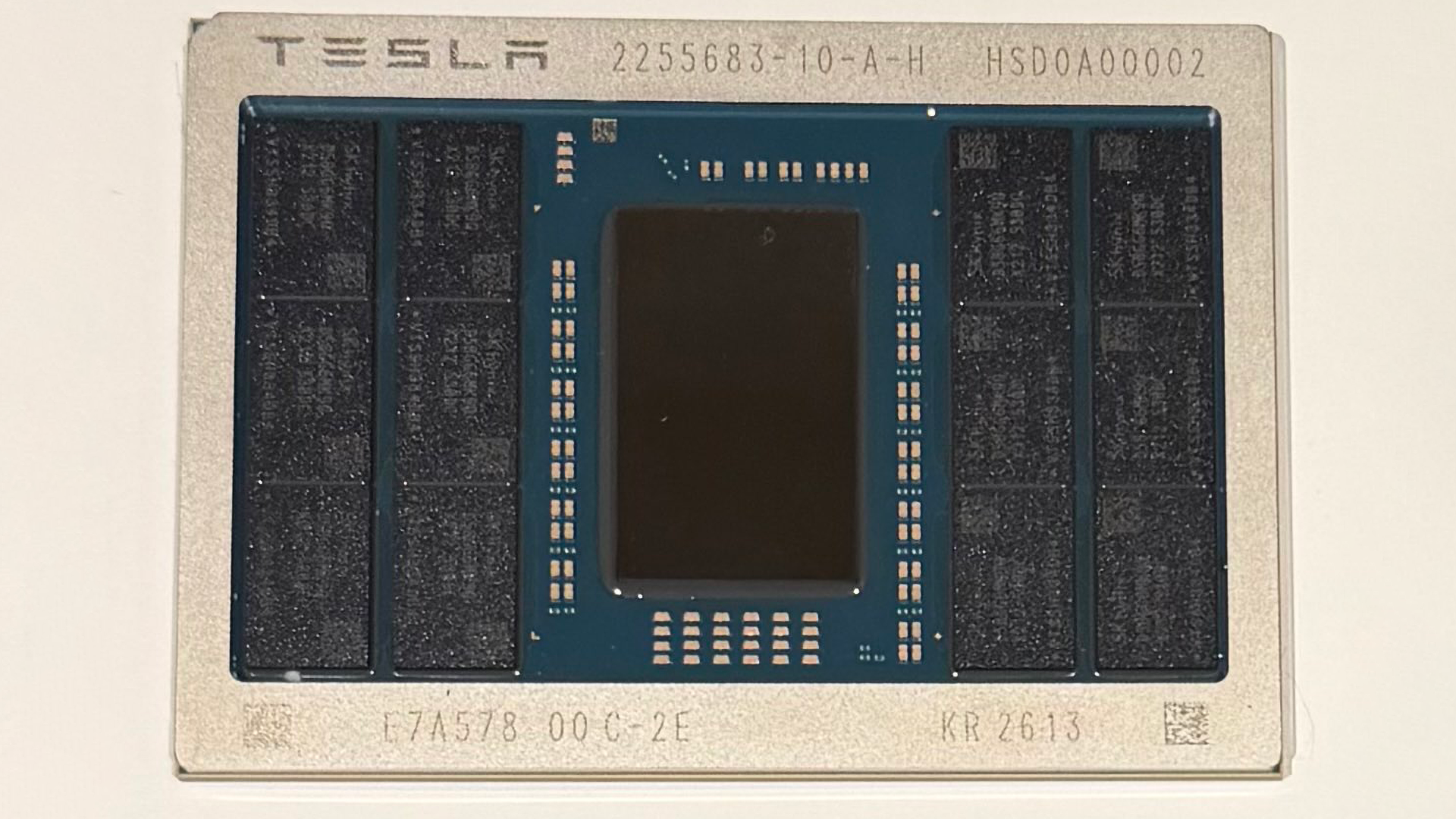
SpaceX’s confidentially filed S-1 reportedly says the company plans to invest billions to manufacture its own GPUs, citing a lack of long-term chip supply contracts. Reuters notes the wording may refer to AI accelerators rather than traditional graphics GPUs, and the filing could imply in-house silicon needs for Tesla/xAI-linked workloads. The report is preliminary and unverified, so the immediate market impact is likely limited.
The immediate market read is less about SpaceX becoming a semiconductor producer and more about the signal that the AI compute stack is fragmenting vertically. If this is real, it implies Tesla/xAI/SpaceX are trying to internalize a supply-constrained layer of the ecosystem, which is directionally bearish for the power of incumbent accelerators, but only on a multi-year horizon because the hard part is not design rhetoric — it is yield, packaging, memory, and software enablement. In the near term, the biggest beneficiary is likely Intel as a foundry-enablement story if its advanced node is actually pulled into a real customer pipeline, while Nvidia faces the most conceptually negative read-through even though no revenue risk is imminent.
The second-order effect is that hyperscalers and frontier-model players may accelerate their own custom silicon roadmaps if Musk demonstrates even partial execution credibility. That can pressure AMD more than Nvidia at the margin because AMD’s differentiation depends on being the “good enough” alternative in a market that is increasingly open to bespoke solutions; if large buyers believe custom silicon is viable, AMD’s addressable share in inference and internal training workloads can compress. Conversely, the likely bottleneck is not compute logic alone but advanced packaging and HBM access, which means suppliers in the memory/OSAT stack could become the hidden winners if this turns into a real buildout.
The contrarian view is that the market may be overpricing the disruption and underpricing the execution drag. A vertically integrated AI chip program typically consumes 18-36 months before meaningful deployment, and any consumer-facing ambitions are even further out; until then, this is mostly narrative optionality. The best risk/reward is to treat it as a long-dated call on domestic semiconductor manufacturing rather than a near-term threat to NVDA earnings, with the real catalyst being confirmation of volume, packaging partners, and software portability rather than the headline itself.
AI-powered research, real-time alerts, and portfolio analytics for institutional investors.
Request TrialOverall Sentiment
neutral
Sentiment Score
0.15
Ticker Sentiment
