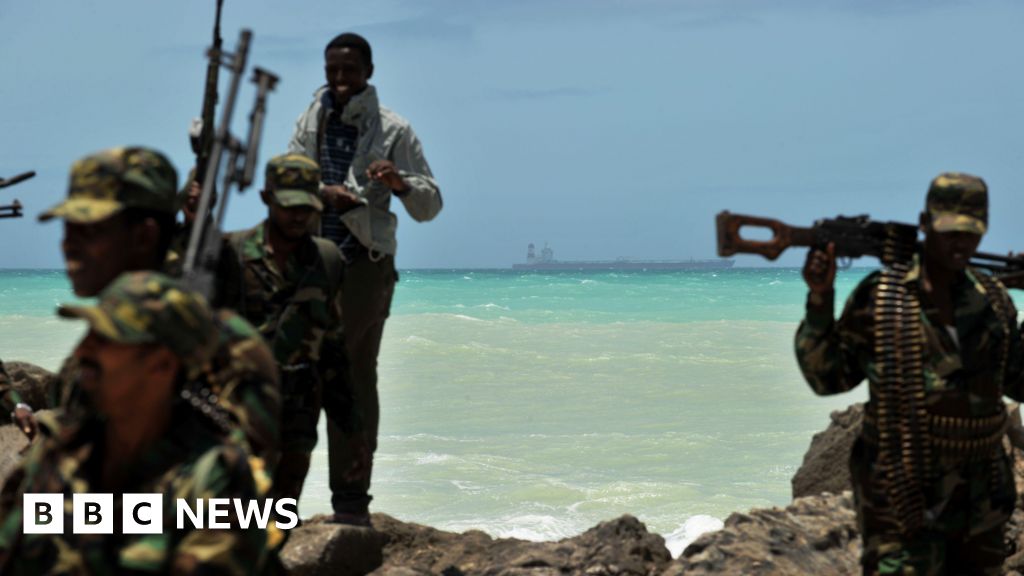
Piracy incidents off Somalia have escalated, with UKMTO raising the threat level to "substantial" after a cargo ship was seized six nautical miles off Garacad and redirected into Somali territorial waters. At least four vessels were targeted in the past week, including a fishing vessel and oil tanker, highlighting renewed security risks for shipping routes through the region. The threat is likely to raise caution, insurance costs, and route risk for maritime operators in the Horn of Africa.
The market impact is less about the isolated hijackings and more about the re-pricing of route reliability along a narrow but strategically important corridor. When piracy returns after a long dormancy, shipping insurers tend to move first, then charterers, then physical flows: the immediate winners are marine insurers and security vendors, while the first-order losers are owners of vessels with exposure to the Arabian Sea/Somali approach because they face higher war-risk premia, slower transits, and more frequent convoy/route-deviation decisions. The second-order effect is on schedule integrity, not just spot freight. Even a modest increase in evasive routing and speed changes can create knock-on delays across container, dry bulk, and tanker networks, especially for time-sensitive Asia-Middle East lanes; that can lift near-term rates without a large volume shock. The bigger asymmetry is that one successful ransom event can encourage copycat behavior over the next 4-12 weeks, while a visible naval response or escort regime can cap the move quickly, so the trade is more tactical than secular unless incidents keep clustering. This also raises tail risk for certain EM importers and exporters that rely on Red Sea/Indian Ocean connectivity, where higher freight and insurance costs hit margins before headline commodity prices move. The contrarian angle is that the current move may still be underpriced if insurers assume this is a one-off: the weather window and low-cost attack profile make this an attractive asymmetry for small groups, so persistence is more plausible than consensus may want to admit. That said, if regional naval patrols intensify or shipping reroutes normalize, the premium can compress as fast as it widened. For broader markets, the cleanest read is a mild risk-off signal rather than a macro shock: it supports defense and maritime security spend, modestly pressures global logistics margins, and can be a hidden inflationary impulse if it lasts into peak shipping season. The key catalyst to watch is whether there are additional successful boardings over the next 2-3 weeks; if yes, the issue shifts from episodic disruption to a sustained risk premium on trade flows and freight-sensitive names.
AI-powered research, real-time alerts, and portfolio analytics for institutional investors.
Request DemoOverall Sentiment
moderately negative
Sentiment Score
-0.45
