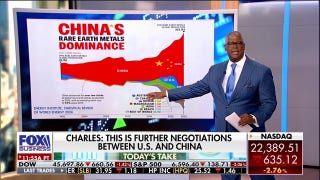
U.S. equities experienced their sharpest decline since April, with the Dow Jones Industrial Average falling nearly 900 points, the Nasdaq 3.5%, and the S&P 500 2.7%, as the U.S.-China trade war escalated. This market downturn was triggered by President Trump's announcement of a potential 100% tariff on China and export controls on critical software, effective November 1, 2025, in retaliation for China's new export controls, leading to the likely cancellation of a planned meeting with President Xi. Technology, energy, and consumer discretionary sectors led the broad market sell-off, while safe-haven assets like gold surged to record highs, and defensive stocks saw gains.
The US equity market experienced its sharpest decline since April, with the Dow Jones, S&P 500, and Nasdaq falling 1.90%, 2.71%, and 3.56% respectively, following President Trump's threat of a 100% tariff on Chinese goods and export controls on critical software, effective November 1, 2025. This escalation, triggered by China's new export controls, has likely scuttled a planned meeting between Trump and President Xi, signaling a significant deterioration in US-China trade relations. The market sell-off was broad, with technology, energy, and consumer discretionary sectors leading declines, exemplified by the Technology Select Sector SPDR ETF (XLK) dropping 4.05%. "Magnificent Seven" stocks, including Tesla (-5.06%) and Amazon (-4.99%), saw substantial losses. Conversely, defensive sectors like Utilities (XLU, -0.41%) and Consumer Staples (XLP, +0.11%) demonstrated relative resilience, with some defensive stocks like PepsiCo (+3.71%) posting gains.
Amidst the risk-off sentiment, safe-haven assets surged, with gold climbing above $4,000 to a new record high, marking a 50% year-to-date gain. Concurrently, oil prices fell below $60 per barrel, impacting energy giants like ConocoPhillips (-4.65%). Wedbush Securities analyst Dan Ives, however, views this downturn as a buying opportunity for "winners in semis, software, Big Tech, and the AI future."
This renewed trade friction introduces significant geopolitical risk, prompting a clear flight to quality across asset classes. The market's immediate reaction underscores sensitivity to trade policy, particularly for companies with substantial exposure to both US and Chinese markets.
AI-powered research, real-time alerts, and portfolio analytics for institutional investors.
Request DemoOverall Sentiment
strongly negative
Sentiment Score
-0.75
Ticker Sentiment
