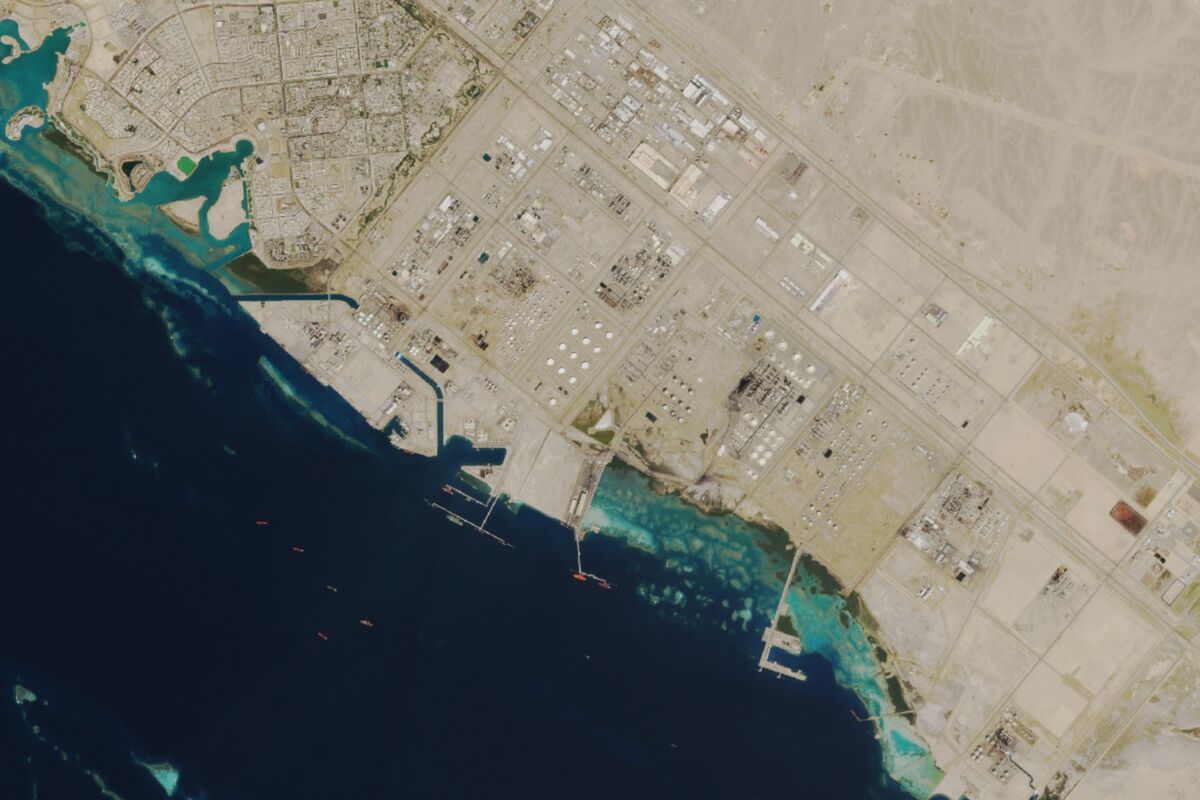
7 million barrels a day: Saudi Arabia’s East-West pipeline is operating at full 7m bpd capacity, enabling exports to bypass the Strait of Hormuz. Tankers have been redirected to Yanbu, preserving flows after closure of the main export route and materially reducing short-term geopolitical supply risk; this should alleviate upward pressure on oil prices and stabilize global supply.
The market should reprice the geopolitical convenience yield previously attached to Gulf export routes — a structural haircut to the tail-risk premium of roughly $4–8/bbl is a reasonable working assumption based on prior short-lived transit disruptions. That repricing will play out in two waves: an immediate compression of spot Brent vs. futures (days–weeks) as traders mark down risk, followed by a slower normalization of the forward curve over 1–3 months as physical flows and inventories adjust.
Shipping and insurance dynamics will see asymmetric effects: concentration of loading into a smaller set of western ports creates a new single-point-of-failure that elevates regional security risk (and therefore idiosyncratic premium) while simultaneously reducing transit-insurance costs on the traditional eastbound lanes. Expect a near-term bump in VLCC/long-haul demand and TC rates (15–30% upside potential if sustained) even as broad-route insurance rates decline, compressing revenue for niche security/investment plays and shifting profits back to large tanker owners.
Refiners and midstream storage owners stand to disproportionately capture value: lower crude convenience yield plus steady product demand translates to wider crude-to-product margins and higher utilization for complex refiners within 1–3 months. Conversely, upstream producers face a dampened price shock buffer, increasing volatility of cashflow and making short-cycle shale less attractive on a relative basis.
Main tail risks that could reverse the move are fast and forceful: targeted attacks on western loading infrastructure or renewed tactical chokepoints can re-inflate the convenience yield within days, while OPEC+ discretionary production changes can offset the mechanical supply relief over months. Monitor security incident frequency in the Red Sea/Bab el-Mandeb corridor and OPEC+ meeting outcomes as primary triggers for reclosing the risk premium.
AI-powered research, real-time alerts, and portfolio analytics for institutional investors.
Request DemoOverall Sentiment
strongly positive
Sentiment Score
0.60
