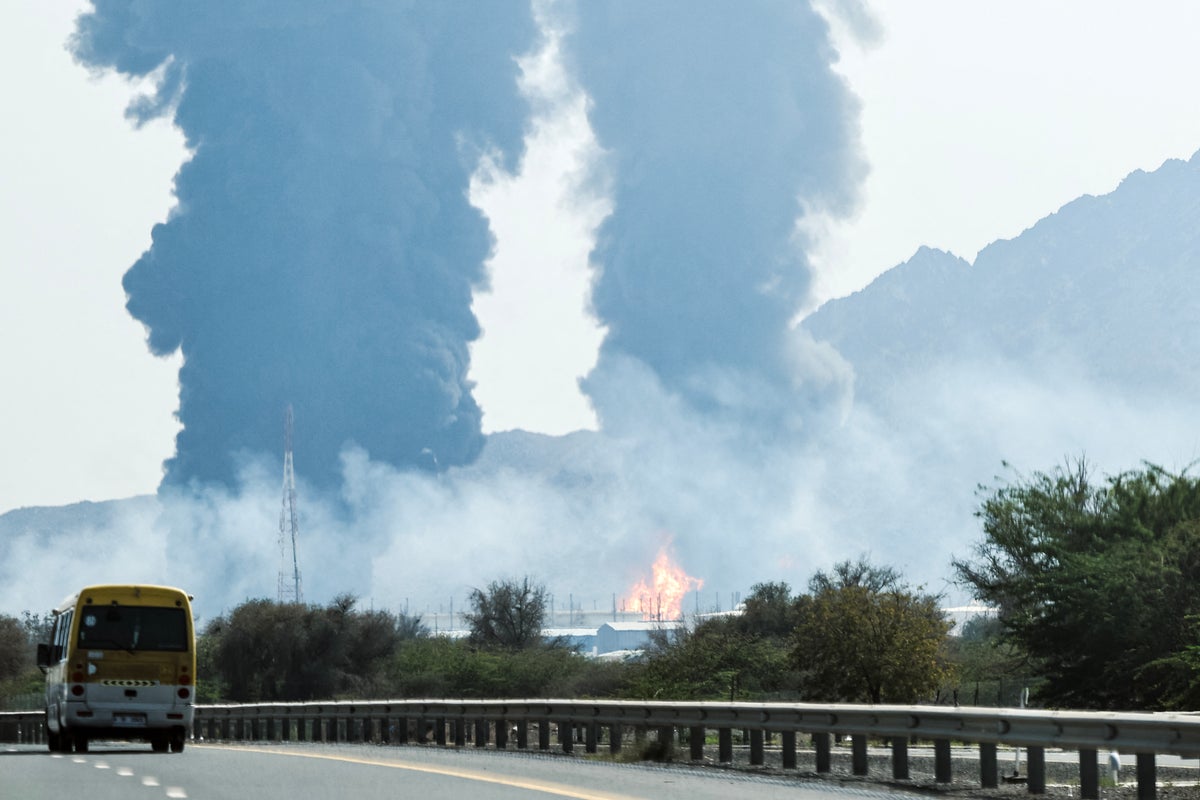
The UAE is reported to have secretly carried out strikes on Iran, including an attack on a refinery on Lavan Island in early April, marking a potential first direct Gulf-state military involvement in the war. Iran said it retaliated with missile and drone strikes against Kuwait and the UAE, raising the risk of broader regional escalation and disruption to oil markets. The reported strikes suggest Gulf states may be more willing to use force to defend economic interests, even as other regional actors sought to avoid the conflict.
The market should treat this less as a one-off headline and more as a regime shift in Gulf risk premia: if a regional financial sponsor is now willing to use force, the old assumption that energy infrastructure in the Gulf sits behind a durable deterrence umbrella is weakened. That raises the implied floor on shipping insurance, tanker routing, and forward volatility in Brent/WTI, even if prompt physical supply is not immediately impaired. The second-order effect is that any escalation now has a broader coalition risk, which makes de-escalation harder because Iran has incentive to broaden retaliation beyond the original belligerents.
The most vulnerable assets are the ones priced off low-volatility Middle East logistics and “stable Gulf” capital allocation: refiners with heavy Gulf feedstock exposure, shipping names with thin spot margins, and EM sovereign risk in states that could be pulled into retaliation cycles. Over the next days, the market likely overreacts in crude and defense, but over months the bigger issue is capex displacement — Gulf states may accelerate hardening of energy assets, missile defense, and dual-use infrastructure, diverting capital away from growth projects. That creates a subtle long-duration headwind for regional construction, ports, and non-oil diversification themes.
The contrarian point is that direct involvement by an additional Gulf actor may also shorten the conflict if it convinces Washington and Tehran that the escalation ladder is now too dangerous. If so, the near-term spike in energy volatility could fade faster than headlines suggest, especially if no major export infrastructure is hit in the next 2-4 weeks. In other words, the trade is not necessarily higher oil outright; it is higher volatility and a fatter tail on both ends — upside on disruption, downside on a rapid ceasefire or back-channel settlement.
AI-powered research, real-time alerts, and portfolio analytics for institutional investors.
Request DemoOverall Sentiment
strongly negative
Sentiment Score
-0.55
