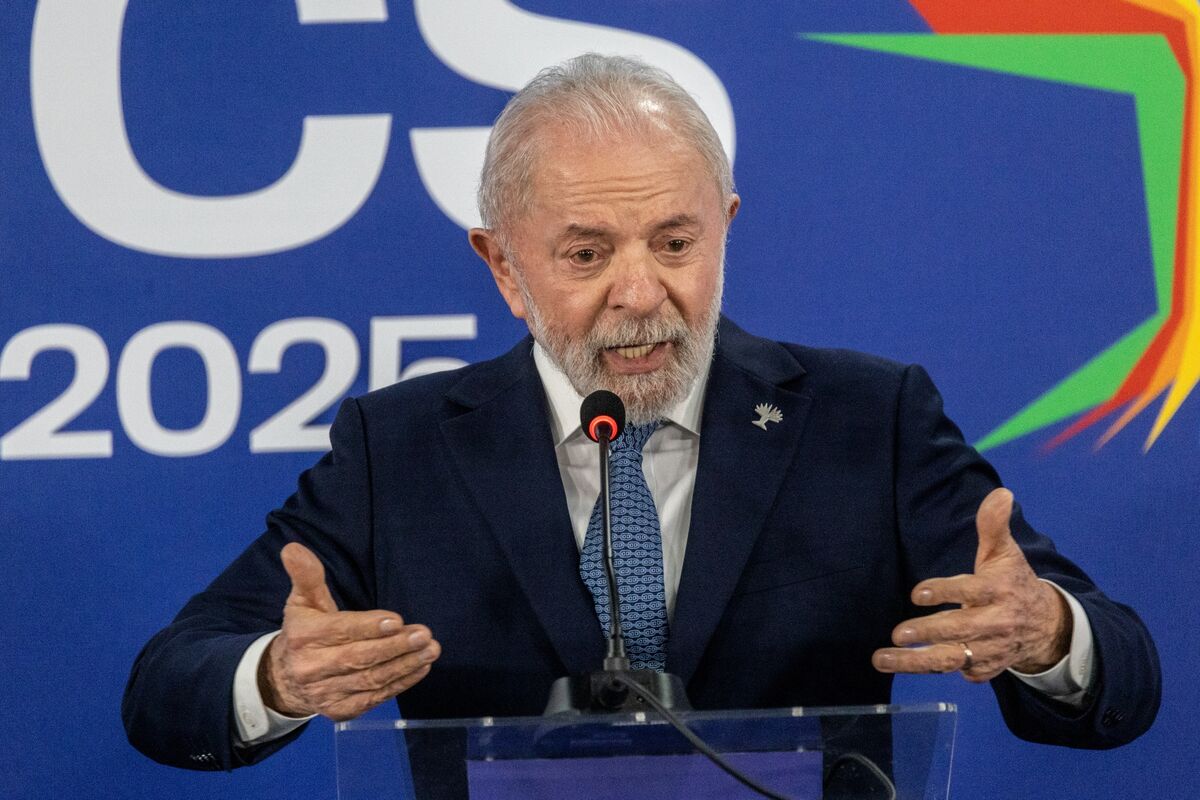
US President Trump threatened Brazil with 50% tariffs, citing a 'witch hunt' against former President Bolsonaro. In response, President Luiz Inacio Lula da Silva announced Brazil would retaliate rather than appease, a defiant stance that could provide a political tailwind for his 2026 re-election prospects and aligns with his government's 'Respect Brazil' campaign.
The United States has threatened to impose a 50% tariff on Brazilian goods, a move explicitly linked by the Trump administration to a perceived 'Witch Hunt' against former President Bolsonaro. This politicization of trade policy introduces significant uncertainty into the US-Brazil economic relationship. In response, the government of President Luiz Inacio Lula da Silva has rejected appeasement and announced its intention to retaliate, framing the confrontation as a matter of national sovereignty under the slogan 'Respect Brazil.' This defiant stance appears calculated to generate a political tailwind for Lula ahead of the 2026 election, suggesting domestic political considerations may drive Brazil's trade strategy. The situation points to a potential escalation in a tit-for-tat trade dispute, carrying negative implications for bilateral trade flows and supply chains, which is reflected in the moderately negative sentiment and uncertain tone of market signals.
AI-powered research, real-time alerts, and portfolio analytics for institutional investors.
Request DemoOverall Sentiment
moderately negative
Sentiment Score
-0.40
