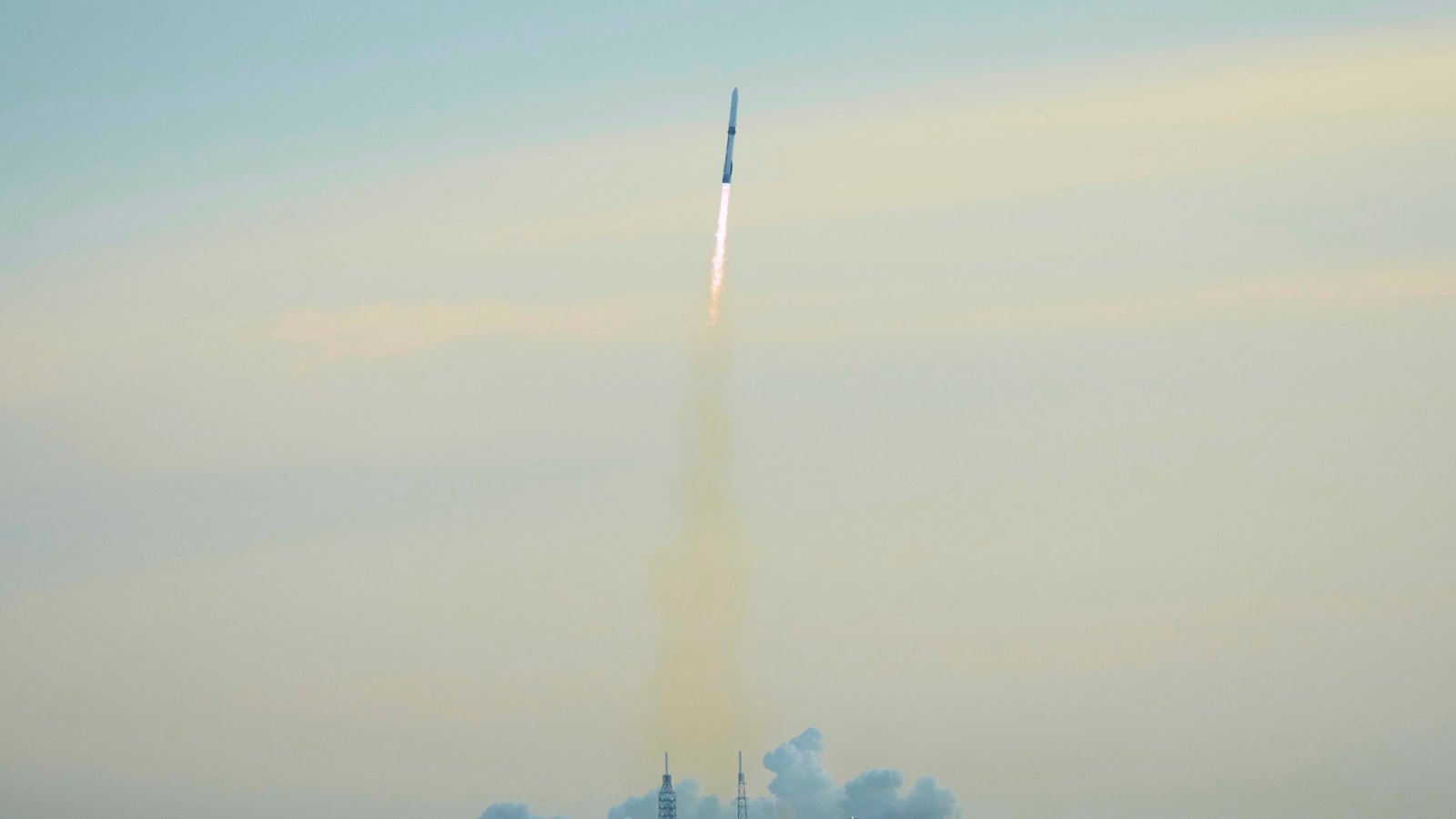
Blue Origin’s New Glenn rocket is grounded pending a joint Blue Origin/Federal Aviation Administration investigation after an upper-stage engine failure left a satellite in the wrong orbit. The failed launch doomed AST SpaceMobile’s payload and forced reentry of the upper stage and satellite, while the booster landing itself was successful. The setback is a negative operational signal for New Glenn, though broader market impact should be limited.
This is a near-term credibility hit for the only non-SpaceX heavy-lift alternative that had begun to matter for civil and commercial launch planning. The first-order loser is ASTS, but the second-order damage is broader: every payload customer now has to reprice schedule certainty, and that tends to shift backlog value toward providers with demonstrated upper-stage reliability rather than just successful booster recovery. In practical terms, launch insurance, integration timelines, and customer capital raises all get slightly harder for any company assuming “new launch provider” capacity in 2026-27. The bigger strategic implication is that Blue Origin’s setbacks make the market more reliant on a single dominant provider at exactly the moment NASA and defense buyers want a second source. That can keep pricing discipline in SpaceX’s favor, but it also raises the probability that federal buyers slow-roll procurement decisions until the launch stack proves itself, which is a headwind for all emerging satellite networks tied to aggressive deployment cadence. For ASTS, the issue is not just one delayed satellite; it is the compounding effect on constellation ramp economics and partner confidence if the company has to bridge an additional 1-2 launch windows. The contrarian angle is that the move may be overdone for Blue Origin's ecosystem but underdone for launcher-adjacent incumbents. A failed test on a third flight is ugly, but it is not yet evidence of an unrecoverable design flaw; if the root cause is contained to a specific engine variant, the rebuild could be measured in months, not years. The more durable trade is relative: companies with existing launch cadence and proven upper-stage reliability should gain share, while ASTS remains exposed to any further schedule slip because its valuation is more sensitive to deployment timing than to satellite hardware quality.
AI-powered research, real-time alerts, and portfolio analytics for institutional investors.
Overall Sentiment
moderately negative
Sentiment Score
-0.35
Ticker Sentiment
