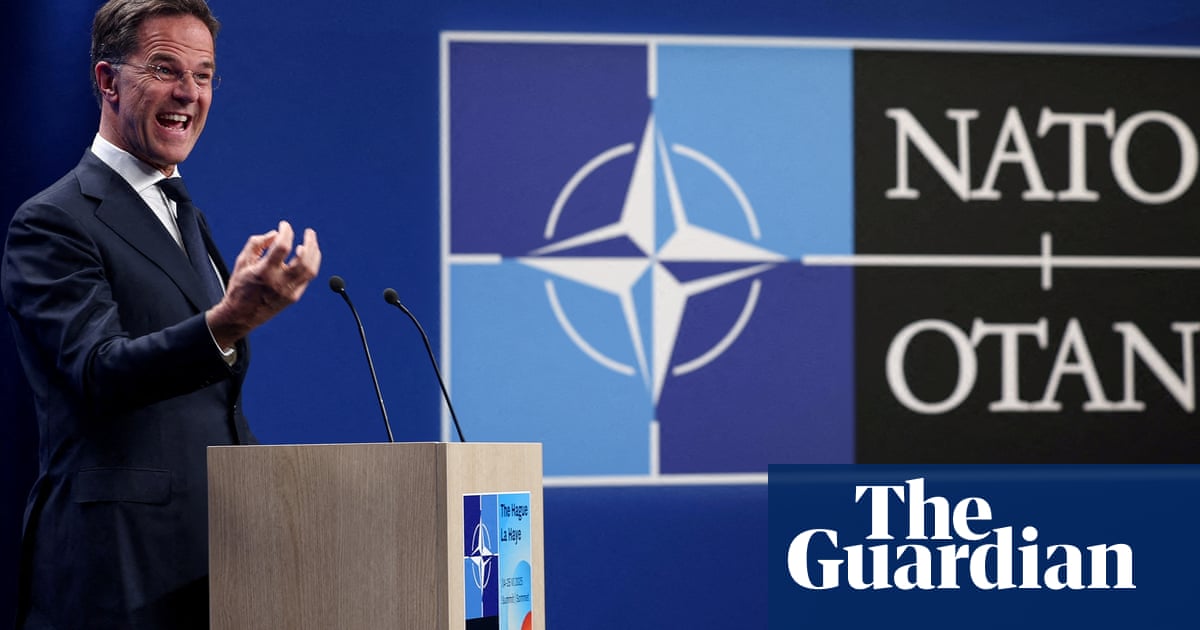
NATO members are poised to significantly increase defense spending to a new target of 5% of GDP (3.5% core defense, 1.5% broader security) due to the escalating Russian threat and US pressure for greater burden-sharing. Secretary General Mark Rutte highlighted Russia's rapid military reconstitution and production capacity, asserting former President Trump's continued commitment to the alliance contingent on higher European contributions. While Spain has expressed reservations about the 5% target, seeking flexibility based on its domestic defense industry, Rutte downplayed internal dissent, emphasizing overall commitment to capability targets. This strategic shift underscores a sustained focus on military preparedness and potential growth for defense sectors, even as alliance unity faces scrutiny.
NATO is signaling a significant strategic pivot with a proposed new target for members to spend 5% of GDP on security, comprising 3.5% on core defense and 1.5% on related areas like cyber-security. This move is a direct response to what Secretary General Mark Rutte terms the "most significant and direct threat" from Russia, which is reportedly reconstituting its military and producing ammunition at four times the rate of the entire alliance, despite having an economy just 4% the size of NATO's combined $50 trillion. The policy is also heavily influenced by US pressure for increased European burden-sharing, with Rutte framing higher spending as essential to ensuring continued US commitment to the alliance. However, implementation faces internal hurdles, as evidenced by Spain's objection to the 5% figure, arguing it can meet capability targets with just 2.1% of GDP due to its domestic defense industry. While Rutte downplays this dissent by emphasizing "flexibility" over "exemptions," the friction from Spain and Belgium introduces uncertainty regarding the uniformity and actual scale of the spending ramp-up. This potential multi-year, bloc-wide fiscal reallocation toward defense represents a substantial long-term tailwind for the defense and security sectors, though the final impact hinges on individual member states' political will and budgetary execution.
AI-powered research, real-time alerts, and portfolio analytics for institutional investors.
Request DemoOverall Sentiment
mixed
Sentiment Score
0.00
