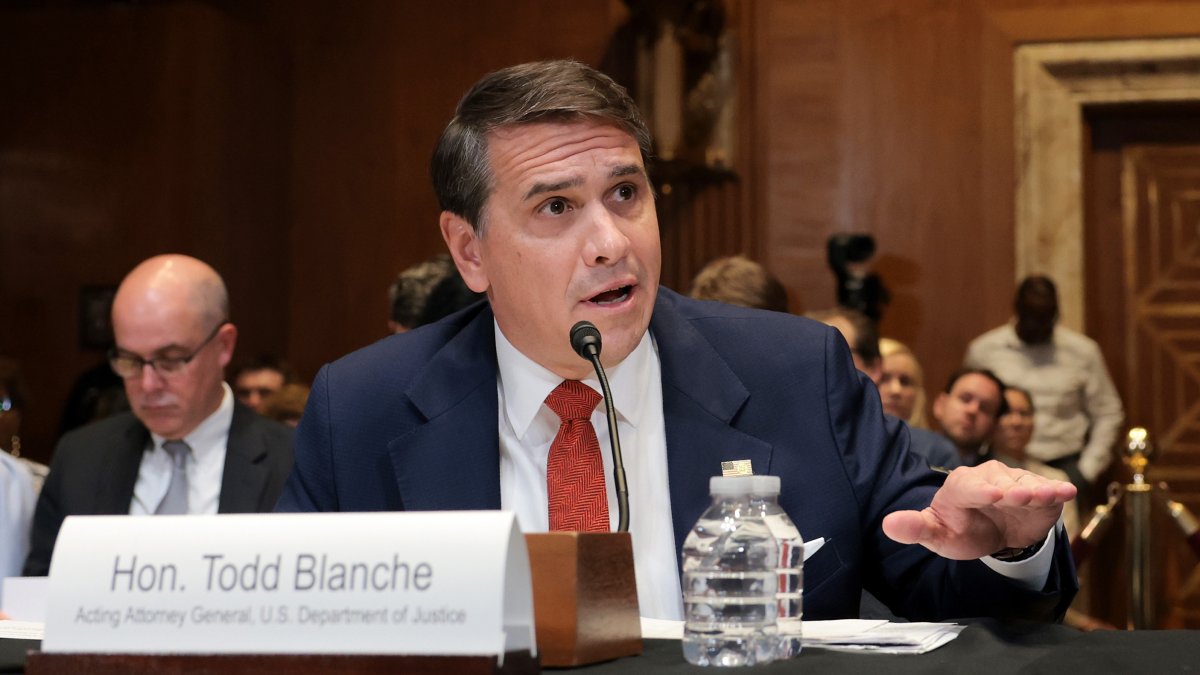
The Trump administration's new $1.776 billion Anti-Weaponization Fund could allow payouts to people involved in the Jan. 6 Capitol riot, including violent offenders, depending on how a five-member commission defines 'weaponization.' The fund would be financed by the federal judgment fund and has drawn criticism from Democrats and some Republicans as an abuse of public money. The issue is politically significant, but direct market impact is likely limited.
This is less a direct market event than a governance shock: the administration is signaling that the boundary between restitution and political patronage is now intentionally blurry. The near-term market impact is limited, but the second-order effect is to increase the probability of recurring legal challenges, appropriations friction, and broader institutional discounting around DOJ credibility. That matters because once enforcement agencies are perceived as politically contingent, the tail risk premia for regulated sectors, federal contractors, and anything dependent on nonpartisan adjudication start to widen.
The bigger medium-term implication is fiscal slippage through precedent. Even if the fund itself is small relative to federal outlays, it creates a template for discretionary, claimant-defined payouts that could be replicated in future administrations as a political instrument. That raises the odds of headline-driven volatility in budget negotiations over the next 1-3 quarters, especially if congressional Republicans decide to weaponize this as a budget rider fight or debt-ceiling messaging point. The most exposed assets are not the obvious names, but duration-sensitive assets if the story feeds broader concerns about rule-of-law erosion and institutional credibility.
Contrarian angle: the market may underprice the exhaustion effect. Investors tend to assume politically charged actions create one-off headlines, but repeated normalization of “funds,” pardons, and selective enforcement can incrementally degrade confidence in federal process without an obvious single catalyst. If that continues, the trade is less about immediate legal outcomes and more about a creeping governance discount — higher risk premia for domestic small caps, municipal credits tied to federal transfers, and companies with large regulated U.S. exposure. The reversal trigger would be either a court injunction, bipartisan pushback with real legislative teeth, or a visible narrowing of eligibility that makes the program look less arbitrary than it currently appears.
AI-powered research, real-time alerts, and portfolio analytics for institutional investors.
Request DemoOverall Sentiment
mildly negative
Sentiment Score
-0.15
