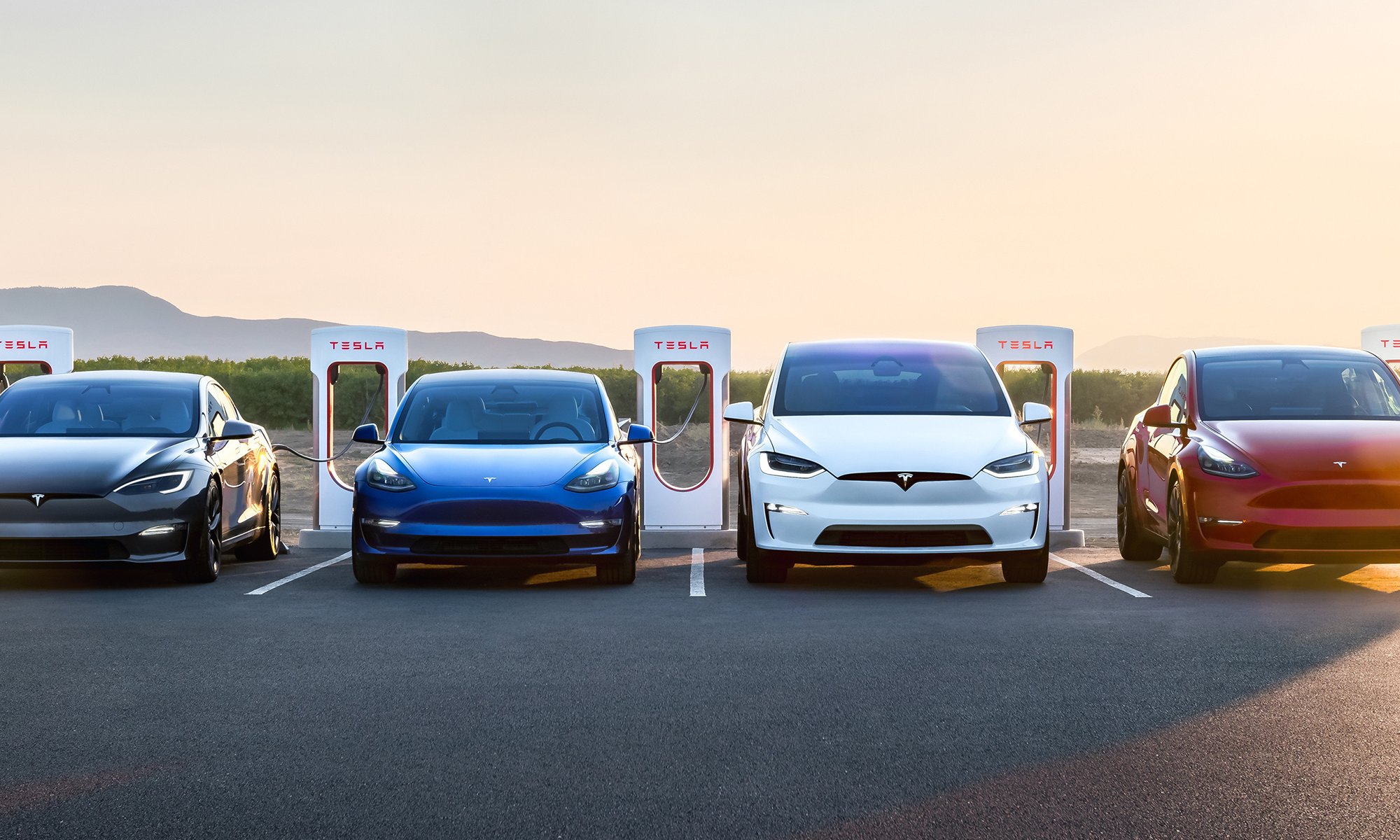
Tesla announced that the Netherlands Vehicle Authority (RDW) has committed to granting national supervised FSD approval in February 2026, which would allow the Netherlands to apply to the European Commission for an EU-wide decision (requiring a qualified majority of member states and population). Supervised FSD—already available in several non-European markets—is distinct from Tesla's unsupervised robotaxi technology but approval in the Netherlands would be a material stepping stone toward broader European deployment, expand the potential paid FSD customer base (currently ~12% of the fleet per CFO Vaibhav Taneja), and support the company's planned Cybercab production ramp in 2026; however, approval is not guaranteed and management's aggressive production guidance raises downside risk if rollout or further approvals stall.
Market structure: Tesla is the primary beneficiary—European supervised FSD approval would expand TAM for paid FSD (currently ~12% penetration) and materially de-risk robotaxi revenue assumptions, boosting EV resale premia and demand for 2026 Cybercab output. Winners also include Tesla-focused data/AI suppliers and battery/commodity producers as production ramps raise nickel/lithium demand; losers are legacy ride-hailing margins and OEMs lacking FSD stacks. Cross-asset: a clear approval path should compress TSLA equity implied volatility (IV) and modestly tighten Tesla credit spreads; EUR flows could tilt into auto equities, pressuring safe-haven bonds tactically.
Risk assessment: Tail risks include EU rejection or a high-profile safety incident that forces regulatory rollbacks, each capable of >30% drawdowns in TSLA within weeks and multi-quarter operational delays. Near-term (days–months) sensitivity centers on RDW statements and Commission calendar; medium-term (6–18 months) risks are Cybercab build-scale execution and capex burn if subscriptions lag. Hidden dependencies: local insurance frameworks, data-privacy rules, and member-state politics (55%/65% threshold) can stop EU-wide rollout despite a Dutch OK. Key catalysts: RDW Feb 2026 decision, EU vote timing, third-party safety incident metrics, and Tesla’s 2026 production cadence reports.
Trade implications: Direct: establish a 2–3% long TSLA core now, add to 4–6% on a favorable RDW signal, and cap exposure if share price rises >50% from entry. Hedge: buy 12–18 month LEAP puts (small notional 1–2% portfolio) OR collars (sell near-term calls to finance) to limit a downside >20%. Options: consider a calendar or diagonal (buy Jan 2027 calls, sell 3-month calls) to monetize IV term-structure; pair trade long TSLA vs short RIVN (RIVN) or F (Ford) 1:0.5 for relative exposure to FSD optionality. Rotate 2–4% portfolio weight into NVDA and LIT (ETF) to play AI chips and battery materials upside.
Contrarian angles: Consensus conflates supervised FSD approval with unsupervised robotaxi monetization—expect multi-year gap; market may underprice execution and regulatory delays given Cybercab 2026 ramp commitments. Historical parallels: automotive safety/regulatory rollouts (e.g., airbags/ESC) took years and incremental regulation raised costs before broad adoption. Unintended consequences include increased insurance/ liability costs and slower subscription uptake; exploit this by buying asymmetric tail protection (deep OTM Jan 2027 puts sized 1–2% of TSLA notional) while selling short-dated call premium to reduce carry.
AI-powered research, real-time alerts, and portfolio analytics for institutional investors.
Request DemoOverall Sentiment
mildly positive
Sentiment Score
0.28
Ticker Sentiment
