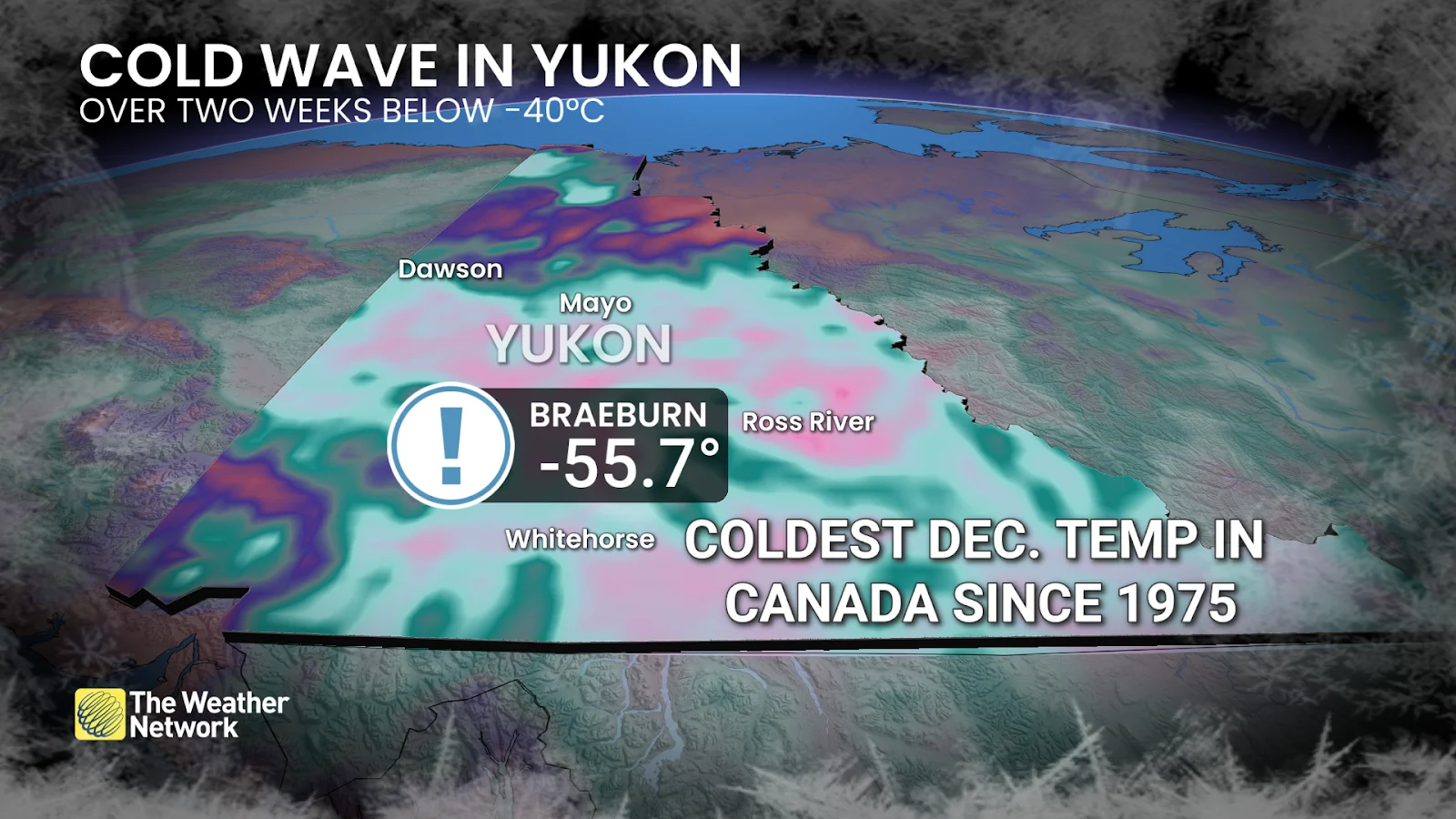
Northern Canada, especially Yukon, is enduring a prolonged extreme cold outbreak: Braeburn recorded −55.7°C on Dec. 23 (the coldest December reading in Canada since 1975), Mayo logged 16 consecutive nights below −40°C with a low of −50.4°C, Dawson saw 16 consecutive nights below −40°C, Whitehorse had 10 nights below −30°C, and Mayo has averaged below −40°C for 12 days since Dec. 9. The polar vortex remains parked over the region with no significant warming expected until January, implying sustained winter heating demand, heightened risk to northern infrastructure and logistics, and localized operational disruption that could modestly affect regional energy markets and supply chains.
Market structure: Extreme Arctic cold in northern Canada pushes near-term heating demand and strains local logistics, favoring natural gas, propane and power generators; expect Henry Hub front‑month volatility to rise 20–50% in the next 30 days if cold spreads south. Midstream/tolling businesses (pipelines, storage) gain pricing power from constrained physical flows and emergency fuel movements; remote production and mining operators are operational losers for days–weeks, tightening supply into markets.
Risk assessment: Tail risks include a rapid warm-up (weather flip) that erodes price moves, LNG cargo re‑routing that soaks up shorts, or infrastructure failures (pipeline freeze/ruptures) causing prolonged regional outages and regulatory scrutiny. Immediate (days) impacts are price spikes and operational curtailments; short term (weeks–months) see storage draws and wider basis differentials (AECO vs Henry > $1–2/MMBtu); long term (quarters) may accelerate fuel-switching investments and insurance/maintenance capex.
Trade implications: Primary actionable exposures are short‑dated natural gas and power volatility and select Canadian midstream equities that capture toll volumes; use option call spreads to limit downside and pair long midstream vs cyclical energy producers vulnerable to cold shutdowns. Cross‑asset: CAD should show modest support if commodity flows rise; provincial credit spreads widen only if infrastructure damage or fiscal hits materialize.
Contrarian angles: Consensus may overprice a sustained national gas shortage — historically (2013 polar vortex) price spikes faded within 6–10 weeks as storage and imports normalized, creating an opportunity to sell volatility post‑spike. Watch AECO/Henry, weekly storage draws and ECMWF 10–14 day ensemble changes for precise timing; mispricings appear in calendar spreads and midstream vs producer relative valuations.
AI-powered research, real-time alerts, and portfolio analytics for institutional investors.
Request DemoOverall Sentiment
neutral
Sentiment Score
0.00
