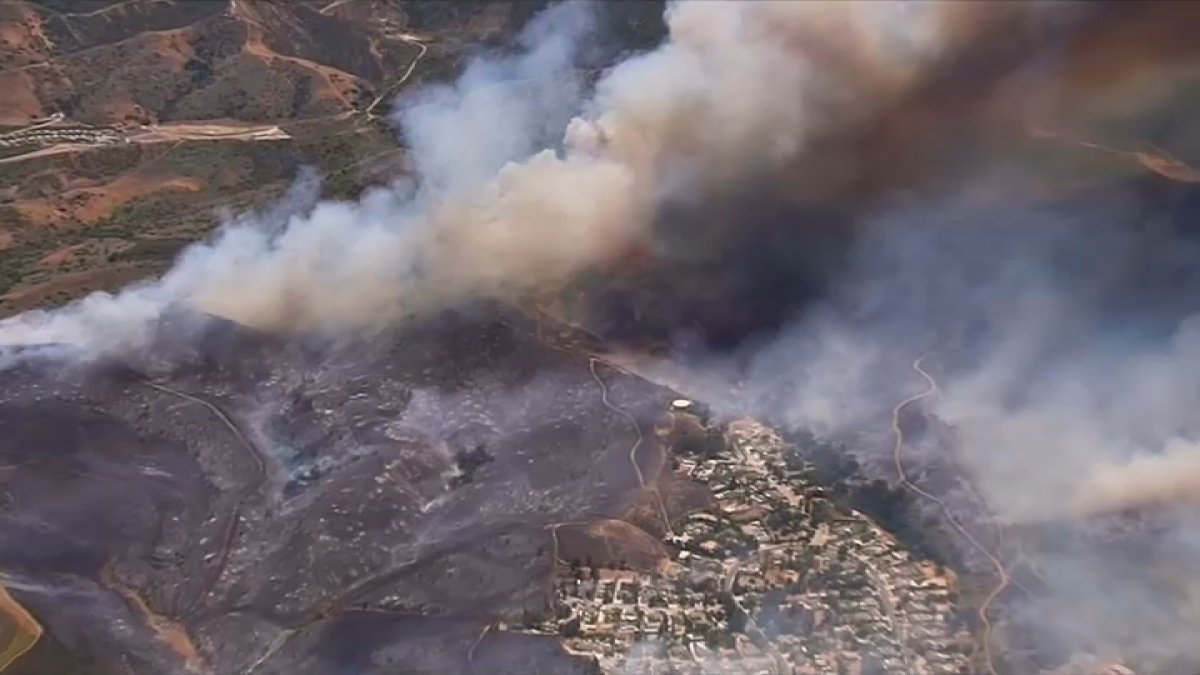
A wind-driven brush fire in Simi Valley burned 1,385 acres as of Tuesday morning, destroyed at least one home, and prompted evacuation orders, warnings, school closures, and temporary sheltering. Firefighting resources included at least three air tankers and six helicopters, while officials warned smoke and winds could push the blaze toward Los Angeles County. Governor Newsom said California secured a FEMA Fire Management Assistance Grant to support response efforts.
This is a localized disaster with broader second-order implications for insurers, utilities, and public-sector recovery spending rather than a direct macro shock. The key market issue is not the acreage itself; it is the combination of wind-driven spread risk, potential transmission/distribution interruptions, and the likelihood that even a contained fire still generates outsized claims from evacuation, smoke, and temporary school closure exposure. In fire-prone counties, the market tends to reprice carrier loss reserves and reinsurance terms before the full cost is known, especially when multiple structures and critical services are threatened in a residential corridor. The second-order beneficiary is the emergency-response and hardening ecosystem: vegetation management, fire-retardant systems, backup power, and grid resilience vendors often see incremental procurement after a visible event even when direct damage is limited. Public-sector recovery spending also tends to accelerate over the next 1-3 quarters, which can support contractors with municipal exposure, while local retail and commuting-sensitive businesses face near-term revenue disruption from closures and evacuation friction. If smoke reaches the broader metro area, the economic impact can widen quickly through absenteeism and short-lived air-quality related disruption, but this typically fades within days unless containment fails. The biggest tail risk is not this fire alone; it is the signal it sends into the peak fire season. A repeat event within the next 4-8 weeks would materially increase pressure on California property carriers, especially those already sensitive to wildfire reserve volatility and regulatory scrutiny. Conversely, a rapid containment and lack of structural follow-on damage should keep the market response contained to headlines, with any operational disruption reverting quickly. Contrarian angle: the knee-jerk short on California-exposed utilities or insurers may be crowded if this turns into a non-catastrophic event. The better trade is to focus on names with embedded wildfire mitigation spend and resilient balance sheets rather than broad state-level beta; the market often overestimates immediate loss severity and underestimates the follow-on spend cycle that benefits mitigation, grid, and emergency infrastructure providers.
AI-powered research, real-time alerts, and portfolio analytics for institutional investors.
Request DemoOverall Sentiment
strongly negative
Sentiment Score
-0.65
