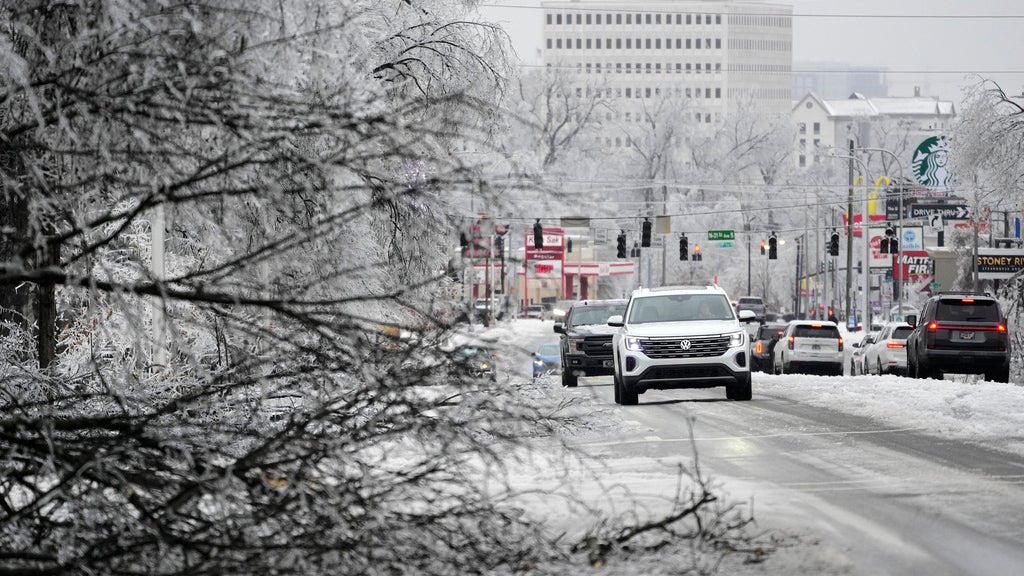
A major winter storm (Fern) has significantly disrupted the U.S. and parts of Canada, leaving at least nine dead, roughly 830,000 customers without power nationwide (about 250,000 in Tennessee and over 100,000 each in Louisiana and Texas), and causing more than 4,300 flight cancellations with major impacts at Boston, New York airports and Toronto Pearson (18+ inches). Snow coverage in the Lower 48 jumped from 25.0% to 56.1%, with localized totals up to 23 inches, record cold persisting in the South and ongoing infrastructure strain that could pressure utility operations, airline schedules, supply chains and regional economic activity over the coming days.
Market structure: Winners in the first 1–8 weeks are energy suppliers (short-term heating fuel, propane), utility repair contractors, home-improvement retail (HD, LOW) and airport/ground-handling insurers that reprice quickly; losers are regional airlines, airport-dependent travel stocks and on-demand food delivery (DASH) facing canceled orders and reputational hits. Pricing power shifts short-term to fuel suppliers and specialty contractors as restoration demand can lift wholesale propane/natural gas and labor rates by an estimated 5–20% in stressed markets.
Risk assessment: Tail risks include a prolonged grid failure or concentrated litigation/regulatory action against utilities that could trigger multi-quarter underperformance and accelerated capex mandates; probability low but severe (portfolio drawdowns >8%). Immediate (days) impact: bookings and flights; short-term (weeks–months): insurance claims and repair revenue flows; long-term (quarters–years): higher capex and potential rate-case outcomes for utilities. Hidden dependencies: mutual-aid labor pools, spare transformer inventories and reinsurance capacity—constraints could extend recovery timelines by 2–6 weeks.
Trade implications: Tactical plays should be short-duration and volatility-aware: play natural gas/propane upside for 2–8 weeks, add 1–3% long in futures/ETF exposure; take tactical downside exposure to DASH via a 3-month put spread (limited risk) sized 1–2% given operational disruptions and order volatility. Rotate 2–3% overweight to HD/LOW for 3–6 months to capture repair capex while underweight regional airlines (AAL, LUV) for 4–8 weeks to catch booking recovery lag.
Contrarian angles: Consensus focuses on immediate travel and delivery pain; overlooked is durable consumer spend reallocation into home repairs and energy (structural uplift to HVAC/insulation) which can sustain HD/LOW outperformance beyond the weather window. Also, if cold persists >10 days, natural gas could spike >15% and force shorts in airline/tourism to cover; a modular options strategy (short-dated puts on HDD-linked names) captures this convexity without large directional exposure.
AI-powered research, real-time alerts, and portfolio analytics for institutional investors.
Request DemoOverall Sentiment
moderately negative
Sentiment Score
-0.35
Ticker Sentiment
