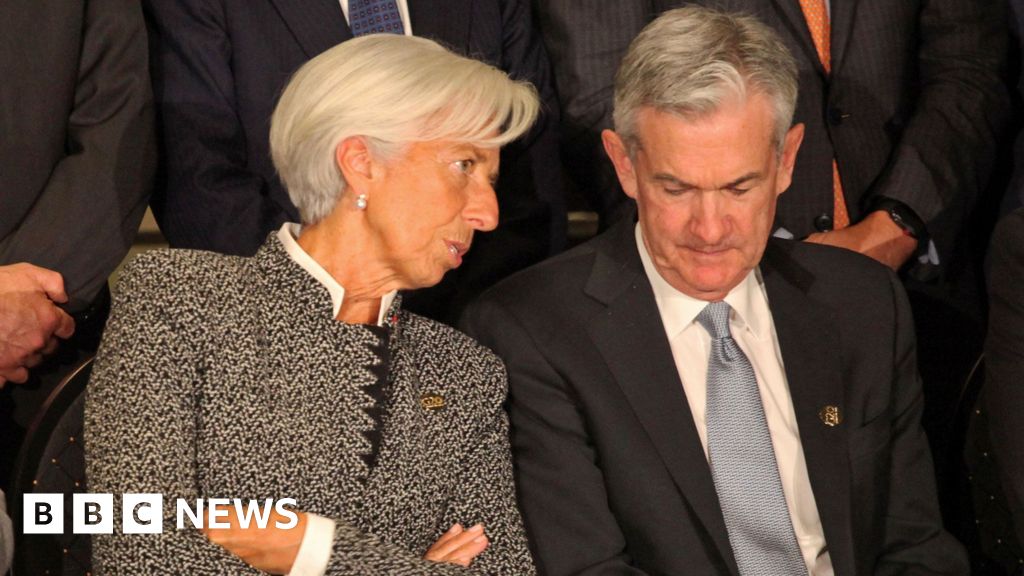
Eleven global central bank chiefs issued a joint statement defending Federal Reserve Chair Jerome Powell and central-bank independence after the US Department of Justice opened a criminal probe linked to Powell's Senate testimony on Fed building renovations. The move comes amid political pressure from President Trump, who has repeatedly criticized Powell as the Fed has cut rates three times since September to a key lending rate near 3.6%; headline CPI rose 2.7% year-over-year in December, above the Fed’s 2% target. Powell is due to step down in May, and the investigation and ensuing partisan friction raise policy-uncertainty risks that could affect rate expectations, central-bank credibility and risk asset pricing.
Market structure: The DOJ probe into Powell raises political risk that increases short-term volatility and safe‑haven demand. Expect bid for long-duration Treasuries, gold (GLD), and USD (UUP) in the next 2–6 weeks while equities (SPY) see 5–10% higher realized vol and option-implied vol spikes of ~15–30% around headline events. Rate-sensitive sectors (REITs, utilities) will outperform in risk-off; cyclical banks and small caps should underperform on funding/credit fear.
Risk assessment: Tail scenarios include (1) sustained political interference leading to Fed credibility loss and term‑premium repricing (low probability 10–20% but >$1tn bond-market repricing); (2) rapid confirmation of a dovish successor triggering risk rally and yield compression. Immediate (days) risk is headline-driven; short-term (weeks) is uncertainty premium; long-term (quarters) is policy credibility and inflation expectations.
Trade implications: Near-term hedge with duration and volatility exposure, size conservatively (1–3% portfolio) and timebox to 4–8 weeks; use options to limit cost. Relative-value: favor defensive/quality sectors (XLU, XLP, VNQ) and gold over banks (KRE, XLF) until political/legal clarity; reduce leverage into macro directionless instruments.
Contrarian: Consensus assumes either Fed capitulation or intact independence; miss is a negotiated political cooling where headlines fade and yields compress 25–75bp in 1–3 months. That would reward long-duration growth and penalize short-term volatility plays — so keep put hedges small and staggered rather than fully allocative.
AI-powered research, real-time alerts, and portfolio analytics for institutional investors.
Request DemoOverall Sentiment
moderately negative
Sentiment Score
-0.35
