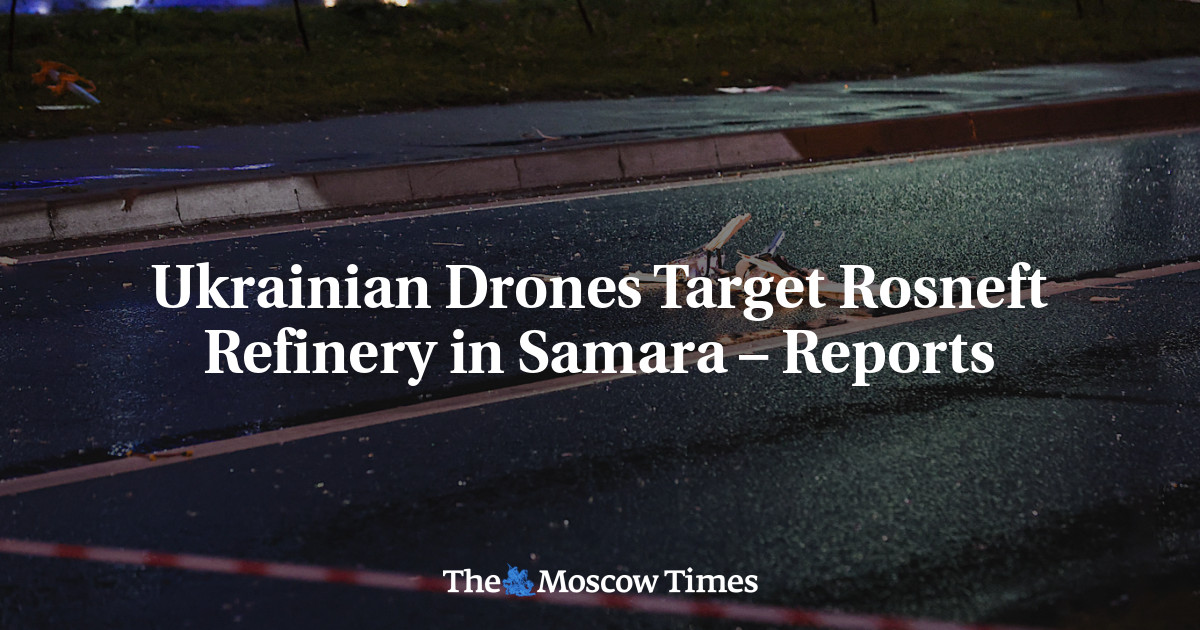
Russian air defenses reported intercepting 118 Ukrainian drones overnight, including 18 over Samara, while Ukrainian-linked sources and Telegram channels said Rosneft’s Novokuibyshevsk refinery in Samara (annual capacity up to 8.8 million metric tons) was among sites struck; Samara’s Kurumoch Airport was one of six airports that temporarily restricted flights. Dozens more drones were reported downed over Belgorod and Kursk regions; residents heard explosions near the refinery, but The Moscow Times could not independently verify the damage and the Samara governor has not commented. Market relevance stems from the potential disruption to a major fuel supplier for Russian military operations and regional fuel flows, which could tighten energy markets if confirmed.
Market structure: A successful hit on Novokuibyshevsk (8.8m mt/yr ≈175k bpd) or similar refineries creates immediate winners — product traders, product tanker owners and short-dated Brent/ULSD longs — and losers — Russian refinery operations, regional aviation/airports and the ruble. Expect spot diesel/ULSD crack volatility to rise 5–15% in days if outages are confirmed; refinery downtime of 100–200k bpd is meaningful regionally but not globally catastrophic.
Risk assessment: Tail risks include escalation to multiple large refineries (0.5–1.5m bpd offline) or Western secondary sanctions on buyers/insurers, which would materially tighten markets and spike shipping/insurance premiums. Near term (days): volatility and safe-haven flows; short-term (weeks–months): inventory draws and rerouting of refined flows; long-term (quarters+): higher marginal cost of supplying Russia via third‑party sellers and insurance-driven freight-cost inflation.
Trade implications: Tactical plays should prefer short-dated, convex exposures (call spreads on Brent/BNO, call options on HO) and discrete positions in product tanker equities (STNG/FRO) and defense primes (RTX, LMT) for a 3–12 month horizon. Hedging (SPX put spreads or VIX calls) is warranted at portfolio level if strike frequency increases. Size positions to 1–3% of risk budget and use stop/trimming rules (see decisions).
Contrarian angles: The market may overreact — past refinery attacks (e.g., 2019 Saudi strikes) saw spikes that largely faded in weeks once output was restored. If satellite/OSINT fails to confirm damage in 72 hours, cut directional energy exposure; conversely, rapid insurance/sanctions moves would amplify the move and justify adding exposure up to doubled position size.
AI-powered research, real-time alerts, and portfolio analytics for institutional investors.
Request DemoOverall Sentiment
moderately negative
Sentiment Score
-0.40
